

PseudoPod 1052: Flash on the Borderlands LXXX (80): Soil, Shadows and Blood
Show Notes
“The Wishing Angel of Suffolk County” – From the author: “The concrete bridge in the story can be found where Bayport meets Sayville, if you’d like to make your own wish.”
“John Must Die” – From the author: “John Barleycorn is a Scottish and English folk song first attested in the 17th century. There are several versions; this story is loosely based on Robert Burns’ 1762 telling which follows John, the personification of the barley crop, as he is threshed, crushed, brewed and generally brutalised.
“The wheel of the season turns. Pray it does not stop.” – Anonymous
The Wishing Angel of Suffolk County
by Holly Hefner
They named her the Wishing Angel. She was constructed of concrete, and might have once belonged in the nearby churchyard. For decades, or at least as long as anyone could remember, she stood half-submerged in the swampy waters near the bridge into town, surrounded by a halo of cattails and empty cans of beer.
The rule was: toss a penny toward her praying hands, and if it landed in the space between her hands and breasts, your wish would come true. You needed to have a good throw. She was farther away from the bridge than she looked. Years of attempts and slimy moss meant even if you hit her right in the chest, it was just as likely your penny would bounce impotently into the green-black water.
But Lara had a good wish and a whole four-weeks of practice aiming at the cracked ashtray she’d set on a fencepost. She picked her best, shiny penny, the one from the year she was born, and marched to the bridge on a Sunday when most folks were at the church. Her family didn’t go to church anymore, but she hoped the angel would forgive her.
The road leading to the bridge was empty save for the rustling of animals in the brush lining the ditches. Lara climbed to the outside of the railing and locked her elbow around a concrete post. She closed one eye and then opened it because she couldn’t keep just one closed. Instead, she took a deep breath, careful aim, and let the penny fly.
It landed with a solid thunk between the angel’s bosom, and Lara nearly lost her footing with excitement. She hugged herself to the rail, her heart thumping, and then took a cautious glance back at the angel.
She remained unmoving, the tide sloshing against her elbows.
“Make him pay, okay?” Lara said. She didn’t say his name. She knew she didn’t have to. The angel would know. Lara knew she would know.
Letting out a breath, Lara climbed back over the railing. She yelped when a sharp edge of metal scratched her leg through her jeans, and she prayed it wasn’t going to bleed. She didn’t want to explain another injury and soiled clothes. She pulled the pant leg up as far as it would go to inspect the scratch. Little beads of blood bloomed along a raised, red line. Lara spat in her palm and rubbed at the scratch, willing the bleeding to slow and stop. Satisfied, she pushed the denim back down and took off running toward home, the thrill of her wish fueling her steps.
The Wishing Angel was cast in 1975, made from a mold originally owned by the Rochester Garden Company and sold for a bargain to Green Bros. Gardenscapes. The Green brothers were neither brothers nor named Green, but the name sold cast concrete statues, and they were sticking with it. In the summer of 1976, the elder of the fake brothers took a delivery order for another church farther out on the island. He and his partner loaded up the pieces, plus a few more they hoped to sell once the rector laid his eyes on them. The Wishing Angel was the last of the statues, strapped to the bed of the truck with braided rope. When the brother came to a sudden stop on the bridge, the rope holding the angel snapped, and she toppled sideways, losing a wing on her journey from the bridge and into the waters below. The tide and storm surges moved her to her current position, tangled in reeds and roots just beyond the shoreline.
The angel was named a loss, marked for insurance at three times the price she was worth, and neither fake brother went to retrieve her from the stinking bay water. By the following summer, the local rabble had already started using her for target practice, as evidenced by the craters left by BBs. Pennies and wishes followed. And prayers.
The thing about prayers: when you speak them to the wind, something is always listening. Something old and powerful and, most dangerous of all, bored. When you are a small thing, like a human, the last thing you should wish for is the attention of an old, powerful, and bored thing.
It might have had a name once, or many names—as many names as it had eyes and wings and legs and spines. For now, it didn’t mind The Wishing Angel. It would be Lara’s Angel, and it would answer her Wish. The Wishing Angel climbed out of the muck, smelling of rot and dead things and life and birth waters. It knew humanity from the first of them to gather around fire and mourn the dead, and it had known these monsters that slithered in and out of their brief lives, reaping destruction on the smallest of creatures for no reason other than to assert their own misinformed power and grief.
Lara was right about one thing. She did not need to speak his name, the Wishing Angel knew it and all the names of little monsters like him. The Wishing Angel decided that it liked Lara, with her skinny limbs and unbrushed hair and scabby knuckles where she punched a fence until she was bleeding and splintered. The Wishing Angel would watch over Lara, for a little while, at least. It was all relative, and tomorrow Lara would be thirty and married and miserable, but today the Wishing Angel would give her peace and protection.
Lara’s stepdad worked in The City. He took the train from Oakdale and stood in his suit and tie on the platform. He thought himself a good man. They always do. He took in Lara’s mom and her kids, and Lara was old enough and she wasn’t blood, though if he was honest with himself, that didn’t matter to him as nearly as he’d pretend.
The Wishing Angel couldn’t tell you the difference between drugstore cologne scents, but if it did, it would not have recognized the “Scent of Champions.” Lara’s stepdad smelled like chemicals and patchouli and weakness. Sweat and body odor masked by basil and bay leaves. He stood apart from the other travelers in the early dawn, glancing at his watch so frequently as though his impatience could summon the train.
The Wishing Angel did not wait for a moment to strike. It did not need an opening. It existed outside of time, and it pulled Lara’s stepfather into that space with it.
If he could form coherent thoughts, Lara’s stepdad would have considered how still the air was, the empty scent of ozone overpowering the stench of urine he’d smelled an infinitesimal moment before. He’d have noticed how silent the world is when you cannot even hear the blood thrum in your veins. He’d have wondered why the inability to feel the constant feedback of sound and light and touch felt like electricity burning through his body. He’d have recognized he no longer had a body. He could not see. He could not taste. He could not touch.
He understood none of these things.
Had the other travelers been watching rather than focusing on their own impatience and worry, Lara’s stepdad appeared to blink out of existence like poorly cut film.
Lara’s mother didn’t call the police the first night. Nor the second, when her husband’s office called her to check on his absence. The police opened a missing person report, but they had already decided the outcome: he’d picked up and started over somewhere else.
Lara cried with her mother. Humans are strange like that.
But she also visited the bridge and left an offering for her angel. It felt like the thing she ought to do. She set the plate in the space between the rail and the edge of the bridge and ran back home without looking back once.
The Wishing Angel had already forgotten her name when it returned to the bridge. It found the paper plate of soft, stale Oreos and ate one for the novelty. They tasted like sugar and fat and bitter cocoa. It left the rest for the raccoon that waited in the brush, green eyes glittering. The animals know to let the old things go first.
John Must Die
by Sam Woodcock
Narrated by [Your Name
There were three men come out of the West, their fortunes for to try / And those three men made a solemn vow John Barleycorn should die. — English Folk Song
None of us remember when the command came. Perhaps it was always waiting somewhere deep within us, sunk into the marrow of our bones and thrumming in our veins. Perhaps it was soaked into the honey-colored stone that built our houses or the thick oak planks that built our roofs. Perhaps it came from the fields, or the paddocks, or the hills. Afterwards, a few of us would claim the town had been overtaken by the devil. All we knew was that the order had been issued, and that not yielding to it was unthinkable.
Bleary-eyed, each of us rose and made our way to the village square. The rain permeated our clothes and the wind gnawed at our faces, but nothing could weary our resolve. We waited until we were sure that all were in attendance. Huddled around the ancient stone cross, we exchanged silent glances of grief and of terror. Without words, we confirmed to ourselves what had to be done, took up makeshift arms, and steeled ourselves for the nightmares to come.
The boy was sowing barley in the mist-soaked fields. He did not run. He was too kind for that, too gentle, too trusting. He turned and spread his arms wide to greet us all, as if we were to invite him to a magnificent feast in his honor. Perhaps it was his birthday. I don’t think I shall ever know, for he was not my boy. The horror came onto his face as the quickest of us took his arms and sent him down hard onto the damp clay. He must have screamed, I think, or tried to, but he was quickly pinned and gagged and torn apart by our desperate hands. I myself ran him through with a pitchfork. Others stabbed and slashed and gouged with paring knives and knitting needles. Those who had not brought tools simply grabbed at chunks of flesh and bone and offal. Our grim business done, we placed what was left of the corpse in a shallow trench dug into the thin and rocky soil. That was the first time we killed John.
The second time we killed him, it was late summer. We found him scratching against the walls of the farmhouse. In the long months he had spent beneath the earth, he had grown tall and thin, pale and twisted. His chin sported a long, long beard of roots and grubs and worms. When he saw the first of us, he begged for mercy.
It was clear that something should be done. That he must die was a song etched onto our hearts and yet, here he was, walking and speaking and crying despite the unforgivable violence we had done to him not a season prior. How can a man endure such torture and live? Why was a man dedicated to destruction by God knows whose will allowed a second chance at life? It was then that an idle and sickening curiosity came upon us. What could be done to this, our own rotten miracle? What novel sport could be had with the farmboy Lazarus?
We started with the scythes. It was quick work to cut him down at the knee. We marvelled as the stumps of his legs did not bleed but oozed an unguent sap. We wondered at the ease with which his flesh could be peeled and snapped and burned. Some of us tasted his meat and proclaimed it was as sweet as barley sugar.
Our victim’s strange anatomy prompted further investigation. It was clear to all that some magic had been wrought upon him during his season’s slumber, so we dragged him flailing and screaming to the barn, where we began to beat him with threshing sticks until his papery skin broke and blistered. Sap erupted from every wound. Beneath it was unnaturally blanched muscle, rounded and supple and easily bruised. Intrigued, we stripped the boy completely, until he was flayed from his feet to his chest to his mewling, skinless face. It was then, I think, that the boy ceased to beg and began to weep.
It was the miller who ended things. It was proposed that if the boy would not die from his injuries, then the body should be crushed between the two great stones of the water mill at the town’s end. It was not difficult to drag the half-corpse of our quarry that scant quarter-mile, but it felt like days, all of us covered in cloying viscera and flesh-grating dust and baking in the afternoon sun. When at last we arrived, the boy was thrown whimpering into the vast gritted jaws of the millstones and ground into a sickly pulp. We let what remained of him seep into the fields.
It was not without trepidation that we harvested that year’s crop, brewed it, and drank it at the inn. The boy survived that brutal dismemberment in which we all partook—how could we believe that he had died between the grindstones? As his body nourished the soil, so the soil nourished the roots, and the roots nourished the grain. And now we have all drunk deep of that grain, fatted our bellies with it. We have drunk to pass an idle day, and to rest after a day of toil. We have drunk to celebrate that our work is done, and to mourn that our work is not yet finished. We have drunk to absolve ourselves of our sin. His blood is mingled with our own. This is what gives me pause every night when I lie in bed and every morning when the cock crows:
It is an inalienable truth among us that John must die, yet he lives still, worked into the fabric of our sinew and our skin. What bloody slaughter must yet come to pass?
Bird Bone
By Mar Vincent
Where you’re from, they say to wear long sleeves in the spring or, someday, you’ll get a bird in your veins and fly away.
You notice them, black or brown, wheeling in patterns lower and tighter than the ever-present gulls, and when they dive, they move so swiftly you don’t see them do it. You won’t know you’re caught until there’s one fluttering inside of arterial walls, catching claws on muscle fibers. Keening cries are muffled by flesh as it tries to settle itself in the space it’s created within you.
It leaves no sign of how it got in, just a firm fist-sized lump under the flesh. The bird presses up against your arm bones, maybe even pecks at them, then spreads its wings, bulging the skin on both sides. Against all rational possibility, it takes flight and takes you with it.
You can’t help being borne up into the air. Can’t catch yourself on anything; even if you grab the post of the nearby swing set with your unaffected arm, you’re not as strong as the creature and its determination to fly.
You’re far above treetops and sea cliffs in no time. So high you imagine you can touch the undersides of the clouds. You see the edges of the coast and gray waves curving around it below.
You don’t care for flying in airplanes, and this tenuous transport is infinitely more unsettling, terrifying. You hold on tight to your bird-boned arm with your other hand, praying for descent. Buffeting winds tear away the vest you’d put on instead of a real jacket.
It’s never happened to anyone else you know, and they all dress however they want, so the warnings have only ever felt like old wives’ tales. But the bird has you now, it’s too late for doubt and disbelief.
Your ascent is steady, unwavering. You feel the bird’s wings beating furiously inside the flesh of your forearm, distorting but not damaging it. It’s uncomfortable at first, but becomes familiar, the way a tattoo needle does.
The further you fly the greater your confidence that this bird has a destination, a purpose. It’s like a homing pigeon that knows its way without needing to see. Once the bird gets to where it’s going you’ll find a way to extricate it and make your way back to your sleepy seaside town. And have a hell of a story to tell, for once.
You start to think maybe it’s not so bad; maybe somewhere deep inside you wanted this, and the bird knew it, and that’s why you were chosen.
It flies over one jagged ocean outcrop after another. Uninhabited, guano-bleached clusters of stone and barnacle. Nothing green, tree or grass, grows this far out to sea. Which is getting farther and farther; the shore you came from is only a gray bar at the horizon now. Getting home won’t be as easy as you’d hoped anymore.
Even as you think it, you sense the flight has reached its conclusion. You smell something fuller and fouler than salt water and dry seaweed. Sickly-sweet rot of some sort. You peer at the sea rock below, teeming with the dull brown movement of countless other birds; a massive colony of squalling nestlings, squabbling adults.
You wonder, only for a moment, where they acquired all the bleached and shattered driftwood that makes their nests, or if it’s even driftwood at all, and then your bird slips out of you the same way it got in, and you fall.
Woodsong
by Arthur H. Manners
It hit me last night, as a chorus of woodsong filled our hiding spot: we’re never getting out of here.
But even if I want to lie down and die, I’m clutching one last thread of hope. It’s all I have to offer Chase—it’s still my job to offer him something, even if it’s a lie.
“Where’d you go, dad?” Chase says, stamping his feet to ward off the cold. He scans the pine forest carpeting the mountainsides. “Out there again?”
I drag my focus back to our makeshift camp: pitiful fire, tattered gear scavenged from other camps littered with cleaved corpses.
But we don’t think about that. Eyes on the horizon. Minds on our next move.
I squeeze Chase’s shoulder. “It’s out there we’ll find a way home.”
He sighs, his stance radiating exasperation, like he’s a teenager.
Because he is a teenager now, stupid.
Years. How did it add up to years. When we first got stuck here, after our roadtrip turned into endless circling, I’d promised him we’d be home the next day.
Now our fourth winter is setting in.
“Dad, let it rest. We’re stuck here.”
We’re not stuck. I must make him see it. But my dad’s special connection with Chase had died with him.
“Don’t say that,” I say. “We—”
A shriek rises from the east. Maybe a person, maybe not.
The woodsong soon starts again, which means some poor bastard has been torn to pieces. A sighing breeze joins the buzzing of insect and the twittering of birds, until every organic mote rings like a bell.
The score of my failure to make things right.
“That song could be for them, dad. Like a memorial,” says Chase.
I say nothing, because it’s better than saying, “It’s either to torture us, or it’s a fucking dinner bell.”
There are no friends here—only the creatures of the forest. They rest by day, but each night their bloodlust ignites; they stalk, whisper, lay traps.
I urge Chase onward, trying a new route—which of course is another loop to nowhere. Come dark, we wedge ourselves between some rocks. Something titanic lumbers along the ridgetop, visible only in silhouette when it blots out the stars.
We sleep in shifts. Chase had bad dreams at first, but now he sleeps like the dead, which scares me even more. This can’t become his normal.
The terrain loops on itself; my improvised maps don’t knit together. I don’t even know if we’re still in Oregon. We’ve run into people who arrived from several continents.
Each time we retread our own footsteps it’s more obvious that I’m out of ideas.
I had hope in the early days, when we teamed up with three Japanese people who spoke of hidden passageways; if people arrived from all over the world, there had to be exits.
But the trio grew careless. What devoured them looked like a grove of trees, until the trunks split open, revealing rows of curved teeth.
Since then, we’ve walked alone.
The next day we find a field filled with butterflies. Butterflies in winter… whatever. Chase runs with wings beating around him, ignoring my hissed warnings—a flash of the boyhood he’s been denied.
“Don’t let your guard down. That’s how people die.”
He stops running. A dark look falls over his face. “I don’t want to end up like granddad.”
“You won’t.”
He looks away. “I already am.”
My dad died a few months before we got here. When I remember that liminal space between diagnosis and funeral, all I see is Chase holding dad’s hand.
I couldn’t even keep his grandad alive. I started failing him long before we got here.
We stumble on a frozen lake, and Chase insists we skate on the ice.
“We should stop walking,” he calls. “I like it here.”
My heart stops. He can’t give up. Not yet. “We need a better lay of the land. Come spring, we’ll try crossing the mountains.”
He arcs in a wide circle. “What if we die before spring?”
“I won’t let us.”
“I told you. I don’t want to be like grandad,” Chase yells, suddenly furious, his voice magnified by the ice.
“Look! I’m sorry I couldn’t save him. God knows, I spoke with every specialist, applied for every trial…”
“I’m not afraid to die, dad. I’m afraid of being invisible.” He jumps in frustration, coming down hard. “It’s like you’re not even here. I’m talking to you, but you don’t see me—
A sound like a gunshot splits the air, then he’s gone into a wound of black water.
By the time I drag him out and start a fire, he’s unconscious, blue, but alive.
Hiding in a tree that night, while frostbite gnaws my toes, I realize that my biggest regret is never having taught him to shave.
The things of the forest are closing in, sensing that hypothermia has left us too weak to run. Bundles of eyes open on rocks. Trees sprout wailing fruits that look like foetuses. Enormous shadows flit under the lake, splintering the ice.
The heaviness in my bones turns leaden. “We’ll think of something.”
“Dad, it’s okay.”
“No, it’s not! I—”
“You can’t save us.”
It hurts to hear him talk like that, but worse is not having the strength to argue.
Chase smiles. “It’s like with grandad.”
“I tried to save him, Chase—”
“He didn’t want you to save him. Grandad just wanted you to be there. For as long as it lasted.”
But I’d been off somewhere trying to fix it. Clinging to hope so hard I strangled it.
I take Chase’s hand and whisper sorries into his palm.
We listen to a fresh wave of woodsong. Now that I really listen, it doesn’t sound malevolent or comforting. It’s just what it is.
“Chase, how many beautiful things do you think we can find before dark?”
Host Commentary
Holly says: The concrete bridge in the story can be found where Bayport meets Sayville, if you’d like to make your own wish.
Small note from Kat, per the story, the Wishing Angel statue was cast in the year that I was born. Clearly a good year for producing… upstanding individuals ;-)
‘Make him pay, okay?’
Four words. Such complex power dynamics. The wheel turning the oppressed to the oppressor and denying us the simplicity of hero turned villain as it does. She makes her choice because it’s the only choice she can make. She makes it because she needs strength to fight back. She makes it because she’s angry and finally has the time and space to do something about that. And she stll asks nicely. Trauma is damage. It’s not you. You’re not just it.
The other line that snagged me here was this one:
‘The angel was named a loss.’
That’s one of those phrases you just never see coming. The embodiment of balance, of vengeance, being named a loss feels entirely too on point for a year, and decade, where accountability is off getting blackout drunk with satire. An angel not worth maintaining. A weapon discarded. But nothing is ever just one thing. Wonderful work.
I’ve spent a lot of time in therapy recently going over the parts of my adolescence I tend to skip over. A surprisingly big part of them has turned out to be the amount of homophobia I waded through because I sounded posh and I read books and I didn’t like football, There’s this one beat I remember really clearly, when a kid from another school transferred over. Like me, he had committed the cardinal sin of sounding a little posh. Unlike me, he didn’t have a decent chunk of physical size on the bigots. By this time we were considered mature enough to head into town and get lunch at the chip shop rather than school, so a bunch of kids were lining Castletown’s main street when he walked up. One of them yelled ‘Backs against the wall, lads’ and pretty much every boy immediately did that. Because children are idiots and cruel. So this poor kid had to walk past a group of strangers who’d decided they hated him, get his rubbish lunch and go back to a school that also hated him.
I didn’t turn. Because while I was an idiot I wasn’t a bigot. Still felt guilty about ducking what he got though. That banal herd pressure to be cruel to someone drives this story and its dull, hatred filled eyes are perfectly drawn here. Well done.
In a couple of areas of my life at the moment we’re experiencing what Marguerite beautifully terms ‘a period of disruption’. Most of it’s either not bad, or actively great (We have a second cat now!) but some is the sort of inevitable, trudging stress that visits us all. We’re both programmed to be problem solvers, and in my case a low level cast of people pleasing and neither of those work here. So instead, we’ve experimented with referring to these situations as ‘weather.’ You can’t reason with it, you can’t fight it. It will end when it ends and your job is to make sure you’re still standing, and dry, when it is.
I thought of that a lot in this story, and how beautifully, for me, it embodies something close to Sapphire & Steel’s concept of time as a predator. A pile of bones at the end of the world, all of them made of other people’s moments. Beautifully horribly done.
‘Grandad just wanted you to be there. For as long as it lasted.’
There are two ways to read this line. The first is the kindest. Grandad, dying, wanting someone to sit with him so he isn’t alone. The second is him wanting a witness or perhaps an audience. Like so many elements of these stories, both can be true. Nothing is just one thing. A tree is a mouth. Insecurity is control. Choice is failure. Personal safety is commodity. Kill is kiss.
Sometimes heroism is putting yourself in harm’s way. Sometimes heroism is persistence. Every time, even when the choice is difficult, even if you don’t think you have it, the choice is yours. Do what you need to do, not what’s expected of you. Count the beautiful things in the woods, for as long as you can. Brilliant stuff.
About the Authors
Arthur H. Manners

Arthur H. Manners is a British writer with a background in space physics. His work is published in places like Analog, Strange Horizons, Nature: Futures, and Flash Fiction Online. His debut sci-fi novel, described as having “echoes of Arrival and Interstellar“, will be published by Saga Press (US) and HarperVoyager (UK) in Spring 2027. For updates and pre-orders, follow his newsletter at https://arthurmanners.com, and find his socials via https://linktr.ee/
Mar Vincent
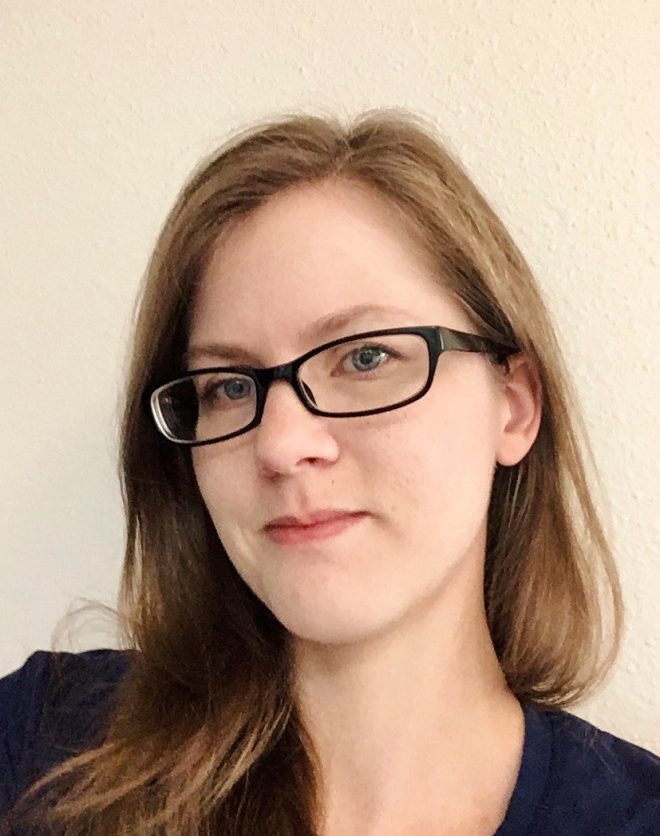
As a fine art professional, Mar has wielded katanas and handled Lady Gaga’s shoes. As a veterinary assistant, she has cared for hairless cats, hedgehogs, and, one time, a coyote. As a writer, her short fiction can be found in Analog, Strange Horizons, Escape Pod, and many other publications. She is a reader for Interstellar Flight Press and Diabolical Plots and a graduate of the Wayward Wormhole. She resides in the Pacific Northwest or can be found on various social media @?MaroftheBooks.
Holly Hefner
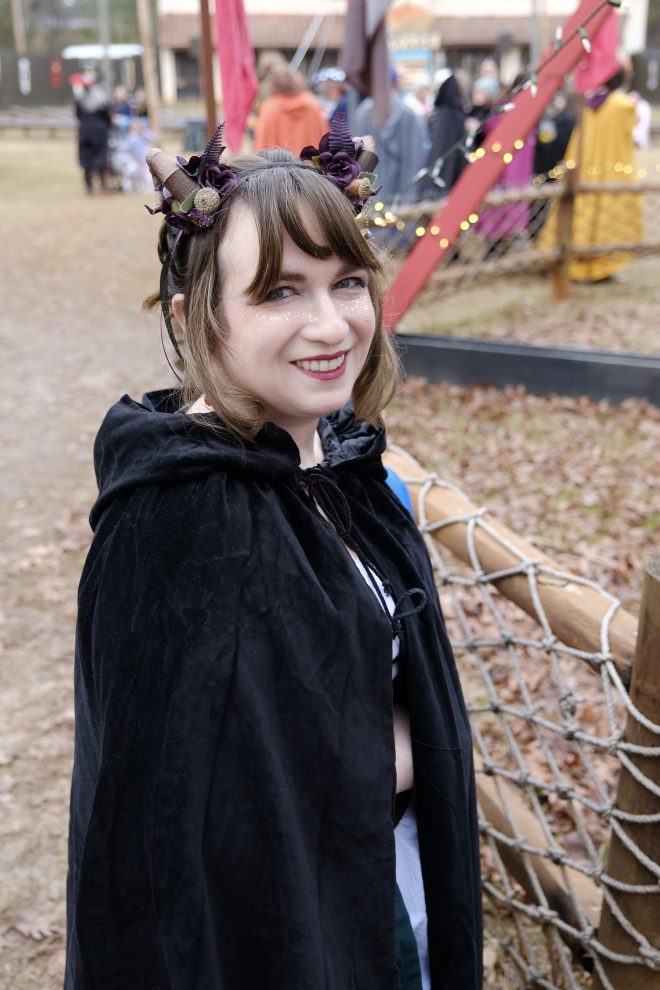
Holly Hefner lives in Atlanta with her partner and two children. By day, she works in advertising, and she’s very sorry for that. When she isn’t interrupting your regularly scheduled programming, Holly writes fantasy and horror. She grew up in Ronkonkoma, New York, where her childhood was haunted by local urban legends and ghost stories. Often, these ghosts creep into her fiction. Holly’s work has appeared in Epic Echoes Magazine and Bothered Stories. Find her on Bluesky @hollyhefner.bsky.social.
Sam Woodcock

Sam Woodcock is a geologist from Staffordshire, England. When not horrendously busy, he enjoys writing spooky TTRPG campaigns for his friends, as well as the occasional non-interactive story. He lives with his fiancée and his black cat, Merlin.
About the Narrators
Thomas Busby
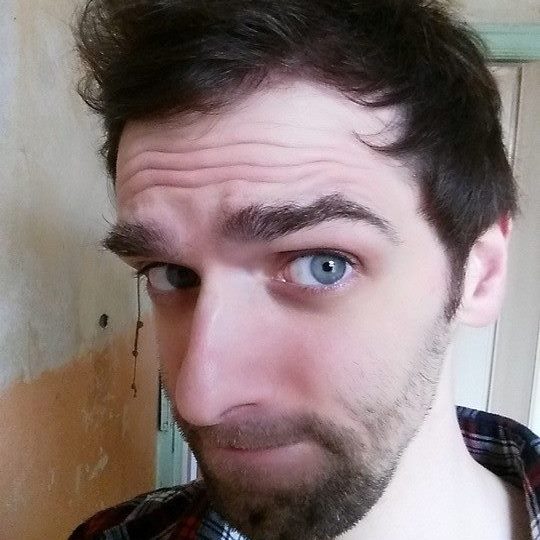
Thomas Busby is an up and coming Actor from South Wales, United Kingdom. He’s just starting his acting career and hopes to do voice work as well. You’ll find him on The Larp Book Podcast where he and three friends discuss LARPing and generally just have a good time.
Preston Buttons

Preston Buttons hosted “Air Out My Shorts“, with The Word Whore, for a ten-year stint. The duo (REDACTED) unvetted works of listener-submitted short fiction—often absentmindedly, always drunkenly, and completely unencumbered by any relevant credentials—from 2005 through 2015. Rumors of a reboot of this “offbeat Canadian classic” have been greatly (REDACTED).
Preston Buttons also narrated Escape Pod 57: Chuckles Mulrooney, Attorney for the Damned.
Alethea Kontis

New York Times bestselling author Alethea Kontis is a princess, a storm chaser, and a geek. Alethea narrates stories for Escape Pod, Pseudopod, and Cast of Wonders and contributes regular book reviews to NPR. Her award-winning writing has been published for multiple age groups across all genres. She is host of “Princess Alethea’s Fairy Tale Rants” and Princess Alethea’s Traveling Sideshow every year at Dragon Con. Born in Vermont, Alethea currently resides on the Space Coast of Florida with her teddy bear, Charlie. Find out more at aletheakontis.com
Dani Daly
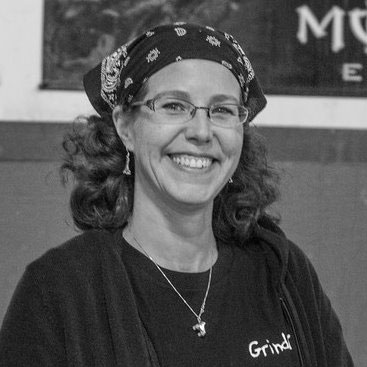
Dani Daly is a jack of many trades, master of none. But seeing as she loves the rogue life, that’s ok with her. You can hear stories she’s narrated on the first four Escape Artists podcasts, StarShipSofa, Glitte
