

PseudoPod 1048: The Work of Smith House
Show Notes
“The Work of Smith House” is a PseudoPod original
The Work of Smith House
By P.C. Verrone
The photos hardly did Smith House justice. Its stone façade loomed above the red oak, black cherry, and eastern hemlock that had thronged the country roads for most of my drive. Towers with parapets sprouted at odd angles, and a hundred arched windows stared as my car approached the iron gates.
The middle of nowhere was not exactly where I wanted to find myself, but I didn’t have much choice. Developers had bought my rent-controlled apartment, and my freelance graphic design gigs could hardly pay for a new place in the city. I had a bed back in Kansas, but I sure as hell wasn’t about to go back to live with Dad and the rest of them. So, I found myself scrolling through listings of sublets and artist residencies that might let me shack up for a few weeks until I figured out my next move. Then, I stumbled on Smith House.
I was a city girl at heart, but I could do worse than a mansion in the Berkshires. The call for applications also contained these magic words: Residents are welcome to stay without charge for as long as they feel artistically nourished. The only issue? The call was for “Indigenous Cultural Bearers.”
The Indigenous part I had down, but I doubted my graphic design exactly fit what they were looking for. Still, I was desperate. So, I wrote beadwork as my discipline.
It was only a little white lie to get a roof over my head. Besides, these places typically didn’t care what you did while in residence. Every artist retreat I’d ever attended began with the hosts emphasizing that we shouldn’t feel pressure to produce, and that rest was an important part of the process. One acceptance email later, I was throwing all my earthly possessions into my Dodge Wrangler and ended up on the front steps of Smith House.
The heavy door cracked open and a white woman in round glasses and a gray turtleneck poked her head out. “You must be Miss Crow,” she said. “I’m Miss Fairewell, Mister Smith’s assistant and coordinator for the residency. Please come in.”
The interior of the house was even more impressive: dark oak walls lit by chandeliers made from bleached stag antlers. A powdery smell emanated from the crimson carpet leading up a grand staircase. Every surface was occupied by some beautiful piece of traditional Indigenous artwork: Hopi pottery, hand-carved Choctaw flutes, a woven Diné blanket.
“Were these made by other artists in the residency?” I asked.
“Oh, no. These are all Mister Smith’s work,” Fairewell smiled.
“Really?”
“He’s quite a talented artist himself, with extremely diverse tastes. You’ll meet him tonight at dinner.”
The steps groaned beneath our feet as we ascended before turning down a hallway. More artworks from cultures across the Americas crowded the walls, clashing with the house’s otherwise Victorian furnishings. I stopped to admire a Hawaiian leiomano: the dark wood handle masterfully carved with swirling oceanic designs, and its rim of pearly shark teeth that glinted in the low light. The leiomano was mounted beside a small door painted with an ornate oak tree. I traced my finger along the design’s twisting roots.
“That room is staff-only, Miss Crow,” Fairewell called as she marched down the hall. I ran to catch up with her as she recited, “We apologize in advance, but there isn’t very good cell service out here and the WiFi can be spotty. We do have some wildlife in the area, so we advise not straying from the property. The days are yours to work, but Mister Smith insists all residents gather for dinner, which is at seven every evening. If you require anything, I will be your point person. I presume you brought all your supplies?”
“Supplies?” I asked.
Fairewell cocked her head. “For your beadworking?”
I smiled. “I’ve got everything I need.”
I expected her to offer the usual permission to take a break while in residence, but instead Fairewell said, “Good. You are expected to be actively engaged in your cultural artform. Mister Smith insists on it. The house has a variety of spaces—studies, workshops, studios, the like. Will you need a specific sort of space?”
I tried to keep my smile pleasant. “No, I’ll be fine.”
Fairewell stopped abruptly and turned to me. Her hazel eyes swept over me as if memorizing every inch of my body. The silence of the dim hallway seemed to press in on us. I suppressed a deep, animal urge to bolt.
Finally, Fairewell muttered, “Very well.” She turned to a door, drew a key from her pocket, and unlocked it. Inside was a small but cozy room with a lofted bed, a vanity, and a window with a view of the woods. “If you require anything, do seek me out,” Fairewell said. “And we encourage all our residents to sign our guest book.” She nodded at an open book on the vanity. Then, she left.
I set my suitcase down and glanced at the guest book. A list of names trailed down the left side of the page. Amelia Zaragoza. Samantha Redcorn. Warren Yazzie. I signed my name at the bottom before collapsing onto the bed. The musty smell of ancient cotton bloomed around me. I turned to let the afternoon sun warm my face.
I had to think. If they expected me to be actively engaged in my cultural artform, that might pose a problem. Even if I had brought the supplies—which I hadn’t—my knowledge of beadworking was limited, and my skills were non-existent. Of course, back in Kansas, I’d have had plenty of opportunities to learn. But then I would have had to endure endless comparisons to Jeannie Crow.
Master beadworker, doting wife, loving daughter, fierce friend, caring auntie, a saint taken before her time. Jeannie Crow, my mother. She was the reason I could fake being a beadworker, at least on an application or in conversation. Her looming legacy was also why I had never even attempted it myself back in Kansas. When I was old enough, I got out of there as fast as I could so that the memory of Jeannie Crow didn’t swallow me alive.
I woke to rain pelting my window. Checking my phone, I realized it was a few minutes past seven. I threw on the nicest skirt at the top of my suitcase, smoothed out the wrinkles, and pounded down the stairs. I followed the noise of clattering cutlery to an enormous dining room off the entryway.
My eyes first landed on the dozens of masks hanging from the walls: a Tingua jaguar, a Cherokee gourd mask, a Kwakwaka’wakw thunderbird. Beneath their vacant eyes stretched an oak table long enough for fifty people, though it had only been set for three. At the head of the table sat Mister Smith.
He looked much younger than I’d expected. Aside from some streaks of gray in his thick head of hair, I might have guessed he was my age. His dark locks were tied in a tidy bun at the back of his head, and his cheeks sported just a little scruff. His cream shirt was rolled up past his muscular forearms, teasing an athletic physique beneath. His face was pale but handsome in a way that invited you to keep looking, especially his indigo eyes. He stood and pulled out the empty seat for me.
“Miss Crow. I’m Robert Smith, but please call me Rob.”
“Lora,” I said, shaking his hand. His subtle tobacco cologne tickled my nose.
“This is Miss Xochi Hernandez,” he said, gesturing to the other guest at the table. She was dressed in a crop top and high-waisted skirt decorated with colorful embroidered flowers, and her auburn hair was braided into a crown around her head. She leapt up and reached across the table to squeeze my hand.
“Well, now that we’re all gathered, why don’t we eat?” Rob said.
“What about Miss Fairewell?” I asked.
“The house dinner is strictly for the artists. And, well, me,” he chuckled.
The meal was filled with delectable food and lively conversation, led mainly by Xochi. She was a choreographer researching the Indigenous roots of Mexican folklorico dance. When the conversation turned to my own craft, I kept to the truth as much as I could.
“Oh, I got into beadworking because of my mom. She was a master, but she passed when I was five.”
“Ay, I’m so sorry,” Xochi offered. “Do you have many memories of her?”
“A few. Not many,” I admitted. “Most of what I know about her comes from my family’s rose-tinted glasses. Growing up, I was always in her shadow, which only got worse when I decided to make a living at art.”
“That had to have been really hard,” Xochi said.
“I don’t blame her. She didn’t ask to be sanctified. I try to hold onto the few real memories of her I do have,” I said.
“To her memory, then,” Rob toasted. “And for bringing you here.” He winked, and I felt my cheeks warm. Throughout the rest of the evening, I kept stealing glances at him. His eyes would lock with mine, and for a moment I would be swimming in indigo pools.
After dinner, Rob said he had business to attend to and wished us goodnight. Xochi insisted she wasn’t ready for the night to end and invited me to share a bottle of red she had in her room. She showed me how to get up onto the roof behind one of the parapets. The rain had subsided, and the air smelled fresh as we looked across the moonlit treetops.
“I’m so glad we overlapped,” Xochi said. “You are way more fun than the guy who had your room before. This Diné guy, Yazzie. He was a real raincloud.”
“What do you think of Rob?”
Xochi smirked. “Well, he’s not my type, but he’s not bad to look at.” I must have blushed, because Xochi laughed. “He says he wants me to teach him some folkorico, so I’ll let you know if he has two left feet.
“Oh! Also,” she added, “you might hear a weird sound at night. It really freaked me out when I first heard it. But Fairewell says it’s just the pipes.”
I nodded, killing the last of the wine.
That night, I heard the noise that Xochi had mentioned: a low sucking that seemed to emanate from down the hall. The guttural slurping sent chills up and down my spine. I mashed the pillow into my ear, trying to concentrate on something else. Anything else.
A rare memory of my mother came floating to the front of my mind. We were at a cookout, and she was bouncing me on her knee. I must have been four, maybe even three years old. She was humming some tune and patting me to the rhythm. The ash brown hair she’d passed down to me was blowing in the breeze and wrapping around the beaded earrings swinging by her neck. They were her own work: turquoise and white beads with sweetgrass braided into them. Mom noticed my pudgy hands reaching for one and gently extracted the hook from her lobe, placing the earring in my fingers. I could still feel the smoothness of those beads against my skin.
When I woke, it was the middle of the night. The strange sound had gone. In the darkness, I shuffled over to my suitcase and slipped my hand into the front pocket. My fingers brushed against the small leather pouch, feathery soft with age. I extracted the pouch and tipped it into my waiting palm. My mother’s earrings slid out, exactly as I’d recalled: the vibrant colors, the thin braids of sweetgrass expertly woven amongst the beads. None but a dedicated beadworker could have made them.
I replaced the earrings in their pouch and set it on the vanity before climbing back into bed and drifting to sleep.
When I came down for breakfast the next morning, a mouth-watering spread had been set out. I waited for someone else to come down, but no one did. When I saw Fairewell passing, I called her over and asked where Rob and Xochi were.
“Mister Smith has pressing business matters, and I believe Miss Hernandez is feeling under the weather,” she said. “Dinner is usually the only communal meal, as most of the day is for you to work on your craft,” she added.
“I see,” I said. Then, I tried, “I’m just taking it easy. You know, rest is such a crucial part of the process—”
“I’m afraid I don’t know, Miss Crow. But I do look forward to seeing some of your handiwork,” Fairewell said, before leaving the dining room.
I spent the rest of the morning working on design commissions and looking at apartment listings. As I slogged through the spotty WiFi, I came across an article concerning the death of a Warren Yazzie. It took me a moment to place the name, but then I remembered he had been my room’s previous tenant, the one Xochi had called a ‘raincloud.’ According to official reports, Yazzie had died by suicide, but his family rejected that explanation.
I shut my computer. The room suddenly didn’t feel as cozy as before. So, I decided to explore the estate.
The house seemed to be a never-ending labyrinth of hallways. The air was dry, and I wondered if they kept the humidity low to preserve the Native artwork that glutted every available corner. I was convinced that Rob couldn’t possibly have made all of it, and yet I could never find another artist’s signature. Some of the pieces had blue ribbons or first-place certificates attached from art fairs and other arts & culture organizations. Despite the aridity, a dank odor permeated the walls, like the den of some hibernating creature.
Peeking into the rooms, I discovered a multitude of studies, libraries, and artist studios with everything from woodworking tools to an enormous loom. When I came back to the painted oak tree door beside the leiomano, I tested the doorknob, but it was locked.
The most peculiar thing was that I never crossed paths with another soul. I was hoping to avoid Fairewell, but the totally deserted hallways unsettled me. By dinner, I was anxious for some form of human interaction. I arrived early, forced into a staring contest with the masks lining the walls. The longer I looked, the more I got the sense that they were trying to scare me off. I was glad when Rob finally entered. His eyes lit up when he saw me.
“How are you enjoying my home?” Rob asked.
“It’s huge! I walked around all day and never bumped into you or Xochi,” I said.
“Too bad. I would have welcomed the distraction,” he smiled.
“Is it true that you made all the art on the walls?” I asked.
Rob chuckled. “I don’t just consider myself some patron, throwing money at artists. The art nourishes me. That’s why I open up my home to authentic Indigenous artists. I want to have a relationship with my residents.” He took my hand in his as he said, “So much can grow between two people when they’re making art together.”
Before I could reply, I felt a presence behind me. I turned to see Xochi lingering in the doorway. The brightness she had exuded yesterday had drained from her. Her face was pallid, and her eyes looked hollow.
Rob frowned. “Are you feeling alright, Xochi? Miss Fairewell mentioned that you were ill.”
Xochi smiled, though her lips settled into more of a wince. “I just woke up with something, but I’m feeling better now. I think we’ll have to postpone our dance lesson, though. I feel exhausted.”
Xochi was quiet for most of the evening, so Rob and I carried the conversation. Whenever I looked her way, she had hardly picked at the food on her plate. After Rob retired again, I accompanied Xochi up to our rooms. As we approached her door, she suddenly burst into tears.
“Something’s wrong,” she said. “I’ve tried dancing all day, and it’s like my muscles can’t remember any of the steps. Like I’ve never danced at all. There’s nothing!”
I wrapped my arm around her. “Your body is probably just mixed up because you’re sick.”
Xochi shuddered. “Maybe.” She drifted silently to her room, where I left her.
That night, I heard the pipes again down the hall. I pulled the comforter up over my head and tried concentrating on another happy memory. My mind slipped into another recollection of my mother. I was sitting on our kitchen floor, drawing with crayons while she sat at the kitchen table above me, beading a pair of moccasins. I looked up at her, and for a moment she didn’t notice me, her eyes focused intently on her work. Then, her head tilted as she looked down on me, and the turquoise and white beaded sweetgrass earrings swayed with her hair. She smiled and bent down to lift me up. She leaned in to kiss me on the cheek. Suddenly, her kiss felt hard like teeth, as though she was biting me. A sharp pain in my neck pierced the memory, jolting me awake.
I was back in my room at Smith House. The night was dark, and the house was silent. No horrible sucking noise. As I calmed my pounding heart, my eyes searched the room. There was no one there. But for some reason, I couldn’t shake the feeling that there had been.
I spent the next few days walking about Smith House alone, killing time until dinner. I grew used to the musk and groans of the old house, and even Fairewell stopped bothering me. Rob grew more charming with each day. As our flirtation heated up, I couldn’t help feeling guilty as Xochi became more morose. She haunted our house dinners, looking frailer every meal. A week after her initial sickness, I was helping her up to her room after dinner when she completely broke down on the stairs.
“I can’t dance! It’s like I’m wearing different feet, like my body has lost all memory—” I held her as she sobbed. I didn’t know what to say. Her throat was so hoarse, she had to whisper, “What if I can’t dance ever again?”
“That’s ridiculous,” I said.
“Dancing is my whole life.”
After I had tucked her in, I sat at my vanity trying to think of something I could do to cheer Xochi up, some gesture I could make to get her mind off of dance. Maybe we could drive into town and see a movie or visit the shops. We could even spend a night in the city. Neither of us had left the estate since we arrived, so a change of scenery would no doubt bounce her out of this funk. It might even help her dance again.
The plan was all but set in my mind as I went to sleep the evening. But the next morning, I learned that Xochi had left Smith House.
At dinner that night, Rob was more vivacious than ever. I felt terrible thinking it, but clearly Xochi’s absence had lifted the mood. After we finished our meal, he asked if I had seen the ballroom yet and guided me to an open parlor next to the dining room with a huge, polished dance floor.
“May I have this dance?” he asked, extending his hand. I took it, and we began to spin around the room. Rob’s feet flew as he effortlessly turned me one way and another. I had never been led by such a surefooted partner. It was thrilling.
“This is a traditional dance from Mexico, you know,” he hummed in my ear.
“Did Xochi teach this to you?” I asked.
“She helped. But the moves are all mine,” he laughed.
As we twirled about the room, my eyes drifted past Rob’s face. More masks glared down from the ceiling, spirits and guardians and ancestors watching as I whirled beneath. As I stared into their eyes, I noticed something wrong about them, something I couldn’t describe. Something horrific.
I felt suddenly queasy and stumbled. Rob stopped in his tracks. “Maybe we should call it a night,” he suggested.
I wanted to protest. It was our first time alone together. But my eyes flashed up to the masks and the uneasiness returned. So, I nodded.
That night, the pipes were silent. Still, I dreamt of my mother, the same memory of the cookout as I gazed at her earrings and listened to the song she hummed.
The morning after Xochi left, I was strolling down a hallway when I heard voices. I nearly jumped, as I had never run into anyone else during the day. Peeking around the corner, I saw Fairewell speaking with Rob in a hushed but clearly concerned tone. After a moment, Fairewell’s eyes locked with mine.
I tried to make as if I were just wandering by. Rob was friendly, but the tension in the air was enough to tell me that they had been talking about me. He quickly excused himself and hurried down the hall.
I was about to walk on when Fairewell said, “You know, Miss Crow, we’ve had other beadworkers stay with us previously, and I must say that your practice is much more… private then theirs. They certainly did not spend as much time strolling our halls.”
I stared the woman down, keeping my mouth a hard line until Fairewell turned heel and walked away. Then, I rushed back to my room. My heartbeat thudded in my ears as I slammed the door behind me.
I had to do something, or else Fairewell would have Rob kick me out. But I wasn’t a beadworker, so what could I do? I gripped the edge of the vanity, trying to steady my breath. My eyes landed on the small leather pouch.
I knew it was blasphemous, passing Mom’s earrings off as my own. But she would want me to have a roof over my head, wouldn’t she? If things kept going well with Rob, I was sure that he’d like to keep me here, cultural bearer or not. I slipped the earrings out of their pouch and put them on.
When I descended the stairs for dinner, I made sure my hair was tied back to prominently display the earrings for both Rob and Fairewell to see. But, to my surprise, there was a new face at the table. She introduced herself as Charlie, a Cree leatherworker from Ottawa. “We’ve never had a Cree before!” Rob grinned. Though he included me in the conversation, Rob seemed much more interested in the new guest.
At the end of the meal, Rob excused himself as usual. As he passed behind my seat, he leaned into my ear and whispered. “Those are the most beautiful earrings, Lora.” Then, he wished us goodnight.
I slept restlessly. After tossing and turning for hours, I got up and sat at the vanity. I slipped my mother’s earrings on again and looked at my reflection. I wondered what Dad and the rest of them would say if they saw me, whether I was Mom’s spitting image or a disappointing doppelganger. When the reflection became unbearable, I stood and left my room.
The halls were quiet. I had walked them countless times now, but they seemed foreign in the moonlight. I hardly recognized the door when I approached it until I noticed the painted leaves of the oak tree. I tested the knob again. This time, the door opened with ease.
Inside was a small storage room, not much larger than a walk-in closet. Shelves were built into every wall, filled with plaques and statuettes honoring Rob’s artwork. Newspaper clippings and photos of Rob accepting awards hung in handsome frames. I was about to leave, when I recognized one of the headlines. Next to a photo of Rob making a Diné-style sandpainting was the article about Warren Yazzie’s suicide.
I realized that none of the framed news clippings were actually about Rob. They were all obituaries or reports of suicides under unusual circumstances, with names I recognized: Amelia Zaragoza. Samantha Redcorn. Smith House was not mentioned in any of these articles, but a pattern did start to emerge as I read. Numerous articles contained some mention that, despite the deceased being an accomplished cultural artist, they had stopped practicing in the last few weeks before they died.
As I continued to explore the ghoulish trophy room, my eyes fell on one more frame, newer than the rest. It contained a letter written in a shaky hand.
Rob,
I will remember my stay fondly, as it was the last time I was really able to dance. I don’t know what has happened to me. My life’s passion has left me. I am empty. Without dance, I have nothing to live for. I’m sorry.
— Xochi.
My blood ran cold.
“This room is staff-only, Miss Crow.”
I spun around. Fairewell stood blocking the doorway. My throat was choked with rage. “What the hell did you do to Xochi?” I demanded.
“Mister Smith simply absorbed her cultural knowledge, as he does with all residents.”
“He took her dance away,” I whispered. “He killed her.”
Fairewell scoffed. “Whatever Miss Hernandez may have done; she has done it to herself. We cannot be held liable if our former residents choose to destroy themselves.”
“Then what the hell is this?” I screamed, flinging my arm at the room.
“That is none of your business,” Fairewell scowled. “You don’t fool me. You have no cultural knowledge to give. Mister Smith would starve if he fed from you. I have told him as much, and once I convince him, rest assured, you will be ousted from Smith House—”
Fairwell suddenly grew quiet. I listened. The sucking sound had returned. Fairewell’s lips cracked into a jagged grin. “It seems Mister Smith is enjoying our new guest.”
I shoved past Fairewell, but she grabbed my hair and yanked me back, throwing me against the oak door. Then, she sped down the hall, calling Rob’s name. Without thinking twice, I grabbed the leiomano from the wall and bounded after her. I reached her at the top of the stairs and swung. An awful crack echoed throughout the halls, followed by a thud as Fairewell’s body tumbled back down the stairs.
Veins pumping with adrenaline, I followed the sucking sound to Xochi’s old room, the room Charlie had just moved into. The door was open a crack. My heart thudded in my throat as I pushed the door open further. There, huddled over Charlie’s sleeping body, was Rob. He was pressing his mouth against the side of Charlie’s head, just behind her ear, his indigo eyes rolled backwards in horrifying ecstasy. His cheeks shuddered with each sickening slurp. As quietly as I could, I crept into the room, lifted the leiomano, and brought it down on Rob’s face.
There was a nauseating pop as Rob’s mouth detached from Charlie, and he fell to the floor. Charlie jolted awake, eyes wild with confused terror. “Run!” I screamed. Without objecting, Charlie went tearing out of the room in her pajamas.
Before I could follow, Rob grabbed my arm. He stood, towering above me and sneering through the blood gushing out of the gash in his temple. He flicked his wrist, easily twisting my arm and causing me to yelp. The leiomano went clattering to the floor. Then, he yanked me towards him and sunk his teeth into the back of my neck. I yelled, but the pain was brief.
He held my body to his as he began to feed. After an instant of panic, Fairewell’s words came back to me. I knew something that Rob didn’t. I was no cultural bearer. I was an empty well to him. He couldn’t kill me. If anything, he would starve himself.
Fighting past the discomfort of the creature attached to my neck, I grasped for the leiomano. As my hand wrapped around its handle, I noticed that Rob was doing something to me. I could feel something fading away. I frantically searched my mind before landing on my mother. I couldn’t remember the color of her eyes, the softness of her lips on my cheek. What had her hands been doing at that cookout—picking a thread or rolling a bead? I had no idea. He was eating away at the few precious moments I had of the real Jeannie Crow.
With one swift swing, I brought the leiomano back down on Rob’s neck. He leapt away from me, but I did not stop. I lunged at him and hacked at his neck. I had no clue where this bloodlust had come from, but within minutes, my face and nightshirt were soaked in blood, and the leiomano and carpet were covered in what had once been Rob Smith.
As I stood and caught my breath, I noticed that something had fallen into the pool of blood and gore. I picked it up and wiped it off. It was an earring. Turquoise and white, with some kind of dried grass incorporated into it. It was beautifully made. I felt that I should have known who it belonged to—who had made it, even. But try as I might, I couldn’t recall.
Host Commentary
I was struck by the layers of subtle terrors amidst the more obvious horrific bits P.C. Verrone incorporated into The Work of Smith House.
Blood sucking vampires will always have a place in storytelling. We all know there have been mentions of creatures of the night throughout history and across all populated continents, with many similarities in their telling. So it’s always a treat to read a new take on this monster, and to me, a vampire that survives on Cultural appropriation of the art of Indigenous People in the Americas, an attack that literally nourishes a pale skinned man in his pristine Victorian house in New England, while stealing the natural talents from the actual artist, is a terrifying twist. I couldn’t help but see a comparison between Rob Smith using those stolen talents to “create” his own so called art and artificial intelligence companies destroying millions of books, priceless antiques and otherwise, to feed large language models. Focusing that theft directly on Culture Bearers of Indigenous Peoples and callously disregarding the erasure and pain of the artist is a true horror.
Since Lora didn’t have the same type of culturally important talent to lose, what she did lose I felt was the result of her own theft of credit. Her fear of being compared to her own mother caused her to lose what little she had left of her to hold onto as an adult.
And while Smith was most certainly the main evil of the story, I also see a monster in Miss Fairwell. One can kind of understand that what a typical monster does, it does because it is in their nature, so a vampire is going to vampire – regardless of what nourishes it. It’s the seemingly ordinary assistant that appears to choose to help and support the monster that is arguably more frightening. What did Miss Fairwell get as a reward for her part in what goes on at Smith House?
About the Author
P.C. Verrone
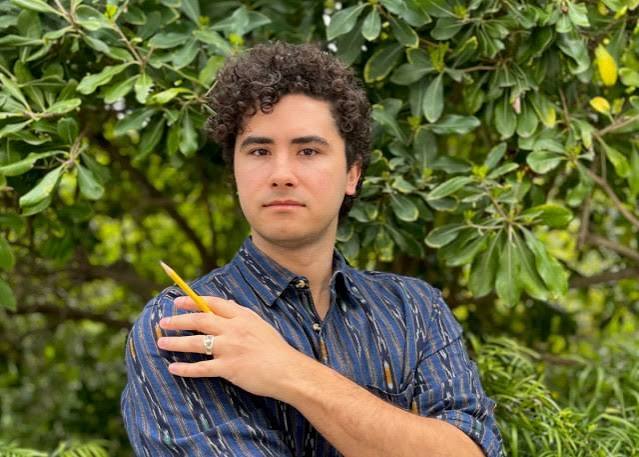
P.C. Verrone is an Afro-Native writer of Kiowa and Osage descent. His work has appeared in Nightmare, FIYAH, PodCastle, Strange Horizons, and numerous anthologies, including the sequel to the bestselling Never Whistle at Night. He has received the Otherwise Award, a Tin House Residency, and won WNDB’s Black Creatives Revisions Workshop. He graduated from Harvard College and holds an MFA in Creative Writing from Rutgers University–Newark. His debut novel Rabbit, Fox, Tar is forthcoming in June 2026. He lives with his husband and their dog, Apollo. You can find him at pcverrone.com, Instagram: pat.the.carroll, and Bluesky: pcverrone.com
About the Narrator
Laurie McDougall
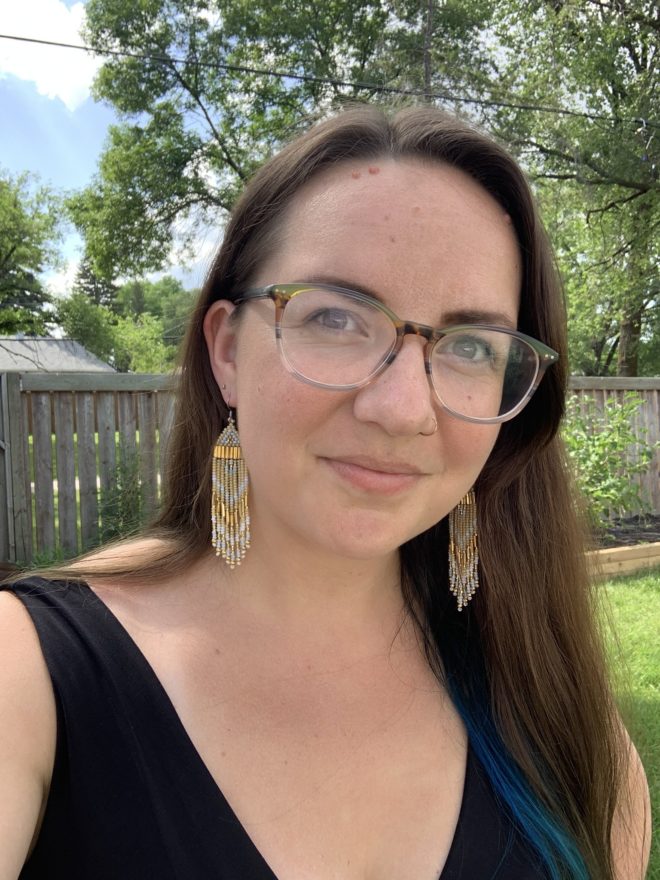
Laurie has voiced a range of projects; academic, theatric, and everything in between. Her roots are Red River Métis and Newfoundlander, and she was born and raised in the heart of the Métis homeland on Treaty 1 territory. She is a beadworker, a hide tanner, an auntie, a gardener, a reader, a musician, and more. She lives in Winnipeg, Canada with her spouse and two sweet cats.
