

PseudoPod 1040: Flash on the Borderlands LXXIX (79): Ubi amor, ibi dolor
Show Notes
Content warnings with timings:
03:56–16:40 ‘A Table Set And Waiting’: graphic sexual content, body horror, homophobia
18:57–26:32 ‘Third Date’: dangers of dating, physical abuse
29:44–40:52 ‘You’re Still Here’: homophobia, religion, disordered eating,
cannibalism/eating a corpse
48:19–56:30 ‘9 Steps to Dissecting a Ghost’: suicide, depression
Suicide Prevention links:
https://findahelpline.com
https://www.iasp.info/
What happened with Unbound:
The Bookseller: Unbound
‘A Table Set And Waiting’ was previously published by Baffling Magazine in 2022.
Our other stories this week are PseudoPod originals.
Ubi amor, ibi dolor – where there is love, there is pain
“Love anything and your heart will be wrung and possibly broken.” – C. S. Lewis
A Table Set and Waiting
By Jordan Shiveley
No one knows who found the Dark Room first.
Maybe it found us?
Needed us.
We are taught to venerate first times. First time you lose a tooth. First time you taste alcohol. The first time you masturbate through angry tears zipped inside your sleeping bag at a youth group retreat. But even now I only hold the faintest smudge of a memory. A static film of the stairs down to the basement, a slash of yellow flaking paint that peeled away from a door handle, the suffocated rattle and wheeze of an air conditioning ground unit that leaked silent pools over time-polished concrete floor.
The Dark Room.
Even writing it out here, it loses some of the weight that it used to insert on reality. The memory, much like the word, has been erased and rewritten one too many times, its page wearing thin.
It was the summer Colin Haders bit my ear till it bled while I jacked him off in the sweet, musty sweat of the art room’s storage closet.
I remember standing in front of the door watching my friends enter it one by one. A glass security door covered with stickers and “No Shoes No Service” and “Bathroom is for customers only” signs this time, but the door itself never mattered. We were there for what was behind it.
Darkness enveloped each of them only a few feet into the room. The darkness did not take them gradually. This was not the receding of a figure slowly being shadowed by distance, time, or the absence of light. It was a sudden swallowing, a working of a throat pulling a mouthful down an esophagus in the space of a breath. A delineated border of dark that pushed across the landscape of their bodies, like thrusting your face into a bathroom sink full of water during a dinner party so no one would hear your choked sobs. One moment they were there, bisected by dirty hallway light and flat impenetrable shadow, and the next they were gone.
It looked so beautiful.
Even in the dim hallway I could still see my skin, my blocky hands scratched from yardwork, my neon blue Swatch watch with the yellow stripes on the band that I said I wore ironically but really I just thought was pretty. My dick was sweaty and hatefully half-hard in my briefs. All the landmarks of polluted meat and bone that served as a trigger for my memories. Remembering the people I wished would want to see me, touch me, spit in my mouth…anything but look at me the way they did in hallways and grocery store lines.
Once you were inside, you could look back and see the door floating there. But I never looked back after the first time. The whole point of the room was what was coming to meet you in the Dark. The Thing that came forward slowly, towards your aching, throbbing body of meat and bones—towards your skin, your fevered needs, your wrung out dreams. Its approach felt like the change in air pressure before a storm. The building tension pressed against your eyeballs and prickled the nape of your neck.
And then it was there.
Always first slithering around your feet, snaking up along the sweat-lined tender skin at the back of your knee. Or long bending fingers encircling your ankles and rubbing back and forth as their grip tightens. I could never tell what the Thing looked like. In the Dark you couldn’t see shit…that was the point.
Then you feel the claws. Teeth? Knives held by a host of many small and hungry hands? It didn’t matter. They are tracing over your skin. Pressing through your clothes to draw a map of what was to come.
I would hold my breath drawing in gaping mouthfuls of need. My lungs would burn as I waited for the Thing to continue. I held so still, afraid if I moved it would dart away and leave me unfinished and ruined.
When the first cut began, something dry and leathery would push apart my lips to scrape like rustling paper through the cage of my teeth. Then talonsknivesteeth begin to slice along the lines they had been tracing and the thing in my mouth would push its way further and further inside of me, filling cavities that I hadn’t known existed until it was inside them. I would of course scream at this point. I would scream until I felt like every vein in my body would explode. I would scream up into the Thing as it entered me, a desperate keening of agony and welcome.
And then it would all fall away.
The skin. The meat. The time Colin Haders shoved me onto the hard linoleum of the school hallway and broke my glasses just because I leaned against the locker next to his and said “hey you” like a total fucking cum-drunk idiot. The Thing in the Dark would take all of it. After, I would still hear it moving, the slapping sound of meat rearranging itself close and warm; an invisible limb thrusting itself into a wet and welcoming glove. On the floor, free of everything, staring into the blessed Dark as it left in the husk of meat and bones I had entered with.
Sometimes, when it came back, our skins were battered or burned. Alex Caton’s was so ruined that he collapsed dead after. We left him in the parking garage and ran. Other times it would drag meat back into the room. Bodies, flensed and broken, joints cracked and bone poking from islands of wet meat like stark white seashells. The Thing wearing my body would stand over me chewing. It sounded more like forcing gristle through a meat grinder than human mastication.
It never let us stay like that. No matter how much we begged or wept. It would always come back and reclothe the blissful nothing it had made of us with the meat and sweat and shame it had taken.
Then it would be done with me, for the time being. Even if I knelt there in the all encompassing dark for hours, it wouldn’t return. So I would leave, the weight of my self-perception a raw seeping sunburn against a wool sweater.
Until it became unbearable and I went looking for the Dark Room again.
Each time it took longer and longer to find, until finally it just wasn’t there. I can’t blame it. I just wish I knew what I did wrong. What I need to change to be what it wants to consume again.
I never saw what the Thing in the Dark Room looked like.
There is a cloudy scratched mirror down here in the basement, hung over a chipped ceramic sink stained from generations of people trying to scrub the world off their skin. When I look at it my face is different. My jaw hangs lower, and when I move it, I can feel the bones in it clicking against each other like the ratcheting of an adjustable wrench, like a chicken bone cracking in the garbage disposal.
I like what I see.
I can feel myself getting hard. I hate it. I hate that I hate it. I rub the corners of my mouth with raspy fingers, letting it stretch open even farther, remembering the razor lines of cuts tracing over me. I think about what it must have looked like, walking around under the sun with my skin taut around it, and I unbutton my pants. I pull my shirt up over my head. The collarbones in the mirror are stark valleys rimmed by freckles. My reflection touches the place Colin Hader marked with his teeth and when it moves my hand away he is still there.
I like what I see.
I stare at my shirt, balled up in my hand, and throw it into the darkness of the basement’s far corner, a chumming of the water. I step out of my pants and kick them after it, a baiting of the air. I push my underwear down my hips; my reflection slides one hand over my cock and the other inside my mouth. It probes my teeth, and the thick piece of meat that lies between them vibrates and slides against my stiff fingers as I moan.
I grasp the writhing worm of my tongue hard between two fingers and thumb and squeeze, the loose edges of my mouth shuddering as I scream into my hand. For a moment I think the darkness behind my reflection thickens and my cock jerks of its own accord, but then it is gone.
Come back
The muscles at the root of my tongue spasm but I tighten my grasp. I think about Alex Caton and what was left of him on the floor of the Dark Room—gristle clogging a drain. I think about what the Thing brought back with it, about the wet sound of its feeding. I think about how much of myself I will have to throw into the dark corner of my basement before it notices me again.
I think about my family sleeping upstairs and I pull.
Third Date
By Divya Kernan
When you invite him up to your place, there is no guarantee he won’t kill you, so you make an educated guess: you plan to sleep with him, surely that cuts motives for murder by half. Besides, you have closely watched his teeth and could swear they aren’t the biting kind.
Though, you have been wrong before.
Regardless, you want him: you lose no time by the door, pull him inside, unbutton his collar, only to pucker up, belatedly coy, in case eagerness on the third date looks sloppy.
“You want a drink?” You ask—the adult way of asking will you kill me?
He says, “No, thanks, that’s not what I’m here for,” flashing endearingly uneven teeth, bright in the spare moonlight, no space between top and bottom rows. Your eyes dart to the jagged bone shard on the jewelry plate by the head of the bed, souvenir of the last man you slept with.
“He really did a number on you,” Alexa your friend who’s a therapist but not your therapist, said, when you told her your boyfriend turned on you. You did not show her the wound, only the bandage, the bitten flesh underneath oozing pink juice no one cared to see.
“Did you talk to the police?” Your therapist, who is not your friend, asked, when you displayed the concave scar. You said yes, she said good, and then you went back to talking soul-altering experiences and how you refuse to be scared out of your verve.
“What sort of animal leaves such marks?” Your PT asked once, and never again, after you answered with a single word: man.
This man, the one in your bedroom, looks nice, with warm gold-flecked brown irises, that invite unconditional trust, and when he kisses your mouth then your neck, you enjoy how soft his lips are, no dried peeling flakes, no chafing stubble. He takes good care of himself, chapstick, razor and all. You bet he’ll take good care of you, too.
When you back into the bed edge, he drops to his knees and runs his fingers up your legs.
“I am going to eat you up,” he tells your navel, and even though, it sounds like a threat, you giggle it off, add a little moan in there, to make sure he doesn’t question your enthusiasm, because now of all times seems too late to doubt his intentions—not with his teeth so close to your flesh.
Despite the sorry choice of words, you cannot believe he wants to kill you.
At his scrutiny, the concave scar itches; he stops in his tracks to poke his thumb into the cleft, probing for that missing chunk of you, and in response, you buzz with the sudden urge to pry his mouth open with pliers and inspect his choppers: if you find pricks, you will blunt them. Or pull them out.
He doesn’t ask what happened—either he doesn’t care or he has his own understanding of what befalls girls who invite strange men to their apartment so fast, so easy. He proceeds with his undressing of you in silence, either loaded or erotic, you cannot tell the difference, too busy that you are replaying in your mind, each of your dates, picking them apart for green flags, how he pulled the chair for you, whether he mentioned a mom or a sister—a woman that is not prey—how he looked at the waitress with the deep cleavage or winked at the waiter who beamed at you so much, he had to ask if you two knew each other. He didn’t look angry, did he? What did he say was the reason he broke up with the previous girl?
You don’t remember.
From down below, he raises his smile to your face, eyes rolled back so you see more ivory white than gold-flecked brown, lips stretched inexistant, leaving you to wonder what part of him kissed you moments ago. His teeth?
Under his touch, phantom pain pulses through the hollow on your exposed thigh, where skin and muscle meat should be. He had been your boyfriend for months, had nibbled at that sensitive spot before, first playful, laughing when you squealed, and sometimes later, brutal because you had displeased him. The bruises always faded.
Then one night, he was all teeth, an unending circle of incisors pressing into you, gentle for a provocative blink, then vicious, until a small, human mouthful of blood and tissue tore away from you.
You kicked him in the jaw out of reflex and, stronger from your panic and his own surprise at what he had just done (or what you had just done), punched him out, screaming at the bloody smirk that slashed his handsome mug from ear to ear. Only after you’d locked the door and heard his footsteps retreat, did you check the damage: there, at the ragged edge of the bleeding wound, you found the tooth embedded in your thigh, bone-white and startling.
Third Date doesn’t bite; he feels good, good enough in fact that you forget for a while he has teeth—a feat easier achieved with your eyes closed.
Nevertheless, when he rolls away to fall asleep at the other end of your king size bed, you stretch your arm and grab the small ivory shard from the jewelry plate.
He didn’t kill you. The thought tastes of victory.
He still might, in the morning, while you slumber, whispers the tooth in your palm. Or on the fourth date. Or the day down the line when he decides you’re a sad slut.
The tooth nicks your finger, you glance at Third Date snoring through the darkness.
You have teeth, too. You could learn to bite.
You graze his soft, pink ear and he moans in his sleep.
Maybe he is a good guy, you think.
Maybe not.
You fall asleep, clenching in your hand the tooth, together with the vague hope that you will wake up alive.
You’re Still Here
by Thea Liu
When I arrive at your funeral, I’m stopped at the church door.
At first, I think it’s because of that night, even though I didn’t think anyone recognized me in the dark, but it’s the opposite. It’s just because your friends think I’m a stranger barging in, until your mother tells them I’m the girl who lives — lived — next door to you, and then they remember I’m five different shades of loser and put me in a seat at the back. I don’t even get to look at you before the service starts.
That’s fine. Getting a seat is more than I deserve, and I’d prefer to be far away from Jesus anyway. Would your parents find the fact I’m a girl-kisser a bigger sin, or how I’m the reason you died? Maybe I’ll tell them some day that it was me, but not until after the funeral, for sure.
There are speeches. Your mother’s is nice, and she almost mentions me, even if I’m mushed into the general group of childhood friends. Your boyfriend can barely string two sentences together. His eyes are bloodshot. Grief or weed?
No one asks me to say anything, obviously. Only my parents know we still hung out after you became popular. It was my mom who found the lipstick you forgot in our bathroom before we went out that night. You were ashamed of me, I guess. It’s fine. I’m ashamed of me, too.
And then the priest is saying God has a purpose, blah blah blah, and a squeal starts building up in my ears. My stomach growls. I haven’t been able to eat anything since you died. Even when I force food down, everything tastes bland, like lettuce, and I vomit it up after.
I look at my phone, as if I don’t have your last texts memorized.
I’m sorry.
Please answer me. I just need to figure things out
I lean my head back against the pew and think about how there’s always a reminder during assembly to not text while crossing the street.
As I run my thumb along the phone screen, from the point where the incoming truck had slammed into you up to the five-hour break before please answer me, I think that they should’ve reminded us during assembly to just reply to the goddamn text, even if we don’t want to.
One, stonewalling is a low move. Two, then I wouldn’t be at your funeral.
Your parents let everyone throw a handful of dirt onto your coffin.
They go first. It takes a while, because they’re crying so much. Next, your grandparents, who invited me to go to church, then never spoke to me again after I refused.
Your boyfriend, who still doesn’t recognize me from that night. Does he know how much time you spent in my room complaining about him? Probably not. But I guess now he knows the good, good girl he dated had more sins staining her soul than opening her legs for him.
Your brighter, prettier friends are careful to not smudge their makeup or clothing. I didn’t know mourning outfits could be that fashionable, but I do know they think the horror flicks you like to watch with me are either corny or belong to the Devil.
I almost miss my turn, too preoccupied with the screeching sound building in my head. Most of the wood is obscured. I do my best to toss my bit of soil onto a bare patch, because it’s the closest I can get to being beside you again. In a way, isn’t my touch on your grave more permanent than the brief meeting of shoulder and shoulder, cheek and cheek?
The screeching grows louder and louder as the hole is filled in. It doesn’t stop after it’s done, you’re buried away forever, and we’re trudging out of the cemetery. It continues during the reception, where the only thing that doesn’t taste like lettuce is the trickle of blood in my mouth when I bite my lip. I’m hungry enough to suck on the wound. It tastes good.
The sound is still there after I get home, after my mom makes me have dinner, after I throw it up in the bathroom, after I put on the lipstick you left behind and imagine I can touch your lips through it, after I get into bed and imagine you’re still here, sitting next to me, and I’m working up the nerve to hold your hand.
Maybe if my stomach weren’t so empty I’d be able to sleep. I bite the pillow you used to borrow. Not to eat it. That would be crazy. Just to pretend.
A couple of hours of tossing and turning later, I figure out what the sound is.
It’s the truck, trying and failing to brake.
Did you see it coming? Did you have time to feel fear? I don’t know. I don’t even know what you wanted to figure out. How could I know? I never saw you again after that final night. I never saw you in the hospital or the morgue. I didn’t even see you in your coffin.
I’m never going to see you again.
The truck’s scream continues, closer and closer and closer.
I go down to the basement and take out the shovel.
It takes me most of the night. I shouldn’t have assumed newly poured dirt would be easy to rehome. It had nestled around you, after all, and everyone’s who’s been in your corona knows how impossible it is to leave. Also, I’m weak from puking up my meals. My blisters have formed and burst and formed again by the time I pry open the lid.
And there you are, more perfect in death than I’ve ever been or will ever be in life. The mortician did a good job hiding the truck’s marks on you, but…
I wipe away the demure pink lipstick your mother chose for you and replace it with the wine red one you were wearing that night, when we staggered into the dark lane behind the church, and you leaned close enough I smelled the gin on your lips.
I saw it in your eyes: the moment you said fuck you to Jesus and your parents.
It was only a quick brush, light enough I wonder if it existed only in my imagination. But no, I remember the wine red staining the corner of my mouth, how difficult it had been to wash off, how much I didn’t want to.
Would you have kissed me — really kissed me — if your group of friends from school hadn’t noticed us? If your boyfriend hadn’t been there, maybe you wouldn’t have jolted back into being the girl who went to church every Sunday — as if kissing a girl was a worse offense to God than letting a boy fuck you in the church’s bathroom — and ran after him crying.
I know. I’m sorry. It’s not easy to betray your upbringing. But I was scared, too, because you’re beautiful and I’m me and I had hungered twelve years for that moment and you didn’t even text me sorry until a week after. I admit: I wanted to make you feel as awful as I did.
There’s no one here to make either of us scared anymore.
Your lips are cold, but that’s okay, your dead lips are better than anything else I’ve ever tasted, and maybe I’m confusing my lips with yours, but I swear they’re soft enough to mold to mine.
My neck and back ache from the digging and from bending over the coffin, so I climb in and lie on you, and it’s kind of nice to know I can’t bruise you with my weight.
I was right. There’s still softness to you. My teeth sink into your lip with barely any resistance, and whoever said fresh meat tastes better was wrong, though they’ve never tasted you — no one’s ever tasted you like this until now — so I can forgive the mistake.
I take in the best parts of you. The curve of your cheek and the palm of your hand, the smooth arch of skin along your collarbone. I take you in until I can’t anymore, my stomach is too full, and I could make myself throw up and have more of you, but I finally don’t want to now. Also, I could never waste any part of you.
The screeching in my ears stops, because I’ve saved you. Soon you will become my flesh and bone, my skin and gut, and as long as I’m alive you’ll never truly be dead. You’re still here, inside me, with me, and you always will be.
When I shower after getting home, I leave the drip of dark blood at my chin for last. It looks like your lipstick.
9 Steps to Dissecting a Ghost
By Jeanna Cammarano
Start in the cemetery
I know it’s cliche, but when you want to commune with ghosts, there’s no better place to find them. You walk down the worn path, and before you know it you’re standing before a headstone with a name so familiar it might as well be your own. Moonlight reflects off its polished surface, illuminating the myriad of emotions that play across your face. Grief, of course, a loved one has died, there will be that—a sadness that cuts so deep it manifests as physical pain. And then there is anger, so red hot that you think it actually registers as hate. Use it. Pull out your shovel and dig. Dig until you hear the telltale thunk of metal against casket.
Procure a book of spells
This, at least, is easier than dealing with the body. You order one from etsy—A Witches Grimoire. The seller, TheLeatherWitch11, has a five star rating and claims to include every spell you could possibly want. It takes six weeks for it to arrive, and when it does you find it’s in Latin.
“You want the summoning done right, don’t you?” the seller asks you. And you do.
“Latin is the way to go. Besides, we don’t do refunds.”
You can’t stand the idea of waiting six to eight weeks more for another book, let alone the time it would take to track someone down with those kinds of skills. You have questions burning a hole through your broken heart. Questions that need answers.
Be sure to cast the right spell
The Latin is a problem but not an insurmountable one. Remember that anniversary trip and the vow to only speak the local language? You scraped by all right, just the two of you—A whirlwind of a holiday filled with innumerable misunderstandings and giggles. Giggles that came without effort, unaccompanied by the tightness of their jaw or hollow edge to their voice.
The laughter is now a distant memory; let’s hope your translating skills are not. You painstakingly decipher each line until you’re sure you’ve found what you are looking for. You don’t want to accidentally bind this ghost to you forever, do you? That won’t get you answers. That won’t help you let go.
Make a sacrifice of your own
Leave a piece of yourself as an offering, to entice the spirit and give it something to hold onto. Your heart would be best, but that’s something they’ve already taken. A drop of your blood then? No, the thought of it makes you remember. No more blood needs to be spilled. Your ghost will have to settle for something less. A lock of your hair perhaps? Those same strands so often found entangled within their grasp in moments of love and desperation both. Will that be enough?
What about the letter they left? The one that says so much but nothing at all. Yes, you can give that back too.
Only proceed when you’re ready to face your ghost
Feel the spell slip from the page and onto your tongue. It’s crisp and bittersweet and thick with promise. One that could mend your broken heart, give you the peace you need to let your loved one go, a release from the pain that haunts you and the anger that feels so close to hate.
You wait. At first there is nothing, only a room stilled, but then there is even less. The air around you is pulled away. Like a black hole in the vacuum of space. It converges on a point—the small pile of remains and hair and a letter that shouldn’t exist.
A silken misty figure unfurls from the abyss. It looks nothing like they did in life. There are no arms to embrace, no hands to hold, no eyes to gaze into.
You’ve missed those eyes, they always held so much warmth when they met yours. You remember, too, how those eyes dulled when they looked away. Like the flame had gone out and all that burned were embers. You’d stoked that fire as much as you could, and every time they lit up felt like a gift—a vital, radiant gift.
You’d hoped to see that flame one more time. Proof that you mattered in their eyes. Proof they’d made a mistake.
Let it all out
This is the moment that finally breaks you. The absence of them even in their presence, it rips the flood gates open.
You yell and scream and call them names. You hurl the questions at them like stones. The ones you’ve been carrying since they left this world. Since they took their own life and most of yours with it.
Questions like “Why didn’t you tell me it had gotten this bad?”
“Was our life really so horrible that you’d give it all away?”
“How could you leave without saying goodbye?”
Your words are heavy and sharp, and you hope they hurt. Hope they weigh on them as they’ve weighed on you. You’ve carried this burden alone too long. Now it’s time they do their share, because it’s not fair they left you to shoulder this alone.
But ghosts don’t speak. You won’t find the answers you’re looking for that way. You have to get to the heart of it.
Steel yourself
They don’t fight you when you take hold of them. Their smooth translucent form wraps around your palms as you pull them close. They mold to fit between your fingers and drape themselves across your arms. It feels like an embrace.
You sob into them, bury your face into their form. It’s nothing like holding them in life, but the cool bundle of them is comforting nonetheless.
They lay pliant—an offering of sorts, and they don’t move as you pull out your ritual knife.
At the first cut, the silken glassy membrane sloughs away revealing a gelatinous layer beneath. It sticks to your skin, coating your hands and arms in goopy ectoplasmic innards. Somehow there is more of it now than before. It expands beneath your touch slowly pooling onto the floor.
You can’t stop now. Not when you have come so far, not when you are so close. You reach further into the viscous plasma until you find its core and clasp your fingers around something round and hard. You pull.
With a squelch your arm is released and within your palm lays a small obsidian stone.
Answers are often found within
You do as the book instructs, and swallow the stone whole. It does not go down easily, and for a moment, you worry you might choke. But you force it down anyway, just like your grief. You’re good at that.
You’re aware of its slow descent down your esophagus, and then you’re aware of nothing. There’s no sense of body or anything else. You’re lost in the dark.
What you find there isn’t what you thought it would be. You thought you’d find where things went wrong. Reasons why they couldn’t stay. Something you did or could have done to make it all right. Something that made sense.
But there is no reason here. There’s only nothing and pain—the two entwined, and impossible to tell apart. They wrap around you in inky darkness and pull you into the depths.
The darkness is crushing, and you are slowly suffocating under the weight.
You understand now, the weight of it. Not the why and the how come, but the weight is enough. It doesn’t matter what is on the other side of it. There is no other side. It is all encompassing. And you feel yourself giving in because you see no other choice. You feel yourself sink to the bottomless depths knowing you will dissolve into it. Become it. Transform into the thing you always secretly knew you were.
Nothing.
And that’s when you heave your guts out onto the floor.
It’s not peace but acceptance
A layer of bile coats your hands, and your clothes, and the floor, but you continue to heave, purging the darkness that had in such a short time become a part of you. It is stripped from you now in violent waves, wrenching itself free from your bones, your veins, and most painfully your heart.
You lay there alone in a pile of your sick, panting. The remnants of your ghost are gone—returned from wherever they came—Only a stone, glossy with the shade of despair, is left in their wake.
But what about you? The hole in your heart remains, and the pain is still sharp and cutting. You find the anger there as well, but it doesn’t burn so molten hot. The heat of it transmuted under metamorphic pressure into something less than hate—a truth forged of anger but love and understanding too. Hold onto it, and prove the darkness wrong, because having come out the other side, you know something your loved one did not.
They weren’t nothing. They were everything.
Host Commentary
So get ready to open the door. The truth is waiting behind it.
Ignorance isn’t just bliss, it’s a defence, and sometimes a shelter. If we don’t know we’re suffering, we can pretend we aren’t. Our lizard brains work to keep us alive long enough for our mammal brains to wake up and DO. SOMETHING.
It’s horrific. It’s never easy and it’s never the same. Abuse. Addiction. Intrusive thoughts. Depression. Neglect. All of them and every other homegrown artisanal monster are waiting for us not just in that room but to follow us out of that room. Whispering to us that war is peace, hurt is healthy, bad is good, up is down, austerity is prosperity. Nothing is certain but one thing; eventually we all learn that while the table is set and waiting we can choose not to sit at it. There are better places. There are better meals. We deserve them all.
Pick your lines. Pick your truth. It’s story time.
Some author notes:
‘From the author: A long time ago, in the early days of a new relationship, I joked to my friends that things were good: I’d woken up alive after my date had spent the night. Fresh out of a psychologically abusive relationship, I had serious doubts about my capacity to spot red flags. After all, when do you really know someone? Since that time, I’ve wanted to explore that hazardous moment when you first let someone into your safe space. That’s how the story was born.’
This is an incredible piece of work and one that speaks to that exact same difficult, horrible space where you know something is trauma, you know it’s going to hurt you and is hurting you now and you can’t quite break free.
He didn’t kill you. The thought tastes of victory.
God that’s bleak. And familiar. Continuing is victory sometimes. Perseverance is peace, for a while. But never for long enough. What Kernan excels at here, aside from literally everything, is the sense of dreadful empowerment that can engender. You woke up alive. It didn’t kill you. You can go back again. But do you want to or do you just think you should? Are you adapting or are you evolving? And if you’re evolving, what, or who are you evolving into and are you doing it by choice? Will you still be here when you become whatever you’re heading towards?
Bare your feelings. Bare your teeth. Bare your truth.
Some author notes:
‘You’re Still Here exists mostly because of [SPOILER FOR ANOTHER SHOW HERE] the “Snackie” scene in Yellowjackets Season 2, namely the part where Shauna gets a little cartilage-y nibble before the rest of the group.[/END SPOILER FOR YELLOWJACKETS] It got me thinking about the use of cannibalism as a metaphor and how it can so viscerally represent jealousy, obsession, yearning, and exploitation. In You’re Still Here, cannibalism is done as an act of love and obsession, a way to keep the dead, dearly beloved alive, but I am fascinated by other uses of cannibalism in literature as well. Artistically. Not because I’m cannibalism-curious. For those similarly fascinated, I would love to direct you to the article “Tender Is the Flesh-Eating: The Literary Cannibal as Exploitation and Desire” by Wen-Yi Lee, published in Reactor, which provides a deliciously (pun intended) in-depth exploration of the topic.’
Holy shit.
I thought of two things as I read this. The first was harmonic stasis, the term for music with a rising action that never resolves and constantly builds tension. It’s key to Hans Zimmer’s work in the scores of The Dark Knight trilogy, but I’m not going to link to that because Zimmer just took the TERF shilling to score the new teenage wizard TV show whose name we do not speak. Instead, there’s a really good article about harmonic stasis and how to build it in the show notes.
The second was tinnitus, and the idea of grief as tinnitus and tinnitus as grief. I’ve lost people, most of us have, and I have tinnitus in my left ear. It’s never that bad, and it’s honestly a very useful indicator that I’m either stressed or dehydrated when it flares up. And grief kind of flares up the same way. I can usually take big hits but ten small hits in a row take me out. That was the summer that we lost my mum. A baking hot house with too many people in it, all of them being too British, wondering which piece of classical music would be the last one she heard, cleaning a house neither of my parents knew or were capable of cleaning any more, and dealing with the logistics of constant care while working out if a brave face was necessary, called for, or possible. There are elements of that summer that will always be with me. The noise will always rise and when it does, I’ve learned to stare it down and let it flow through me. That need to consume, to climb inside my grief, is one I’ve worked hard to assuage and I’m grateful for where I am. But the horror here, for me, is how familiar this metaphorical instinct is and just how little relief I know it will ultimately bring.
Again. My God.
This line especially:
Hold onto it, and prove the darkness wrong
Healing feels, a lot of the time, like things snapping into focus. Losses which are finite in reality and infinite in emotion. Realising a relationship is vital and unhealthy and has to end. The sudden delivery of context for elements of your childhood, your past, your work history, your taste, yourself. The hand that writes you pausing on the page and realising that it wasn’t always doing what it thought it was. It hurts so much, so badly when you first realise this, and I’m hesitant to give it a personal lens but it seems to demand that, and perhaps it will help. Two years ago I realised I had anxiety, and I realised I’ve had it my entire life. The pharmaceutical change that led to this isn’t one I need to go into detail on but the change in perspective? Is this, it’s the ending of this story. The realisation that almost all my problems were one problem. It’s Scooby-Doo all the way down and it’s always, for me, Old Man Jenkins from the Anxiety Park. It’s still him. He’s still there. I unmask him weekly these days rather than daily, but I DO unmask him. I do get that catharsis recharge. I prove my darkness wrong. It doesn’t hurt any more. But getting here sure did and that pain, and the sense of a page blasted clean that comes after it, is painfully well captured here. Wonderful work from everyone, thank you.
About the Authors
Jeanna Cammarano
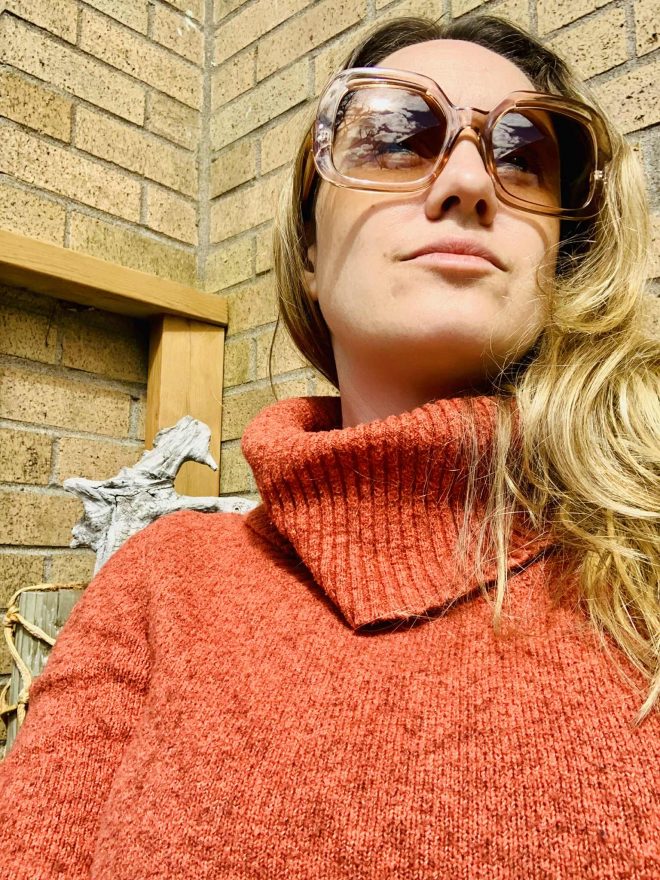
Jeanna Cammarano is best known for wielding a great many pens, some of which happen to create stories. She writes short speculative fiction often about witches or ghosts, or witchy ghosts, among other things. She’s also an assistant editor for Flash Fiction Online and in a past life made video games.
You can find her work in the video game Wildstar, and other games. Her is fiction linked at wordrat on Bluesky.
Jeanna lives in Nova Scotia, Canada with her family, and when she’s not writing or editing, she homeschools a wild child who may or may not be a forest creature.
Social Media links:
https://bsky.app/profile/wordrat.bsky.social
Divya Kernan

Divya Kernan (she/her) is a biracial and neurodivergent speculative fiction writer, a French native and an alumna of the Short Story Incubator at GrubStreet, Boston. Her short story “Carmilla, or, the Making of a Girl” published in Baffling Magazine was featured on Reactor Must Read list. You can find her on Bluesky: @divyakernan.bsky.social.
Thea Liu

Jordan Shiveley
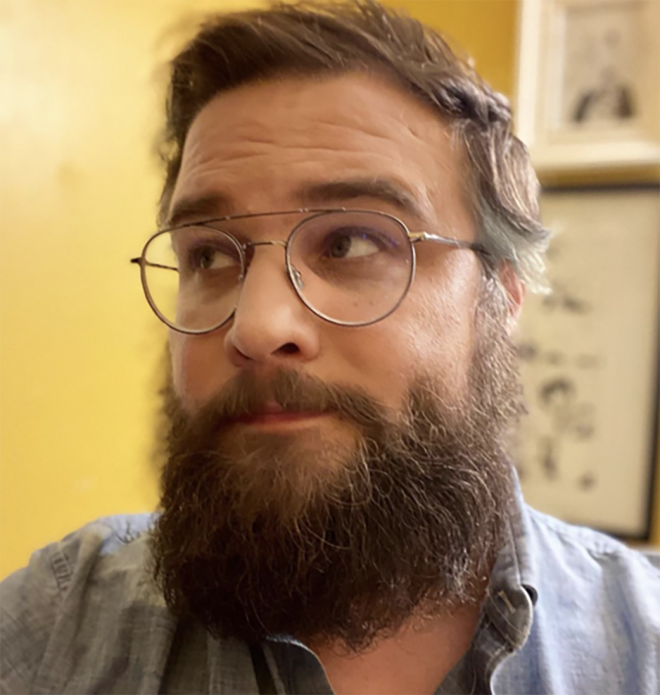
Jordan Shiveley is the author of the novel Hot Singles In Your Area which was unfortunately published by the embezzling thieves at Unbound. Their work has also been seen in a variety of short fiction venues such as The Best Horror of the Year Vol. 15, Nightmare Magazine, Voidjunk, Baffling Magazine, The Crawling Moon: Queer Tales of Inescapable Dread (Neon Hemlock), and tabletop roleplaying games. The audiobook of their novel Hot Singles In Your Area is available to order now and was NOT published by the thieving embezzlers at Unbound. They live and work in Minneapolis, Minnesota. More at jordanshiveley.com
About the Narrators
Shweta Adhyam
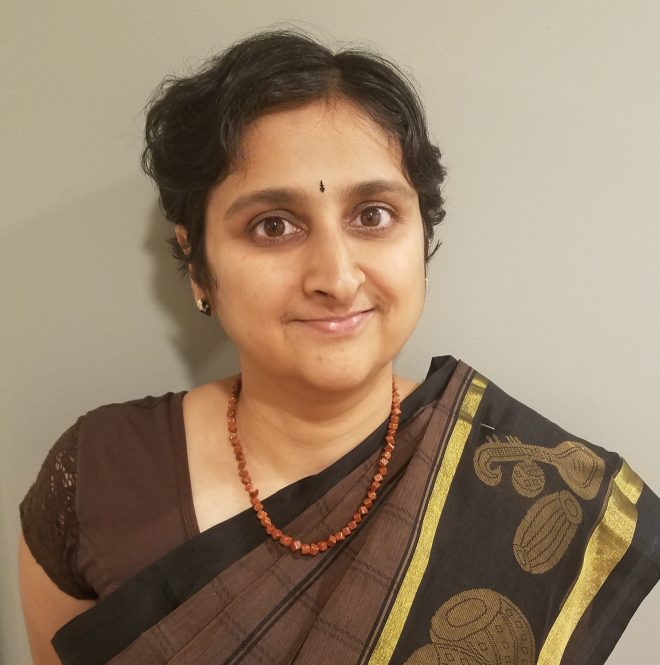
Shweta belongs to Madras, and Seattle, and speculative fiction. She speaks five languages, has had four careers, is three layers of immigrant, calls two cities home, and believes escapism is of the first importance. She is frenemies with ADHD, knows far more about Hindu mythology than is good for her, and attended Clarion West in 2017. She lives with her spouse and child.
Rebecca Wei Hsieh

Rebecca Wei Hsieh (she/her) is a Taiwanese American actor, writer, translator, and sensitivity reader based in NYC. Having grown up across several continents, her work focuses on the interplay between Asia and the Asian diaspora, gender, queerness, and mental illness, and has been featured in outlets like We Need Diverse Books, Wear Your Voice Magazine, Book Riot, and The Dot and Line. She has a BA in theatre and Italian studies from Wesleyan University, and you can find her attempts to use her liberal arts degree at rwhsieh.com
Premee Mohamed

Premee Mohamed is an Indo-Caribbean scientist and spec fic writer based in Canada. Her work has been published by Mythic Delirium, Pseudopod, Nightmare Magazine, and others. She can be found on Twitter at @premeesaurus.
Scott Campbell

Scott Campbell searches for challenges that will increase his skills for the battles to come. The slush pile underneath PseudoPod Towers is a worthy opponent. Scott started as an associate editor at PseudoPod in 2016, he become Web Wrangler in 2021, and ascended to Assistant Editor in 2022. He is an invaluable resource for not only his assistance with reviewing stories but also helping to build all the blog posts and ensuring our website and bios are up to date.
He also writes, directs, and performs for the queer (in every sense of the word) cabaret The Mickee Faust Club. He also write far too infrequently at the official online home of the Sleep Deprivation Institute (and pop culture website) Needcoffee.com. He lives in Florida with absolutely no pets.
