

PseudoPod 1032: Flash on the Borderlands LXXVIII (78): Terraeque urbesque recedant
Show Notes
From the author: “Othertongue” began as a pastiche of H.P. Lovecraft’s “The Colour Out of Space,” provoked by real political rhetoric about languages from across the American borders. As it developed, it found its own voice and purpose, growing into its own version of the Weird. I wrote this story in March 2024, and sadly, it has seemed only to get more timely and relevant as the year progressed.
“We didn’t cross the border, the border crossed us.”
Jacob Street
by L. Marie Wood
“Again?”
“Every damn time,” Kate said, running a hand through her hair.
“Aren’t there supposed to be satellites checking the routes all day long? There’s like 30 of them in space, right?”
Kate shook her head because she didn’t know and didn’t care. All she knew was that every time they drove to Jacob Street or anywhere near it, the GPS dropped them right into the bay. It didn’t matter if it was one of those old, clunky box type GPS systems that people used to mount on their dashboards, the touchscreen ones that came with higher-end cars, or an app on a smartphone.
“You’d think we’d know the way by now,” Glenn said under his breath but loud enough for Kate to catch his words on the wind. And they should have. They’d travelled the same route at least four times in the past six years from the same starting point. They did the same things when they went on that route too: started later than expected, both of them procrastinating without meaning to; stopped for breakfast at some roadside dive, always saying they would try someplace new when they got in the car but ending up at the same hazy windowed joint; stopped for flowers and one of those green metal vases with the narwal-like point to dig into the ground… and ended up looking at the little icon for their car lying at the bottom of the bay.
“You’d think,” Kate said and knew she didn’t have to say it, but did anyway, because he didn’t have to say it either but he did. When he said it, it sounded like something… something she didn’t like. ‘We’ sounded a lot like ‘you’ and she didn’t care for it at all. She also didn’t care for the haughtiness of his tone, the condescension. It reeked of accusation, chastisement. Blame.
No, she didn’t like the way it sounded at all.
When she said it, she meant all of those things and more.
They knew the way – somewhere deep down inside, both of them did. They knew the way as much as they knew that the GPS would plop them at the bottom of the bay, driving along some unseen road in the deep. It wasn’t forgetfulness… it was denial. They didn’t want to know the way – who would ever want to commit that to memory? She would just as soon never see that place again. She could feel its fingers reaching for the back of her neck even from home.
They knew the way but they put the address into the GPS anyway. Called the address up from memory too, their fingers typing it in without either of them even thinking about it – like it was buried int their minds, part of them… indelible. But that was all right. It had to be.
“I don’t think there are that many satellites up there,” Kate said, following up her snippy comeback with something less in-your-face. “Even for the US, that sounds like a lot.”
“Yeah, but you’d think they’d have fixed it by now, even if there aren’t as many as I said. If there was only one up there, you’d think it would have figured out there’s no road there – that it’s just the fucking bay, don’t you think?”
Shrill. He got to shrill a lot faster this time, Kate thought and shuddered.
“We’ve been coming out here for-” Glenn started but hesitated because he didn’t want to say it, didn’t want to tally up the years and make it real.
“I know how long we’ve been coming here,” Kate said, cutting in and saving them both the pain.
“It’s just ridiculous, that’s all,” Glenn said, allowing himself to be backed off the ledge.
“Technology,” Kate replied offhandedly and she knew that was the right thing to say at that very moment; it was the thing that would make it a drive instead of a trek.
Streets patterned out on a grid curving around the water before looping over themselves, stretching, reaching, leading to somewhere else. But their car wasn’t on any of them. It was there, in the middle of the green space on the screen. Kate imagined it was blinking, beeping even, like submarines do in the movies. A watery grave for us, then, is that what this means? Kate couldn’t help but think. Every year it calls louder, draws closer?
“Fuck it, we’re not going,” Glenn said but Kate didn’t really hear it. She was too busy thinking about an underground city below the surface of the bay, some sunken town where people used to live, walk the streets, talk to neighbors. Someplace where people could sit outside their restaurants and watch the world above the surface of the water, shimmering and colorful in the light of day and ablaze with lights dotting the water at night, like stars in the sky. They were laughing down there, holding up a drink in toast as she and her brother danced along the edge, nearer, ever closer as time moved on.
The old man waved from the side of the road, his half gloves grimed with something sticky. The plaid shirt, pulled tight against the heap of rags he wore, was tattered and dirty just like it was the year before and the year before that, his nose blinking red.
On.
Off.
On.
Off.
“Maybe it’s a sign that we shouldn’t go there anymore, that’s it’s not real anymore. That none of it is.” Glenn was talking and Kate heard him. He was talking about what was real and what wasn’t, what they should do and what they shouldn’t, and all the while she could feel it, knew it was happening, could feel it dislodging things inside her, making loose what was once stuck firmly and she wondered how long it would take before he felt it too, before his tongue flew up from the bottom of his mouth to impale itself on his teeth, before the brackish water pooled in his throat.
“Yeah?” Kate asked only her voice didn’t sound like her, not anymore, not ever again because that person wasn’t there anymore, that person’s feet didn’t touch the ground because the ground had been gone for centuries. She laughed and wondered who was making so much noise. Glenn turned to her, his face aglow from the beacon lighting up the deep, red blinking that showed the passage of time in beat with his heart, X marks the spot, the din that only color can bring. She laughed and he screamed and then laughed and then cried. She told him it was enough, that he could shut up, could shut his fucking mouth finally and look at the light, look at the beacon, hear its insistent beep. And when he turned his face to it and became one with the street where he lived, the street that had been his home for many days and many nights, centuries, thousands of years when they used marble to pave the road and gold to gilt the street signs, when his face was home and his teeth pushed up into his head, she noticed something. For the first time since they were kids and he had fallen out of a tree, his leg twisted and bent beneath him so that his back was curved like a snake, and his head had landed next to hers, so close to hers that he almost broke her more, almost made her face kiss the dirt beneath the stone that had split her head open, dust to dust… For the first time since the blood dropped like tears to make wine, the red light blinked at the back of his throat again, just as it had then, lazily, but sure.
On.
Off.
On.
Off.
You are here.
Everyone Drinks at Sunrise
by Rio Lombana (previously known as SC Mills)
Alicia sits cross-legged on the yurt’s hardwood floor, her feet numb from a nightlong vigil in this circle of aging hippies. Next to her, the shaman taps away at a handpan, accompanied by waffling flutes and fuzzy, choked drums through a cheap speaker. Daisy-chained golden Amancay flowers crown his head. A stained mason jar filled with dark liquid sits before him, emitting a sickly rotten-molasses smell. Depredadora—Peru’s newest chemical-spiritual guide, finally available to those lucky few foreigners like Alicia who can afford retreat centers such as this one.
The shaman will abstain, but everyone else drinks at sunrise. Any minute now. Surely. Alicia can just spy the outlines of cinchona trees through the yurt’s lattice walls, their black fingers clawing a graying sky. She checks the time on her phone yet again: 5:44 a.m. Soon.
The shaman glares at her. He clears his throat.
She clicks off the too-bright screen and rolls her eyes. Depredadora is supposed to grant visions of ancient gods, make you one with nature. Whatever. She’s down for any kind of spiritual journey, as long as it gets her high. Preferably, in a way she’s never tried before.
The handpan mercifully halts, leaving only the tinny wail of the background music. A headache pounds behind Alicia’s eyes, began by the repetitive hippie music, then worsened by the neighboring man’s overpowering yet ineffective patchouli deodorant. He fishes out a handful of mint leaves from an NPR-branded tote bag. “A chaser,” he whispers to her.
The shaman paces the circle, offering the chunky purplish potion to each bedraggled new-ager. At last, his dirt-caked feet, edges yellowed with calluses, halt before Alicia.
She throws the plant medicine back, eager to ascend—or descend—to any plane it commands. It tastes like the sweet slime on expired kale, decaying in the crisper. Her stomach curdles but doesn’t rebel. She’s had worse. She’s tried everything.
She scans over her body, feeling nothing at first. This better not be some bullshit homeopathy. She’s been fooled by “traditional” medicine before. Just last weekend—
Agonized screams cut above the low-fi flutes, jolting her out of her reflections.
Across the room, a man’s skin cracks and peels off in curling pale strips—papery birchbark, exposing bone and moving sinew. A wailing woman grips his shredded arm, her fingers elongating into grasping tendrils and choking vines.
Panic twines around Alicia’s chest and squeezes. No hallucination has ever been so vivid. She can’t just be seeing things. But she must be—she must.
“Depredadora and her meal.” The shaman cackles, his eyes empty, like knots in a hollowed-out Andean oak. “Which is which now?”
“The plants are screaming!” Half-chewed mint leaves tumble from patchouli-man’s mouth. “We’re hurting them!” He digs his fingers into and around his ears. Sap-like blood, sticky and translucent, oozes from his jagged nails.
Alicia recoils, gagging, trying to retch up the poison. Too late. Searing pain shoots along her spine and scours down her arms, lifting welts that harden to hooked thorns. She writhes on the floorboards, thrashing, ripping off strips of her own skin. High-pitched screams—no, chittering—rises above the music. From her own mouth, from others, from the forest, even from the mint. Inhuman, yet familiar. Like it’s always been there, everywhere, whispering below hearing.
“No respect,” the shaman scoffs. His rough fingers grip Alicia’s jaw, forcing her to look east.
The sun lifts above the horizon—a burnt-orange ember, the end of a cigarette. She stares, captivated. Her retinas smolder. Her skin hungers.
Alicia crawls toward the sun, away from the shaman’s satisfied laughter. She tumbles over the edge of the yurt to the forest floor. Blessed wet dirt, her home, soothes her flesh and silences her mind. Her chittering fades. Blisters swell and pop with final ecstatic release as her roots sprout and burrow into the earth.
Othertongue
by Rajiv Moté
We gazed fearfully into the crater in the Las Americas parking lot, near the San Ysidro Port of Entry. Well, I wasn’t there, but like thousands of others, I watched the videos online. Plumes of hissing smoke curled like grabby fingers. A voice whispered inside the hiss. Goosebumps–even on a phone screen. A speech therapist analyzed the footage and found plosives, continuants, fricatives, trills, taps… “Phonemes.” The building blocks of speech–but with no speaker.
Nobody could identify the language. I can tell you it was rhythmically seductive: shaping the mouth to utter those exotic syllables brought the pleasure of a bite of forbidden fruit. Aggressive growls squeezing through a constricted throat, breathy whispers fluttering among lips and tongue, the clicking of teeth. It felt dirty. Of course youths and “freethinkers” gobbled it up. A punk band used it in a song called “Aphasia”–an underground hit, I’m told.
More serious minds were less cavalier. Investigators found nothing in that crater. Worse, the disembodied whispers, lurking in white noise, spread. Rantings in traffic’s roar, chantings in the air conditioning. I heard mutterings in my shower.
The Diocese of San Diego opened an investigation into the voice’s angelic or diabolical origins, but the news show pundits pointed to the nearby border and did the math. It was a foreign language, and without authorized entry, an illegal one. Maddog In the Morning understood denotation and connotation, calling it an alien language. “Not our mother-tongue, but the Othertongue.”
Youths and globalists aside, Othertongue made us feel helpless, displaced, even nihilistic. We couldn’t follow it or reply. It disregarded us. There was an unknowable, ubiquitous discourse we could never join. We felt old, irrelevant, and foreign in our own country.
America had weathered invasions: militants and migrants, drugs and disease, cybercrime and superstorms–and other economic, cultural, and political intrusions aimed at terrifying, fragmenting, and diminishing us. We’d passed laws to protect ourselves–upheld by sympathetic courts. Now that Othertongue’s psychological harm was clinically documented, the border closed, sometimes with the literal clang of steel.
We debated the right balance of openness and national identity, as we often did. Was America a mosaic, melting pot, or stasis? We needed a pause, to understand what was going on.
The President addressed the nation. “We have languages coming into our country, we have nobody who even speaks those languages. They’re truly foreign languages, nobody speaks them.”
Congress approved funds. Eminent domain was exercised. Barbed wire outlined compounds in the desert.
Meanwhile written Othertongue materialized. We saw it in unreadable graffiti in underpasses. We drove by billboards with shapes whose angles and planes seemed to endlessly unfold as we passed. I saw indecipherable ads in the local arts & entertainment rag, scattered among the Missed Connections. It was obviously writing: varied, repeating sequences, deliberately arranged. Amateur and professional code breakers used everything from letter substitutions to statistical frequency models, to no avail. We couldn’t know if the written Othertongue even represented the spoken one.
Alien writing was more alarming than alien speech, however strange and sourceless. Writing is an intent to communicate (what?) to someone (not us) in the future (when?). It was mockery, a threat, or an indecipherable plan, brazenly hiding in plain sight.
A Szechuan restaurant everyone loved for its authentic cuisine suddenly featured Othertongue on its menu, under the Chinese and English descriptions of each item. We wondered, if Othertongue infected the physical menu, couldn’t it infect the food? The restaurant was forced to close.
The Linguistics department at Princeton University wanted a copy of the menu, claiming it could be a Rosetta Stone for cracking Othertongue, assuming the writing referred to the dishes. But government agents were ahead of them, incinerating every last menu, along with the restaurant itself.
Infected books joined the fires. Internet representations were dynamically firewalled.
Of course we debated. The optics were terrible.
But experts understood that this was an invasion, even if the mechanism remained mysterious. Cable news explained it: language is a vector for ideas. We’d already debunked the “marketplace of ideas,” where good ones rise and bad ones fail. Persuasiveness determines victory, and persuasion takes many forms. Nobody knew the persuasive powers of Othertongue, nor what ideas it was trying to implant.
We knew that Othertongue was viral, if not why some were susceptible and others resistant. In addition to appearing from nowhere, now people–especially youths and intellectual elites–spread it in slang and poetry, scrawled it on skateboards and syllabi, tattooed it into their flesh. Abstract art? Occult communication? Symptoms of disease? Experts say language shapes perception. With documented effects on mental health, and “openness” rhetoric turning distinctly Anti-American, how much was caused by Othertongue? What ways could it be shaping America without us noticing? One thing was obvious: a viral, comprehensible language could be even more persuasively virulent than an incomprehensible one. Some things, once known, can’t be unknown. Translation was outlawed.
Freedom of speech is enshrined in the Constitution, but Princeton University vs. the United States ruled that freedom of language is not. The High Court confirmed what pundits said all along: Othertongue was illegal. Barracks and reeducation facilities were erected in fenced compounds across America. Neurolinguistic deprogrammers were recruited and trained.
We debated. Free societies debate–may the best ideas win. America divided between they who embraced Othertongue, rolling it in their mouths like their favorite sins, and we who resisted. But like the public service announcements said, the price of freedom is vigilance. If we saw signs of infection–in language, fashion, cuisine, art, or ideas–we needed to speak up.
It was only a matter of time. Inevitably, the Others themselves began to appear. Shadowy figures, glimpsed only in the corner of the eye. We wanted to dismiss them as pareidolia, but by now we knew better. The more we forced ourselves to look, the more clearly we saw them. Dusky strangers, unknown to the communities they haunted, lurked on street corners and down the darkened alleyways and viaducts where normal people didn’t go, whispered incomprehensible words we’d once hoped was just the susurrus of the blood pounding in our ears.
They gathered, proliferated, and began to gain substance. Permanence. They didn’t vanish when you blinked. Sometimes they turned to meet your stare, white eyes in dark faces that shaped themselves in the semblance of humanity. Their lips pulled back to bare teeth, gleaming white in the gloom.
Science explained that to gain substance, these Others needed sustenance. Protein. Meat. Where were they finding their meals? What were they eating? We all had our theories. You start to wonder where all the honking geese went. You start to notice the posters for missing pets. You start to count the news stories of missing children, or the elderly who had wandered off and vanished. We all had questions. “Correlation does not imply causation,” but do those ten-dollar words even mean anything? Can you trust the people who use them?
We wrung our hands, we argued about what to do, and the Others fed and became more and more like humans. They walked among us, passed as us, and many of us didn’t look twice. It’s insidious, the things you get used to. How quickly the unnatural becomes the everyday.
Thankfully we live in a republic, not a democracy. We choose representatives whose job is to step in when we become complacent. We live in a society of laws, and if they need the occasional dusting off, we choose people to do that. People who recognize an invasion, who understand when we are at war.
The footage was disturbing. The Others, looking all too much like human men, women, and children, restrained for their own safety (and ours), screaming in incomprehensible tongues as they were taken away. Disturbing, but still a relief. After so many failures to preserve America for Americans, we’d finally acted.
Debate continues, forever. It’s the price of freedom. Some say if an enemy intended to divide us to be conquered, they couldn’t have done a better job. I recognize the tricks that reframe victory as defeat. I reject them. Our very minds, like our borders, are under attack. The only thing to do is close them.
Six Best Things to Do in Dim (and/or Lost) Carcosa
by Rich Larson
1) Hit the Beach!
The desolate shores of Lake Hali smell of rot and memory; its black waters are webbed with hagfish slime, but you won’t find softer sand anywhere! The secret? Powdered children’s bones, accreted slowly over deathly eons!
2) Explore the Old Town!
A tightening spiral of stone ruins where human senses fail and space-time cannibalizes itself, Carcosa’s charming Old Town is not, was not, and will not be to be missed. Make sure to take a selfie with the Writhing Penitent!
3) Try to Spot the King in Yellow!
Let’s be real: you’d never even heard of Carcosa until you got your hands on last summer’s hottest read. If you go gaga for royal weddings or The Crown, you’ll adore the Desecrated Palace, where a certain tatter-robed celebrity can occasionally be seen gliding across the bile-splattered floors.
4) Day Trip to Alar!
Carcosa’s less-flashy sister city, Alar, is still worth a day trip – even though nobody knows where it is. Follow the foul indices of the Unmoored Moon, maybe?
5) Watch the Suns Set!
If Double Rainbow Guy were still around, he would flip for this view: two suns sinking beneath the gloaming waves? Yes, please! There’s no better way to finish off a day in Carcosa than by kicking back to watch all natural light abandon this place, replaced by the sickly glow of abominable, ether-birthed constellations.
6) Succumb to the Emptiness at the Core of All Things!
Technically, you can do this anywhere…but in Carcosa, it just hits different. Trust us!
Host Commentary
The line that rings me like a bell here is ‘They didn’t want to know the way.’ I think a lot about the idea of conscious ignorance. It’s a powerful coping mechanism, the ability to survive by refusing to admit you have to survive. It’s like portioning a part of yourself off, and leaving that to acknowledge the trauma while the rest smiles and chats and does all those normal person things we’re expected to do. Travelling here not as a means of escape but to a ‘normal’ we are told doesn’t belong to us but somehow we’re still expected to participate in, even under sufferance. Especially under sufferance.
Wood does a fantastic job of layering that horror in here. The literal and metaphorical micro-aggression of the satnav directing them into the ocean. The resonant poetics of the final image, of the flashing light. Tracking. Marking differences. Marking targets. Marking prey.
The NPR tote bag made me laugh so hard. Liberal guilt, it turns out, is delicious. Especially here, where Mills mixes liberal guilt and liberal racism and asks us to throw them back without so much of a mixer. But the most powerful element here, for me at any rate, is not that. It’s the complex, blood on your tongue tang of watching people suffer the consequences of their actions, who are rather closer to your world view than you’d want them to be. People who travel the world, and the geography of human cognition not to understand themselves better but to get some good photos for the ‘gram. Performative participation as fortifications against the emptiness inside and the idea of being open minded on the out. Fortifications built on quicksand.
Rajiv says:
‘ “Othertongue” began as a pastiche of H.P. Lovecraft’s “The Colour Out of Space,” provoked by real political rhetoric about languages from across the American borders. As it developed, it found its own voice and purpose, growing into its own version of the Weird. I wrote this story in March 2024, and sadly, it has seemed only to get more timely and relevant as the year progressed.’
This is an incredible story. The way the perception of Othertongue flips turns the ground into quicksand under us in the same way as Mills does in the previous story. Horror, as Friedkin said, is seeing something approach. Horror, as we like to say here repeatedly, is a lot more than that and here Mote whispers that something terrible might be in the room and whispers closer that the something terrible might be us. Incredible, mercury-fast storytelling. Grant Mazzie and Sydney Briar would love this one.
Because sometimes, as Steve Buscemi once said, you need to embrace the horror! Or perhaps the horror will embrace you. I love the seaside jollity of this one as well as the nagging sense that perhaps Carcosa is, well, awful obviously but if you’re heading there perhaps, just perhaps, where you came from is worse. Any port in a storm. Sometimes, even, this one.
About the Authors
Rio Lombana
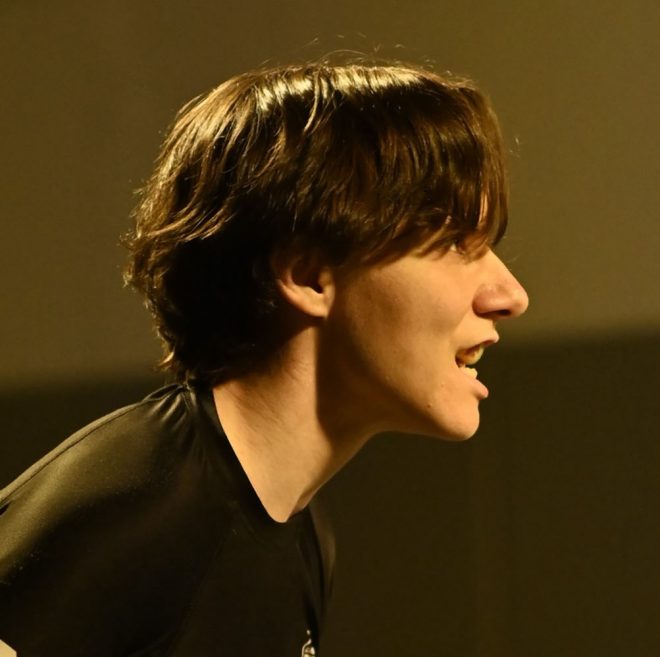
Rio Lombana (previously known as SC Mills) writes speculative fiction from Seattle, where they like to hike in the dry season and train martial arts while it rains. Raised in the Carolinas in the Southern Baptist church, they are the apostate eldest daughter of a Panamanian-American mother and a white American father. Their stories are published or forthcoming in Escape Pod, Adventitious, Small Wonders, and elsewhere. They’re a Viable Paradise graduate and NYC Midnight winner. Find them at riolombana.com.
Rajiv Moté
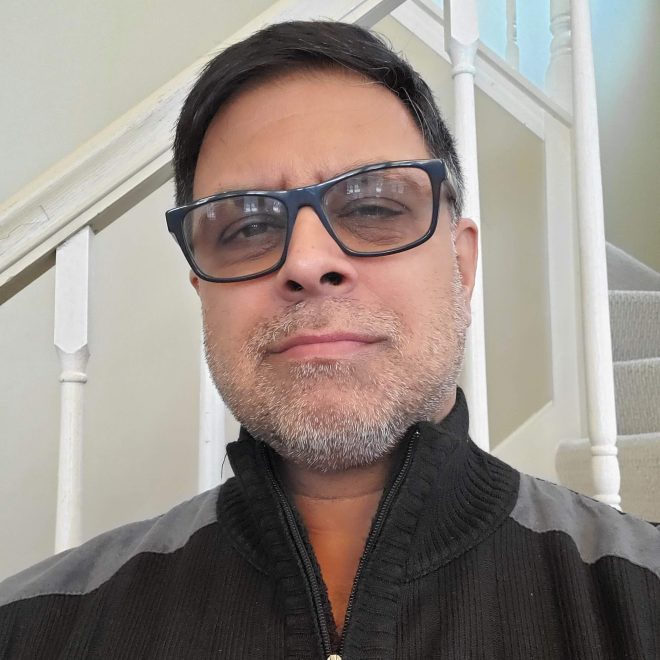
Rajiv Moté is a software professional and writer living in Chicago with his wife, daughter, and a tiny dog. His stories can be found in Cast of Wonders, Escape Pod, Diabolical Plots, and other publications.
Rich Larson
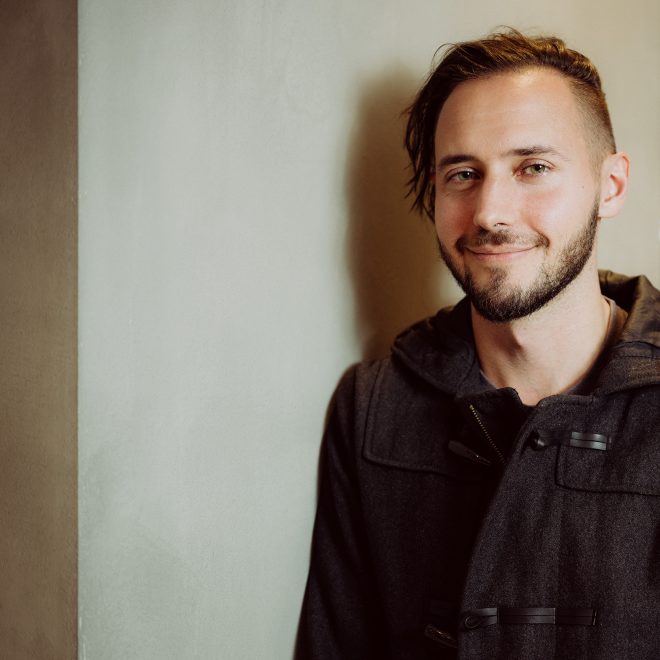
Rich Larson was born in Niger, has lived in Spain and Czech Republic, and is currently based in Canada. He is the author of the novels Annex and Ymir, as well as collections Tomorrow Factory and The Sky Didn’t Load Today and Other Glitches. His fiction has been translated into over a dozen languages, among them Polish, French, Romanian and Japanese, and adapted into an Emmy-winning episode of LOVE DEATH + ROBOTS.
L. Marie Wood

L. Marie Wood is a dark fiction author, screenwriter, and poet with novels in the psychological horror, mystery, and dark romance genres. She won the Golden Stake Award for her novel The Promise Keeper. She is a recipient of the MICO Award and has won Best Horror, Best Action, Best Afrofuturism/Horror/Sci-Fi, and Best Short Screenplay awards in both national and international film festivals. Wood’s short fiction has been published in groundbreaking works, including the Bram Stoker Award Finalist anthology, Sycorax’s Daughters and Slay: Stories of the Vampire Noire. She is also part of the 2022 Bookfest Book Award winning poetry anthology, Under Her Skin. Her academic writing has been published by Nightmare Magazine and in the cross-curricular text, Conjuring Worlds: An Afrofuturist Textbook. Wood is the founder of the Speculative Fiction Academy, an English and Creative Writing professor, a horror scholar with a PhD in Creative Writing and an MFA in Speculative Fiction, and a frequent contributor to the conversation around the evolution of genre fiction. Learn more about L. Marie Wood at www.lmariewood.com.
About the Narrators
Rae Lundberg
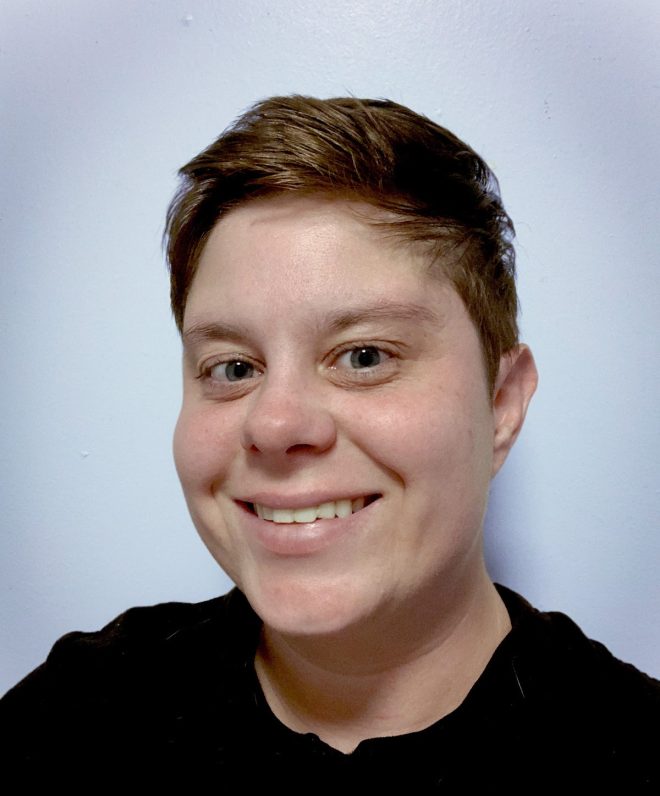
Rae Lundberg is a writer and voice actor from Kentucky. In addition to co-writing and acting for The Night Post, Rae is also the showrunner and sound designer. Their writing and sound design work can be heard in Nine to Midnight and KILL FM, and they have lent their voice to dozens of audio drama podcasts. A former English teacher, copy editor, and freelance journalist, Rae holds an MFA in Creative Writing and works in patent licensing for a university. They live in the SF Bay Area with their wife, two cats, and overflowing shelves of queer books. You can find more of their work at HeyRaeVA.carrd.co.
Find Rae on Bluesky: @heyraeva.bsky.social
Pine Gonzalez
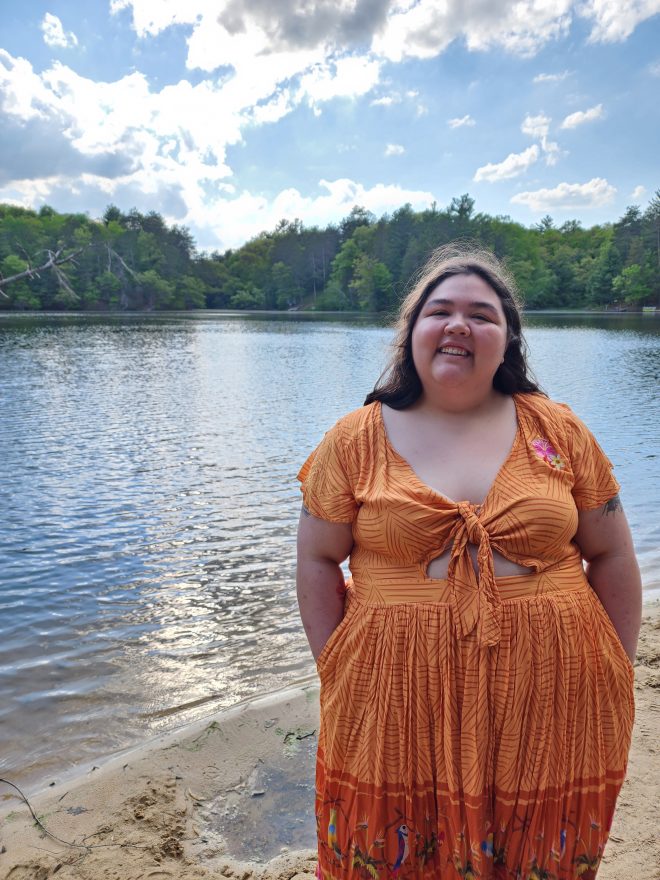
Pine Gonzalez is a queer, Chinese American/Puerto Rican writer and voice actor from the Chicagoland area. Their writing ranges from romance to fantasy with a focus on telling queer stories. They currently have two completed audiodramas– Tales from the Fringes of Reality and Forged Bonds– and can be heard in shows like WOE.BEGONE, The Grotto, and Fresh Meat. You can learn more about their work by visiting their website pinetreepods.com.
Alexis Goble
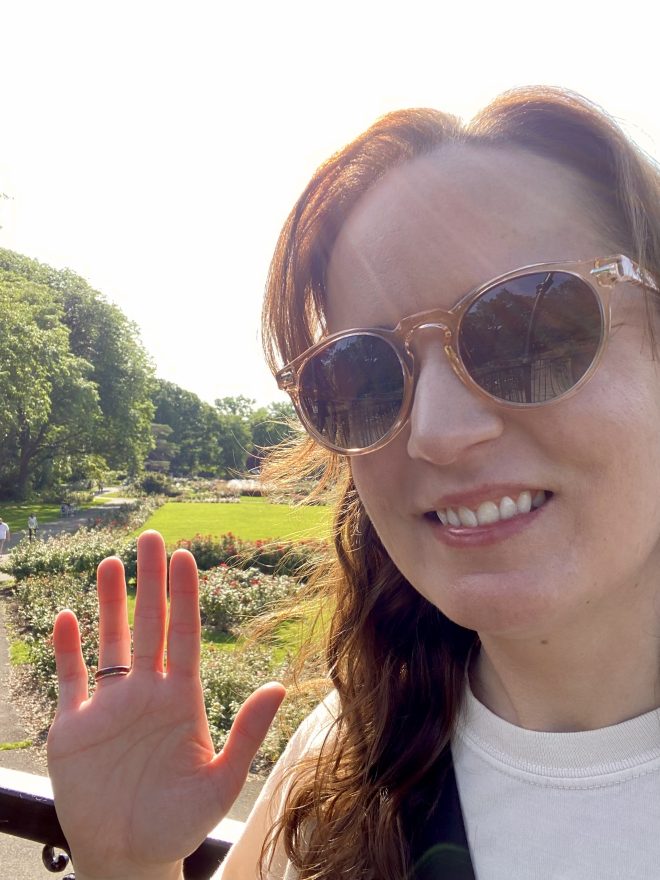
Alexis Goble is a multiclass human living with her husband in Cincinnati. When she isn’t setting diamonds or soldering glass, she dabbles in a revolving menu of hobbies and art projects. To list them all would be sheer madness.
Kyle Akers
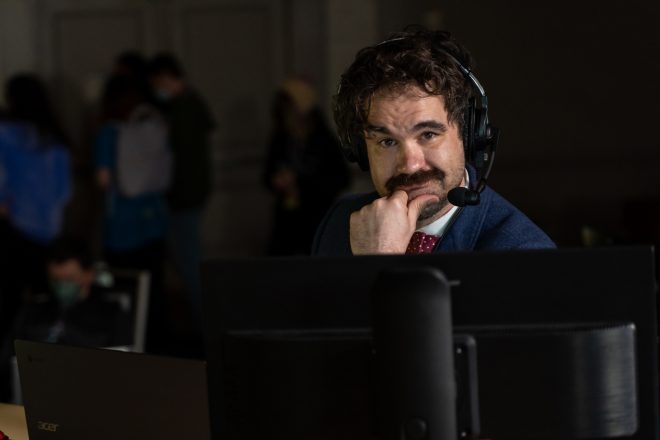
Meet Kyle Akers, a versatile talent from Kansas City, Missouri, who’s worn many hats throughout his journey. His journey has seen him take on various roles, from touring the nation as a musician with the electro-pop band Antennas Up, gaining recognition through television placements, to becoming a respected voice actor featured on The NoSleep Podcast, Pseudopod, Audiobooks, and more.
Recently, Kyle embraced a new role as a full-time ICU nurse. On top of that, he serves as a Host Volunteer Co-Coordinator for Games Done Quick, where he actively contributes to their charitable mission. Kyle’s life story is a fascinating blend of music, storytelling, healthcare, and philanthropy, all wrapped up in one unique individual.
