

PseudoPod 936: Flash on the Borderlands LXXI: A Gibbet of Flesh
“Down the dark decades of your pain, this will seem like a memory of heaven.”
Every Part of You
by Lyndsey Croal
First, I remove your eyes, then place the spider eggs in your skull, nestled safely in the empty sockets. Your eyes were so beautiful before, but now they’re dark, hollow. It doesn’t take long for the spiders to hatch within, then escape and cluster along the edges of your jaw, creating an ever-moving smile. As they grow, they creep across your pale thin face and weave silk across your cheekbones, making them full again. The spiders wait, hungry, as the flies that buzz around your body are caught, their sacs forming dimples under your cheeks. Soon there are many, filling the cavities and spaces between your features. Long, thin legs stretch out from your eyes, winking and blinking in a strange rhythm. I gaze into them for a long time, remembering how yours used to look at me. The way they never faltered when I spoke, or how they narrowed when you knew I was talking nonsense but didn’t let on in any other way. The way they didn’t shed a tear when we first got the diagnosis, and how they looked to me instead to check if I was okay, even when you were the one who was dying.
As spiders crawl up and down your throat, I think of the way your mouth whispered words so carefully, how almost everything you said was tender, had meaning. Now your voice is a gentle thrum, the scurry of a thousand legs.
I replace your lungs with caterpillars, resting snug in your broken ribs. They slither between leftover muscle and sinew and feed on the leaves I place in your chest cavity. When they’ve had their fill, I watch them burrow and begin their metamorphosis, form chrysalises where your lungs once were, dozens of them immobilized. I think of how I waited by your side for so long as you slept, how I couldn’t move in case I missed you taking your last breath.
When the moths finally emerge, they flutter between your rib cage, whirring as if you are breathing once more. And I can imagine your breath on my neck, the smell of coffee and honey, the way you inhaled so sharply just after you asked me to marry you and only let it go when I replied. How in that moment of held breath, I could hear your heart beating so fast. And all I wanted to do was to tell you not to worry, that of course, of course, the answer was yes. Because I wanted to be with you, always.
Above the moths, I release a swarm of bees and they buzz in your chest, form honey structures around your once-beating heart. Their wings hum in rhythm with my own pulse and I listen to it for a long time, remembering how yours used to race whenever we kissed, danced, lay together, laughed. The way that in your final days I would lie with my head on your chest just to hear it still beating.
The worms I drop in the soil in your abdomen. They squirm within and I remember how you used to say that the stomach is the way to the heart, and so I take care feeding them. Just like I did for you, carefully, in those last days. Soon, they’re fat and wriggling, so alive that I have almost forgotten that there are only bones and rotting flesh beneath. For you are coming together again, my love, dissected and recomposed with the worms, spiders, moths, and bees—more whole every day. More alive every day.
I let loose an army of ants up your arms and legs, and they march from your toes to your femur, fingertips to shoulder blades, forming nests along the crevices of your joints. They are so packed together it looks like your muscles are coming back, and that soon you might stand up strong and take my hand and lift me in your arms once again, and we’d dance and dance like we did on our wedding day, at ceilidhs, or even in our kitchen on quiet evenings when it was just the two of us, until our bodies ached with the thrill of the movement.
There are ladybirds living where your freckles once marked your body, clinging to your carapace, bringing color to your paleness. I used to map your freckles, from top to bottom, and I knew them like they were constellations in the sky—each one unique to you. You were always beautiful, and so you remain, even if you have a new rhythm now, of moving freckles like satellites dancing between stars.
I look now at the wings of the moth, the antennae of the ants, the fangs of the spiders, the spots of the ladybirds, the markings of the bees—all things of perfect symmetry. They are like you and I, you see. Two parts of a whole. Synchronised. Balanced.
You once said you could not live without me. How selfish of you to think I could do the same without you.
When we are done, I lie beside you, take your hand in mine. The insects crawl from you to me—spiders in my hair and ladybirds in my throat. Finally, we are together once more, and I can feel your moth-wing breath, your ant-march touch, the bee-buzz beat of your heart. Oh, how I have missed you, my love, every part.
To Be Human
By Hannah Greer
The doctor’s fingers worm through my insides, peeling back flesh and patting at the blood with a sponge as he searches for what he wants. I lay still, a chill seeping through the thin paper that separates my skin from the metal table. It’s cheaper to keep me awake during the collection, so they do. They say I don’t feel pain, anyway. That the part that connects pain and feeling doesn’t exist in me. Still, I feel when the doctor probes and cuts my pumping, beating parts away. They make a wet sound when he sets them in a metal pan beside my hip.
“Any weekend plans?” I ask. The doctor doesn’t acknowledge my game. He doesn’t like to pretend I’m human. He prefers when I lie still like the dolls he trained with at school. The dolls are very realistic, they say. It’s basically the real thing. Until I pretend to be human, then it is not.
No one likes to pretend I’m human, except the doctor who taught me how to play back when I was small and my organs were only good spares for children. He liked to play until the day he told me we were going somewhere only humans went, somewhere better than where we were. I never found out if there was such a place. We didn’t make it out of the lab and I never saw the doctor again.
When I step onto the train, heads turn. First my way, then anywhere except for me. They whisper behind their masks to each other and trickle out of the car. People like the idea of free-range organs in concept only.
My organs slosh as I sit, small as they regrow. By next month, they’ll be full-sized again. Next month, I’ll return to the doctor and he’ll take them out again to put in someone else. Someone who is human. They will feel pain when my spares replace theirs.
Two people do not leave. A woman who doesn’t look up from her tablet and a little girl with a plastic mask over her nose connected to a humming tank. I peer at the little girl and she stares at her shoes.
“What’s wrong with you?” I say it like a human would, measuring each beat.
The mother doesn’t look up as she snaps, “Isn’t it obvious?” I wait. I wouldn’t have asked if it was. “Her lungs are failing.”
Lots of lungs are failing. There’s something in the air, they say. “Can’t she get spare lungs?” The doctors have lots of spare lungs. My last pair went to a wealthy 152-year-old woman.
The woman’s voice trembles. “Not all of us can afford it.” Her gaze drifts from the tablet to her daughter. The way she looks at her…
I wish someone would look at me like that.
“I can give her lungs,” I blurt.
The woman’s gaze shoots up. “What?” She sees my eyes, stained gold to mark me a spare. She looks away, pale.
“I can give her lungs,” I repeat. If it would make her look at me like she looks at her daughter, I would do anything.
Two weeks before my next collection, when my lungs are child-sized, I meet the woman at an old, rundown clinic. There is a sign that says we should not be here. I expect something to happen when we ignore it, but nothing does.
The doctor who meets us is not like the doctors I’m used to. He is old and bald and wrinkled and must have gone through many spares.
He speaks to the woman and doesn’t look at me. He is not so different from my doctors, after all.
“I need at least double,” he tells the woman.
“This is what we agreed on! I found the lungs; you do the surgery.”
He shakes his head. “This isn’t the same as finding a set on the black market. It’s much riskier to use their spares directly, without permission.”
The woman’s eyes water, her hand white around the little girl’s. “I don’t have more.”
The man turns away. I speak up. “You can have my liver as compensation.”
It’s enough.
I sit on a chair in the hallway running a finger over the seam in my chest while the doctor puts my lungs into the little girl. The woman paces. She bites at her fingers. Eventually, the doctor comes out. He says the transfer went well and the little girl will live.
The woman sobs and hugs him around the neck. He pushes her off with a grumble and she turns to me.
“Thank you.” She walks over, hesitant. “I can never repay you for what you’ve done.”
“I know,” I say.
Finally, she drags her eyes to mine. She looks at me like I have done something special and unexpected. It is not the look she gives her daughter, but it is more than I’ve ever received. “They won’t take it out on you, will they? I know this is against their rules. Will you be okay?”
The doctors will not be happy when they cut into me and find my lungs small and new. If I lie, they will think I’m defective. If I don’t, they will lock me up. Neither is a pleasant outcome for a spare.
I don’t tell the woman. Humans do not tell the truth, so neither do I. “Yes,” I say. She smiles. I smile back.
I like pretending to be human.
Taproot
by S.L. Harris
The root had cut Stan’s hands treacherously. There were gloves in the garage, but some stubborn thing made him continue barehanded. No one at home to tell him different now. He braced his feet against the soil and pulled again.
Continents of sweat spread across the back of his shirt. He gasped and pulled again, and thought he felt a budge, but whether in the root or his spine he couldn’t tell. He sat down, wondering just when his body had grown old. He could just cut it back, like he’d done a half-dozen times a year for the last decade. The creak of the shears, the snap, and all visible trace of the weed gone, at least for a while.
Christ, but at a certain point you have to just take care of it, don’t you? At a certain point you have to clear it out for good and all. He wiped the sweat across his face, stinging his eyes and leaving a crackling field of dirty salt. Then he bent to work again. With a little spade he dug out a cone of soil around the root, pried with a dandelion weeder, and pulled again. Down here the thick root was pale as a corpse, with little hairs standing out.
He pulled and twisted. The root bent obligingly side to side, but wouldn’t give up an inch of its hold in the soil. He dug his little pit deeper, until the sides of it started to fall in around his ankles. He groaned and sat back, contemplated abandoning the whole project, but the afternoon, the evening sprawled formless before him. Better this than the house now so unfamiliar in its emptiness.
All the meaningless things to be done swam through his head, all the lonely hours to do them. He felt the creaking cordwood of stacked-up regrets start to sway, and he knew his danger.
He gritted his teeth and bent again to the root. He hacked at the surrounding earth with his spade. He dug the little pit deeper and wider, swallowing more of what remained of the little neglected garden. He snarled and pulled. Layers of skin sanded off his hands.
There’s tools in the garage. Just get what you need.
Stan bent his head and pulled until everything felt like it would break. The few flowers clinging desperately to life were trampled as he circled the root, widened the hole, fell back. Finally there was a crack and a cave-in. The soil loosened its grip a little. The root came up a few inches.
With it came a human hand.
Stan leapt back with a yell. The hand was same color as the root and clenched tightly around it. Whatever might be beyond the wrist was still hidden in the earth. He exhaled. There’s roots that look funny. Everyone knows that. Just took me by surprise, that’s all. No wonder, with everything going on, the mood I’m in. Just a weird little root.
It looked exactly like a hand.
He wanted to leave it, but he surveyed the wreck of the garden, thought of the wreck of the house. These things had to be done. Hadn’t that been the problem? Always giving up? Always thwarted by stupid little things? A funny little shape in a root and you leave? That how it’s going to be?
He touched the hand tentatively with the toe of his shoe. It didn’t move. He poked it with the little dandelion digger. It gave like flesh. He swallowed and grabbed the root again, well above the hand. He pulled.
The soil shook like quicksand. The root came up a little more, and the hand along with it. It was attached to an arm. Stan jumped back and closed his eyes, his head throbbing. Go back inside. Leave it.
But the house seemed far away, the little pit he had made impossibly high. He tried to pry the fingers off the root with the dandelion weeder. They would not give. He gulped down bile and touched the fingers with his own. The flesh was warmed already, maybe, by the hot sun.
He pulled at the index finger, but the grip was like iron.
“Come on. Let go.”
He pulled at the root again and the dirt gave up an arm, just to the elbow.
Get up. Call the police. Hello, yes, I was gardening and found something. I think it’s a body. He would give his address. The reasonableness of the world would return. There would be other people. Asking questions, being surprised. How it should be, a thing like this. It would be alright. He could begin picking everything up. He would get his life in order. It would be a strange and horrible memory, but it just a memory, in a life that went on. The strange and horrible thing would fade into a scar and then a shadow and at last only a whisper. He would go back to the world.
He bent down and pulled with every piece of his body now. He felt something falling apart. He twisted at the root. He tried moving the earth from where he thought the head would be, wanting but not wanting to see. Who was it? Would there be decay? How did he deserve this? Why was he here alone? Where were the people he was supposed to have with him?
He grunted, shuddered, his muscles quivering, all the hair on his body standing on end, and at last there it was, shaken and sucked out of the earth. A body whole, its grip fast upon the root. And there was the face. His face, only calm, at peace. He felt sick and tender, disgusted and afraid. Of this thing, for this thing.
He lay down in the wrecked garden. He was aware of trampled stems and dry marigold petal-seeds driven like little nails into the soil, of little roots passing everywhere around. The sky was hollow blue, bleached white on the edge of vision. Nothing stirred amidst the desolation. He still held the root tight in one hand. The other did, too. Inverse figures on a playing card.
At last, one of the figures rose. The other remained on his back, every part of the face composed, at rest, eyes open on the limitless sky. Every muscle was at ease, except for the fingers that gripped the root like those of a drowning man on the last trailing rope. As the earth fell in a loose rush around the still form, there was a muffled whimper through lips filling with soil, and then under the abominable weight of earth the lids closed on the figure of the other retreating to the empty house in the light of the dying day.
Host Commentary
PseudoPod, Episode 936 for August 30th 2024
Flash on the Borderlands LXXI (71): A Gibbet of Flesh
This week’s stories:
Every Part of You by Lyndsey Croal narrated by Lindz McLeod
To Be Human by Hannah Greer narrated by Kitty Sarkozy
Taproot by S.L. Harris narrated by Elie Hirschman
Hosted by Alasdair Stuart with audio by Chelsea Davis
Hey everyone, hope you’re all doing okay. I’m Alasdair, your host and this week’s stories are the 71st collection of Flash fiction we’ve published. The theme this time is body horror, and the sub quote I’ve been given ties that most gristly and grizzly of concepts to the emotional and psychological.
“Down the dark decades of your pain, this will seem like a memory of heaven.”
Our first story this week is Every Part of You by Lyndsey Croal. Every Part of You was first published in OOZE: Little Bursts of Body Horror, edited by Ruth Anna Evans, in March 2023 and was also included in Hexagon Magazine’s The Year’s Best Arthropod Short Fiction, Volume 1.
Lyndsey Croal is a Scottish author of strange and speculative fiction, with work published or forthcoming in several magazines and anthologies, including with The Deadlands, Weird Tales Magazine, Apex, and Flash Fiction Online. She’s a Scottish Book Trust New Writers Awardee, British Fantasy Award Finalist, former Hawthornden Fellow, and a Ladies of Horror Fiction Writers Grant Recipient. Her debut novelette “Have You Decided on Your Question” was published in April 2023 with Shortwave Publishing. Find more of her work via www.lyndseycroal.co.uk.
We’ll put her socials in the show notes as ever.
ENDCAP
So hold tight, because the truth is, that’s all we can do.
The desire not to let go is one I understand viscerally,. I came to realize a couple of months ago that my deep-seated sense of justice, something which has in the past, locked me in place on issues which others have been able to walk away from, is an indicator of possible presence on the ADHD spectrum. I mentioned this to a dear friend, who may be listening and her first response was to whittle a convincing shocked face and say ‘Whaaaaat?’ and her second was to point out that a bigger clue is my large collection of transformers.
Refusing to make eye contact with the one foot tall one currently holding my headphones and alarm clock, I instead turn to the idea of being able to let go as something healthy. I’ve been actively practicing this for a while now and I can tell it’s working because it sucks and I hate it. We want, more than anything, for things to stay the same once they get good. We note, rightly, that they never get there quickly enough or stay long enough. We look at the dwindling flame of stability and consider what we can throw on it to keep it burning. A lot of us, a lot of the time, will throw ourselves on there.
We burn but we don’t die. Much as some of us may want to.
All it will do is hurt more.
Don’t hurt more.
Let them go, knowing the person they helped you become, the shape they leave, will be with you forever.
Next up we have To Be Human by Hannah Greer. It’s Hannah’s first pro sale! It’s a PseudoPod original! We’re so glad to have them aboard, especially as this story is read for you by the incomparable Kitty Sarkozy. Kitty Sarkozy is a speculative fiction writer, actor and robot girlfriend. Kitty is an alumnus of Superstars Writing Seminar , a member of the Apex Writers Group, and the Horror Writer’s Association. Several large cats allow her to live with them in Marietta, GA, and she enjoys tending the extensive gardens, where she hides the bodies. For a list of her publications, acting credits or to engage her services on your next project go to kittysarkozy.com.
Deep breaths, smile wide, don’t make eye contact with the Doctor. Because you know the truth.
Selflessness turns the cutting edge toward you if you’re not careful. I’m the child of a teacher and a nurse. I’m the partner of a lawyer. I considered the Priesthood when I was a teenager. I didn’t know who I was. Only that I was an unholy mix of too big and too clever, visible everywhere, but fitting in nowhere. Hammering a shape for myself in the world felt like anathema. Finding a line of best fit was my only choice, it felt, for a long time.
I was wrong.
The act of will it took to realize that, to make my life the shape I wanted it to be and, crucially, to do so without hurting myself or others, is one of the hardest things I’ve ever done. I’ll let you know when it’s finished but right now it’s going well.
I don’t have a line for you to walk, I don’t have a metric that helps. Society only functions when we all pitch in and we never, ever all pitch in. The only person who knows the right level of engagement for you is you, and that level will change hour, day, week and month by month.
But this doesn’t: You deserve to be here. We’re glad you’re here. We need your help just like you need our’s. No one who exploits you is your friend, your ally or to be trusted. And sometimes, kindness is an act of rebellion.
Our final story for you this week is Taproot by S.L. Harris. S.L. Harris is a writer, educator, and sometime archaeologist who can be found digging in gardens, libraries, tea cabinets, and ancient houses. Originally from Appalachia, he currently lives in the Midwest with his wife, two children, and many books. This is a PseudoPod original and is narrated for you by Elie Hirschman. Elie Hirschman always wanted to be a voice actor, growing up watching He-man, ThunderCats and Voltron. After recording several e-Learning, scientific and marketing projects, Elie discovered the world of audio podcasts, working with such groups as Darker Projects and Dream Realm Productions. Together with fellow actor David Ault, he started Cool Fool Productions, where they dramatize bad audio scripts with questionable results. He’s currently still active in all EA podcasts (except CatsCast) and also appears semi-regularly on the Nosleep Podcast. He doodles constantly but never saves the drawings, and likes to paint with his kids, although the amount of paint they are willing to waste drives him batty.
So dig deep.
Deeper.
The truth is down there.
The pat response here is that grief is transformative. It is. The shitty thing about truisms is the truth. But the real truth, the real horror, the real hope is all the same. That everything is transformative. All the time.
I’m not even just talking about biology. We change constantly, across every axis, endlessly rewriting the idea of ourselves based on conscious and subconscious external and internal stimuli. The core idea, if we’re lucky and work hard at it, always stays what we want it to be but everything else? The dice never stop rolling. The dice never stop blowing up. We never stop moving. Not even after death.
The protagonist of the first story refuses to accept that. The protagonist of this one accepts it, he’s just running from it. The horror of being in a space that used to be occupied is one we all feel, and while it never goes away it becomes something we see around not through. A lens not a patch, if you like.
But the thing I love about this story is that the horrible certainty the main character is running from is itself ambiguous. Read one way, this is a grieving spouse keeping themselves busy. Read another it’s a murderer facing an unusually arboreal form of justice. Read a third way this is a metaphor for renewal. Read a fourth, it’s the start of something truly horrific. All of them true, all of them transformative, all of them valid. The truth is, we get to pick. The truth is, we always have.
Amazing work, thanks to all.
Onto the subject of subscribing and support: PseudoPod is funded by you, our listeners, and we’re formally a non-profit. One-time donations are gratefully received and much appreciated, but what really makes a difference is subscribing. A $5 monthly Patreon donation gives us more than just money; it gives us stability, reliability, dependability and a well-maintained tower from which to operate, and trust us, you want that as much as we do.
If you can, please go to pseudopod.org and sign up by clicking on “feed the pod”. If you have any questions about how to support EA and ways to give, please reach out to us at donations@escapeartists.net.
If you can’t afford to support us financially, then please consider leaving reviews of our episodes, or generally talking about them on whichever form of social media you… can’t stay away from this week. We now have a Bluesky account and we’d love to see you there: find us at @pseudopod.org. If you like merch, you can also support us by buying hoodies, t-shirts and other bits and pieces from the Escape Artists Voidmerch store. The link is in various places, including our pinned tweet.
PseudoPod is part of the Escape Artists Foundation, a 501(c)(3) non-profit, and this episode is distributed under the Creative Commons Attribution-NonCommercial-NoDerivatives 4.0 International license. Download and listen to the episode on any device you like, but don’t change it or sell it. Theme music is by permission of Anders Manga.
Next week we have Sea Curse by Robert E. Howard read by the amazing Tiernan Douieb and with audio production by Chelsea and hosting by me. We’ll see you then. And finally, PseudoPod wants you to remember the words of one of the world’s most wanted fictional criminals:
“There is nothing that can take the pain away. But eventually, you will find a way to live with it. There will be nightmares. And everyday when you wake up, it will be the first thing you think about. Until one day, it will be the second thing.”
See you soon, folks, take care, stay safe.
About the Authors
S.L. Harris
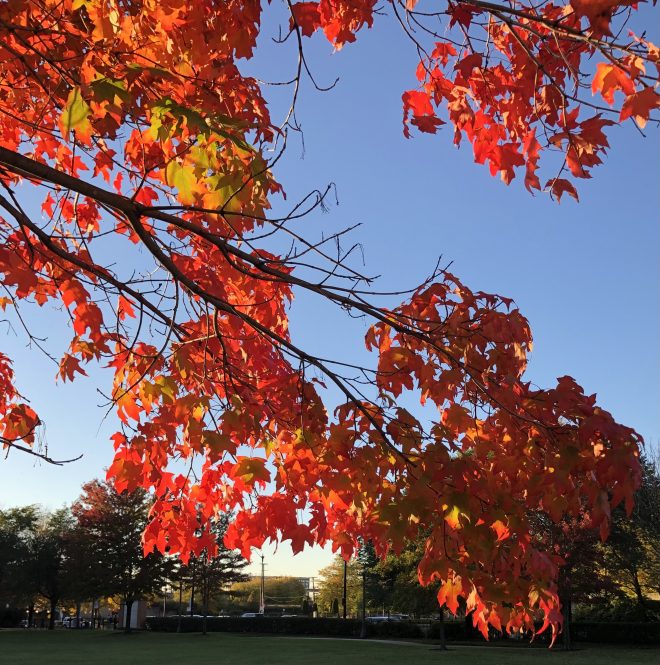
S.L. Harris is a writer, educator, and sometime archaeologist who can be found digging in gardens, libraries, tea cabinets, and ancient houses. Originally from Appalachia, he currently lives in the Midwest with his wife, two children, and many books.
Hannah Greer
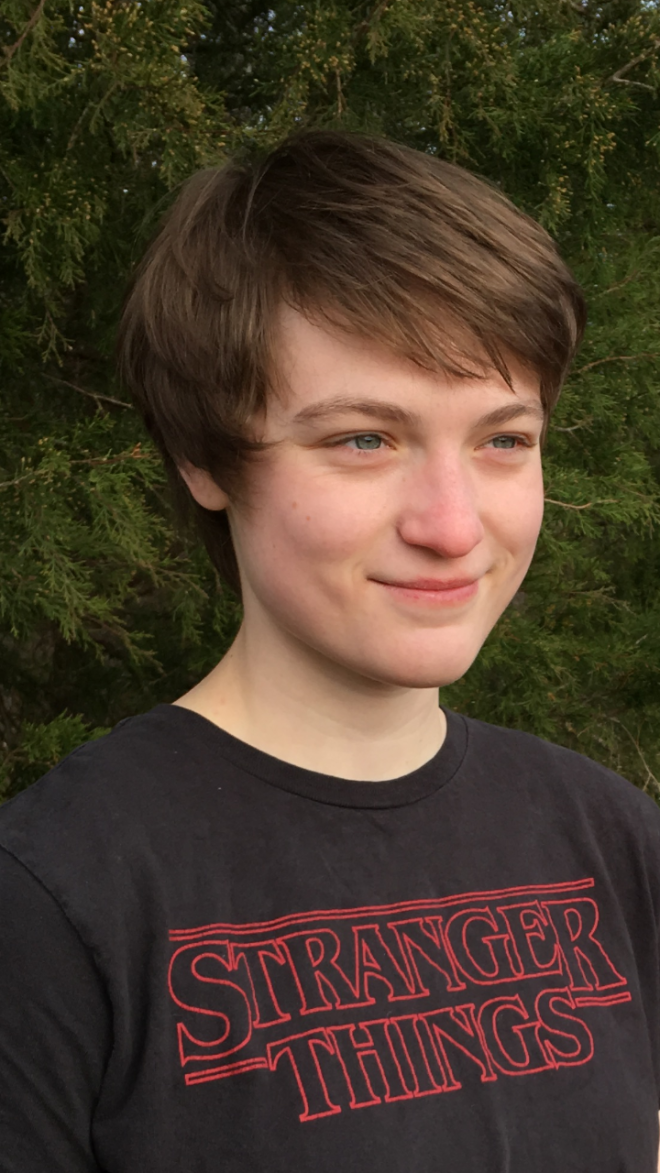
Hannah Greer’s work has appeared or is forthcoming in MetaStellar, The Dread Machine, and Radon Journal. She is a first reader for Fusion Fragment, hoards books, and competes in combat sports. She resides in North Carolina with her partner, a trio of cats, and a small flock of pigeons. Find her on Bluesky @hannahgreer.bsky.social or on her website, hannahgreer.carrd.co
Lyndsey Croal
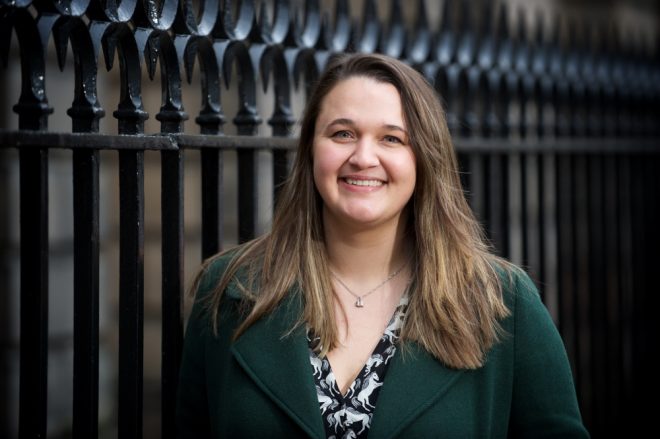
Lyndsey is a Scottish author of strange and speculative fiction, with work published or forthcoming in several magazines and anthologies, including with The Deadlands, Weird Tales Magazine, Apex, and Flash Fiction Online. She’s a Scottish Book Trust New Writers Awardee, British Fantasy Award Finalist, former Hawthornden Fellow, and a Ladies of Horror Fiction Writers Grant Recipient. Her debut novelette “Have You Decided on Your Question” was published in April 2023 with Shortwave Publishing. Find more of her work via www.lyndseycroal.co.uk.
About the Narrators
Lindz McLeod

Lindz McLeod is a queer, working-class, Scottish writer and editor who dabbles in the surreal. Her prose has been published by Apex, Catapult, Pseudopod, The Razor, and many more. Her work includes the short story collection TURDUCKEN (Bear Creek Press, 2022) and her debut novel BEAST (Brigids Gate Press, 2023). She is a full member of the SFWA, and can be found on twitter @lindzmcleod or her website www.lindzmcleod.co.uk
Kitty Sarkozy

Kitty Sarkozy is a speculative fiction writer, actor and robot girlfriend. She is an alumnus of Superstars Writing Seminar, and a member of the Apex Writers Group and the Horror Writers Association. Several large cats allow her to live with them in Marietta, Georgia, and she enjoys tending the extensive gardens, where she hides the bodies. For a list of her publications, acting credits, or to engage her services on your next project go to kittysarkozy.com.
Elie Hirschman

“Elie Hirschman always wanted to be a voice actor, growing up watching He-man, ThunderCats and Voltron. After recording several e-Learning videos, scientific articles and commercial narration gigs, Elie discovered the world of audio drama and sci-fi podcasts, working with such groups as Darker Projects and Dream Realm Productions. 20 years and over 30 EA Podcast appearances later, still no guest spot on any of the He-man reboots, but who knows what’ll happen in the next 20 years?”
