

PseudoPod 1059: The Last Sunset
Show Notes
- Creature Feature Classics #2: Creatures of the Night
- Snake Bite Books
- Blood types
- UK blood donation
- News article: HarperCollins staff ‘had to protect themselves’
From the author: “I’ve always been intrigued with blood type. I’m an AB+, which means I’m a universal recipient of anyone else’s blood, which is pretty lucky and personally I feel is the reason why mosquitos love me, but there are other blood types which are not so lucky. I originally wrote a short, fun, dare I say it sexy story that played along with this theme around four years ago, but ‘The Last Sunset’ was a rewrite of that idea along a more serious angle with fully fleshed out characters. I hope you enjoy my story…”
The Last Sunset
By Anne Wilkins
Red leaks out of the rips in the sky and pinks are slashed in a pretty pollution haze. It’s dusk, my favourite time.
George is asleep. His head is at an awkward angle, slumped forward onto his seatbelt. A thin stream of saliva runs down his chin and soft snores fill our motorhome.
“We’re here,” I say, and I run my hand along his leg. Over his blue spider-like veins, along the liver spots, and across paper-thin skin. I love it all because all of it is him.
He wakes with a start, his eyes dark, furtive, fearful.
Before he remembers.
“We’re here?” he repeats, like he’s forgotten already. His voice shakes.
“Fancy a swim?”
His head nods enthusiastically, child-like. At times like these, it’s so easy to remember how he used to be.
“No running away this time, okay?”
“I didn’t mean to. I just forgot…” his voice fades and his eyes have that distant look again. At the last motorhome park, it was close. Too close. Him wandering away like that, not remembering who he was. I got him back in the end, holding his hand while people watched on — but for a moment, I felt my world collapsing.
“I love you,” I say, and my heart burns with the words. He is my everything.
“Love you too.”
“Stay close this time.”
He nods, and I take the key from my pocket and unlock the chains between his ankles.
We normally don’t like to be seen in public. People can be so judgmental. All they see is age. But age is only a number. It’s the type of person that you are that matters. And George and I just happen to be the same type.
I remember the first time I saw him. It was an instant attraction, as if my whole body craved him. It was at a time when I’d almost stopped searching, thinking there was no one for me, and that I might as well give up. Then I found him.
A one in a billion.
He holds my hand as we frolic in the waves together. It’s our first time here in New Zealand, and it will be his last. Even with the dementia, I think he knows it. One last road trip.
And then I have to start all over again.
“Edith!” he screams in excitement as a massive wave threatens to bowl him over. I hold his hand fiercely, not letting the wave take him from me, but knowing I can’t hold onto him forever. He’s near the edge already.
For a second we’re both under the water, but I don’t let go. I’m not ready to let go. When we emerge on the surface George’s face is alight with life. His largely toothless smile beams yellow.
But it was too close for me. Another reminder of how easily he can be taken.
“Let’s go back to the shallows. It’s safer there.”
I wish I’d taught him how to swim.
A few people on the beach are watching us, probably judging us in the fading light. Trying to guess what we are: a grandfather with his granddaughter? A carer with an elderly gentleman? A gold digger with her rich sugar daddy? I wish I could say I don’t care anymore, but a part of me still does. At least with dusk age blurs under a softer, less cruel light.
“Do you remember when we first met?” I ask as we sit in the shallows, running our hands through the ripples. I’m testing the waters of his fragmented memories, wondering how much has been taken by Alzheimer’s. Stolen. Never to be returned.
His brow furrows, he’s trying hard to concentrate. “A little… it was a place like this, wasn’t it? I think… Mexico?”
I nod, and he continues. “I remember looking up from the sand, and… seeing you there, standing over me. I thought you were an angel.”
I smile. He still remembers, and I’ll never forget.
His face goes pale, and goosebumps line his skin as more memories surface. Memories I’d rather he forget.
“You weren’t an angel, were you Edith?”
There’s a slight shiver to him. I’d like to think it’s from the water.
“C’mon George, you’re getting cold. We don’t want you to get pneumonia again, do we?”
I drag him out of the water and towel-dry him while he stands on the sand. There’s no heat in the fading sun to warm him up, only me. My hands linger over his chest. It’s a tangled grey mass where it once was dark curls, but I always loved his chest. Loved. Love. Not past tense, not yet.
A group of teenagers are gawking at us. I can hear their snorts of laughter.
“Dirty ol’ bugger,” one of them sniggers. George doesn’t hear them.
His hearing isn’t what it used to be.
His eyes aren’t what they used to be.
Neither is his mind.
“I remember…” says George, but his voice sounds lost, as if he’s still out at sea somewhere, splashing among the waves. His eyes are looking out there too, searching to find something.
“That’s good, sweetie,” I stroke his forehead and lead him gently back to our motorhome, away from judgemental eyes.
When we get there I close the curtains and lay him down on our bed. He knows what’s coming and he’s ready. It’s been too long, almost three months, but I haven’t wanted to push him. Not when he’s near the end. I take down his swim pants. My branding’s all over him. Small circular scars from where I feed.
I open my mouth wide and my proboscis sinks into his pale skin. It tastes salty, before I break the surface.
He starts to count aloud, “One… two…. three….” while his body trembles. He used to resist in the old days, before he learned obedience.
He knows I never go past a hundred. That I’ll always stop before I take too much. I’ve been tempted before, but he’s too precious to lose. There’s only one George. After it’s done my proboscis retracts to the back of my mouth.
“Good, George. Thank you.” I always thank him, out of habit or good manners. Mother always insisted it was the right thing to do.
His eyes are closed already. It always takes a lot out of him. I cover his frail body with the duvet and turn on the electric blanket for him. He’ll sleep now. His body will be busy already replenishing the lost blood. Once upon a time, the most delectable juices flowed from him, but now there’s a taint about him, like corked wine. Still, I can’t afford to waste a single drop. I lick a trail of his blood from my bottom lip
“Night, sweetheart,” I whisper, and I chain him up.
While George sleeps I explore our motorhome camp. I don’t need a torch — I can see perfectly fine in the dark — but appearances must be kept up, so I carry one with me. The campground is only half full as New Zealand is nearing the end of Summer, but there’s still the usual fanfare: the old timers; teenagers; twenty-somethings; families with kids that aren’t quite school-age yet; and the tourists. There’s a mix of caravans, old tents that have seen better days, and motor homes like the one George and I are in.
I’m about to explore the kitchen when I catch a familiar stench on the air.
Dogs can smell a hundred thousand times better than humans, and my kind even more so. The smell’s unpleasant, like the slow rot of carrion. I look behind and see a shadow, under a tree, with a lit cigarette, watching me.
“Hey stranger,” she calls.
“Hey.”
I want to move on, but pleasantries must be observed, territories determined, and victims claimed. None of it interests me, but I want no trouble.
She saunters over, all sass, with waist-length dark hair. Well-fed, like someone who can pick and choose her meals.
“Haven’t seen one of my kind for a while. You stayin’ long?” she asks.
“Just passing through.”
“What’s your type?”
“I already have one.” George.
“Well, if you want I’m hooking up with some young surfer tonight. Meetin’ him down on the beach. You’re welcome to join me for a feed. I was gonna’ toss him to the sharks later.”
She’s smiling as she’s saying this. Thinking that she’s being friendly; sharing a meal, disposing the evidence together. But she’s the kind that plays with her food, that gorges it all. Wastes it. Kills it. While I’m a fine diner, with an acquired taste. And I have to keep going back for seconds, thirds, fourths… from the same plate.
“He won’t be my type.”
“He’s everybody’s type, honey. He’s an O negative. Universal donor. Smells delicious,” she licks her lips, and I see the hint of her proboscis at the back of her mouth.
“That’s not my type.”
She looks confused, but I’m not about to enlighten her. I start walking away, back to George. She reaches out to grab me before I go, pulling my arm. I feel her claws just under the surface.
“Name’s Raven, by the way,” she says before she lets me go. “And that offer’s still open if you change your mind. You look like you could do with a decent feed.”
“Thanks.” I don’t know what else to say, so I hurry back to the motorhome trying to put as much distance as possible between myself and Raven. Telling myself I’m different. I’m better. More humane. But my body betrays me, salivating profusely at the thought of digesting the sweetness of a young surfer. Imagining the fresh blood pumping into my mouth.
“Stop it!” I say aloud.
George is still asleep when I get back. His thin legs have kicked the duvet off, and he’s now spread himself across the small bed within the constraint of his ankle chains. There’s no room for me there. His mouth hangs open, and there’s drool pooling on the pillow beside him. I can’t help myself. I’m so hungry. Hungry all the time, and like some common beggar I suck up his saliva.
It’s not the same as his blood, but it helps to hold back my hunger.
For now.
I was twenty-three when it happened. I went to Woodstock with daisies in my hair, cigarettes in my pocket, and a handmade poster: Make Love Not War.
I came back a monster.
“You smell so sweet,” the stranger had said. And he’d sucked me dry, then somehow given me life again. He didn’t know what type I was. He didn’t care. He’d been an AB positive, the kind that can take anyone else’s blood. Universal recipient. Lucky for him. He thought he was doing me a favour, giving me life again. “You’re not gonna age, babe. What you got going on now, this sweet little bod, you’re gonna keep forever. Just keep to your type.”
That was all he told me, the only advice I ever got: keep to your type.
He didn’t know I was the rarest blood type in the world.
There are only forty-three people in the world known to have my blood type. Forty-three people out of almost eight billion people. So rare they call it ‘golden blood’.
I came back home and I just remember crying. My mother didn’t understand, not at first. She offered me her blood. Even supplied it in a little bag, with a straw and everything. But it made me sick. It wasn’t my type.
I went without feeding for almost a year. It nearly killed me. But it’s amazing what mothers will do for their children. She bribed officials for me, drove me to Mexico, and helped me kidnap a little Mexican boy on the beach. He was only eight at the time. But his blood type was Rh-null, golden blood, just like mine.
I’d finally found my type.
We kept him chained up at home in our basement while I took my pint of blood every two months, with my mother right beside me. Holding him down while I fed, muffling his screams, and teaching him obedience.
All so her daughter could live, as a monster.
George, sweet, innocent George. I owe my life to him. Without his blood I would have faded away, shrivelled away to nothing. I stroke his grey locks, what’s left of them, as he sleeps. We’ve been together for fifty-three years now this August. The constant feedings have taken their toll on him. Every day he’s a little bit closer to his use-by date. But I’m not ready to let him go.
Not yet.
Not until I find his replacement.
I open one of the side compartments in our motorhome and take out a long tubed cylinder. Even when she was dying, my mother was still looking after me. Still bribing officials for whatever information she could find.
Inside is a scroll with sixteen names and addresses.
I take it out and trace my finger lovingly over each of the names that are listed there. It reads like a list from the United Nations. All my new Georges. An eight-year-old girl in Zimbabwe; a pensioner in Northern Ireland; a teenage boy in Brazil…
The list goes on.
In all the world these are the only people I can feed on. The golden ones.
But I’m not greedy. I only need one. Number thirteen on the list, a six-year-old boy in New Zealand.
Luke, he’s called, and he lives no more than five kilometres from this motorhome park.
I try out his name in my mouth, Luke. It tastes good. Like George used to.
The next day there’s reports that a surfer’s missing. Then they find his body, or what’s left of it.
Sharks, they say. I catch Raven’s eye around the camp. Her belly’s full and she wears a sated look. One I haven’t worn in years. My tummy growls in protest.
George and I return to the beach. He seems weaker today, even though I upped his dosage of iron. He sits on a plastic chair in the sand with a beanie on his head. He’s been complaining that he’s cold, even though the sun’s out. His skin’s greyer, and there’s a tremor in his hands.
“George, are you feeling alright?”
“Yes. Just a bit chilly, that’s all.”
I touch his head, and it’s like fire. Damn.
“You’re sick, George.”
“Am I?”
“You’re burning up.”
“But I feel so… cold.”
“Come on, I’m taking you back.”
We walk to the motorhome and Raven sees us.
“Is that your type then, honey?” she laughs. “Forgive me if I don’t share.”
I ignore her, holding George’s hand, leading him back.
Inside, George collapses on the bed.
“I’m so tired,” he moans.
I give him some paracetamol to bring his crazy temperature down.
“You still look like an angel, Edith.”
I smile.
“An angel of death,” he adds.
I lose my smile.
“You’re not dying George.”
“I’m not living either, Edith.” He reaches out to hold my hand. “And neither are you.”
I pull away. I can’t look at his eyes, there’s something there I don’t want to see. “I–I’m going to get some ibuprofen, from the shop. To help.” I start to reach for his chains, but he stops me.
“You don’t need to chain me. Not this time. I’m an old, sick man. I’m not going anywhere.”
He’s right. I drop the chains to the floor.
“I’ll be back soon. Just rest. Drink some water.”
“I remember…” he says, but his eyes are closed, and his voice sounds so far away.
“What do you remember, George?”
“My name. My real one. It was Diego…”
The camp shop sells everything, but it takes them forever to give me the ibuprofen.
“Could be COVID, new strain,” they warn, asking me to list the symptoms. “Here, best take a test,” and then they hunt around for one that hasn’t expired.
“And wear a mask,” they warn.
By the time I get back to the motorhome, he’s gone.
When I hear the cries from the beach I know where he is.
“I never taught him to swim,” I whisper as they bring his dead body in.
But even if I had, it wouldn’t have mattered. He would’ve offered himself freely into the waiting arms of the waves. Swallowing the water, filling himself with death. With no angel by his side.
Tears stream down my face. Ones I’m not even conscious of. Tears for sweet-tasting Diego.
It’s a couple of days later when I find Luke. My golden child. He’s playing on the beach, building sandcastles just like Diego once did. He’s built a little moat decorated with shells and bits of a dead kina. His parents are further back. The mother immersed in a newborn, the father with his eyes closed, a cap covering his face from the sharp rays of the sun.
“Hello,” I say. “What are you building?”
He looks up, all innocence. Maybe he sees me as an angel, like Diego did.
“This is my castle. And the kina is magic, it stops the monsters.”
“Does it now?”
I bend down to have a closer look at the new George. He’s bubbling with life and smells so divine that I feel light-headed. I swallow back the saliva before I drool.
The power I hold is so strong that all I need to do is hold out my hand and he will come with me. He’ll be chained, and taught obedience, and I’ll drink his blood for the rest of his life until he becomes just another George floating out in the sea. And then I’ll take another, and another…
Somewhere in my head, I hear George’s words: I’m not living either Edith. And neither are you.
The hunger is so great, but there’s something inside me that’s greater still. Something that I thought I’d lost.
“The kina you have must be very strong, I think… I think there’ll be no monsters today.”
The words pain me. It’s taken so much to get here, but I’m rewarded with a largely toothless smile, like George’s, only whiter.
“Nice to meet you, Luke.”
And I walk away. It’s not too late to be an angel.
“Wait! How’d you know my name?” he calls, but he’s distant now.
Just a blur, like dusk. Under softer, less cruel light.
Host Commentary
Our author had this to say about this story:
I’ve always been intrigued with blood type. I’m an AB+, which means I’m a universal recipient of anyone else’s blood, which is pretty lucky and personally I feel is the reason why mosquitos love me, but there are other blood types which are not so lucky. I originally wrote a short, fun, dare I say it sexy story that played along with this theme around four years ago, but ‘The Last Sunset’ was a rewrite of that idea along a more serious angle with fully fleshed out characters.
Blood. Ah, yes. It’s a subject that’s, pun probably intended, close to my heart, too. My blood type is A+, and I donated regularly right up until my first child was born. I used to joke that A+ was exactly the type of blood a teacher, as I was then, ought to have. My mother has the rarer A- version, and she used to donate too until health issues got in the way.
I haemorrhaged when my daughter was born. Unexpected, but not entirely uncommon and, fortunately, I was already in surgery, so the doctors were able to intervene quickly and prevent a tragedy. I was conscious. I remember it: that sense of something draining away. Light-headed dizziness. The kind anaesthist pumping something cold into the vein on my left arm. An almost pleasant sense of floating… while my husband held onto my right hand and tried not to sound terrifed as he begged me to stay awake.
Childbirth. It’s astonishing that we do it at all, it really is. (And also, briefly on my soapbox, don’t take chances with pregnancy. Things go wrong. You probably won’t know they’re going to go wrong until they go very, very wrong. Crunchy health influencers are idiots. Listen to your doctors.)
Anyway, after that, I was given blood transfusions. I watched the blood-filled bags labelled A+ and quietly thanked the person who’d donated that blood in exchange for a cup of tea and small packet of biscuits, and felt a little sad that I wouldn’t be allowed to do it again – in this country, once you’ve been a blood recipient, you’re no longer allowed to donate. (Another aside: funnily enough, just after I wrote this, I saw a call from the UK blood service because supplies are low and they need donors. So if you’re able, please do that. There’s a link in the show notes.)
So maybe this story hits me harder than some, because I’m in both heads. I feel George, feel that sense of drifting, floating, losing something so very fundamental but at the same time… a strange kind of peace. And also Edith, taking blood because she has to. She is grateful, isn’t she, but also guilty, because she understands. She’s a monster by circumstance, not by choice. She’s tried to limit the damage but she knows… she knows she can’t, really. She’s saving her life at the cost of someone else’s.
Given the news recently, I can’t help but think more metaphorically, too. How many people out there have been, we’ve learned, saving their own livelihoods at the cost of someone else’s violent trauma? A lot, it would appear. Edith is a fairly sympathetic character in this story, but Raven? Raven is well-fed. She has plenty. She could take less, but no, she wastes her food, leaves pain and death in her wake, and is unrepentant. I can think of a few people like that – they spend their days pretending to be thoroughly moral people while they do it, too – and perhaps even more people somewhere in between.
… But I was glad when Edith finally walked away. It will hurt her, most likely, but that’s a choice she’s finally decided to make.
Back in the real world, some people have been taking real financial hits because they’ve finally said, enough, too.
And some of them haven’t. Some of them are still feeding, knowing what that costs and either choosing not to believe it, or simply not caring.
Principles are expensive.
But if we’re not willing to pay that cost, all we end up with is a world with more monsters.
About the Author
Anne Wilkins
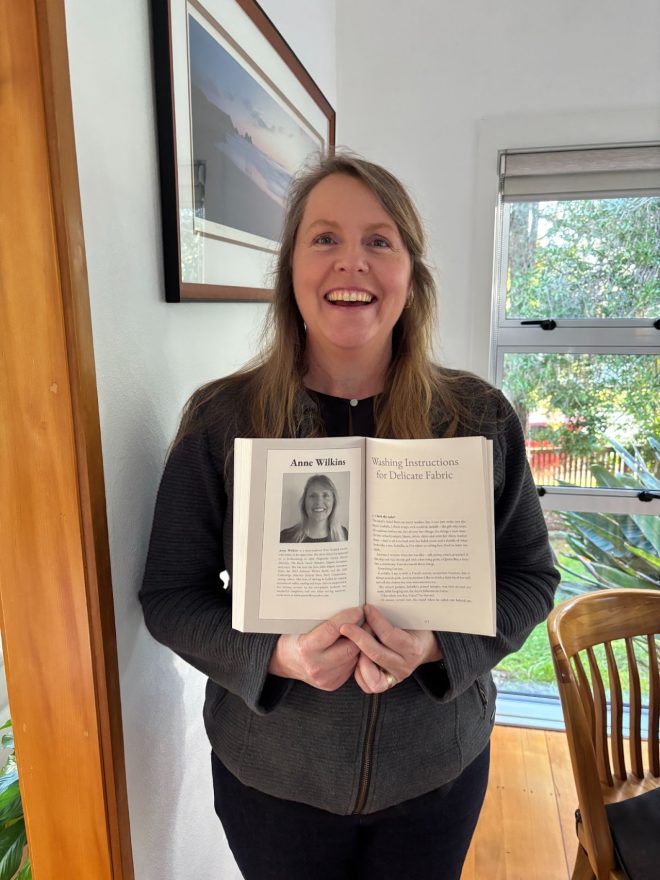
Anne Wilkins is a sleep-deprived New Zealand teacher who writes in her ever-dwindling spare time. Her short fiction has appeared in Clarkesworld, Beneath Ceaseless Skies, Apex, The Dark and elsewhere. She received the 2025 Te Pae Tawhiti Distant Horizons Award for Outstanding Short Story and has won several international and national writing competitions, including the 2024 Elegant Literature Prize, the 2023 Cambridge Autumn Festival Short Story Competition, and three Writing Battles (2023, 2025 and 2026). She was a 2026 finalist for the Sir Julius Vogel Awards for Best Short Story and Best New Talent. Her love of writing is fuelled by copious amounts of coffee, reading, and hope. When not writing she enjoys sleeping.
About the Narrator
Dani Daly
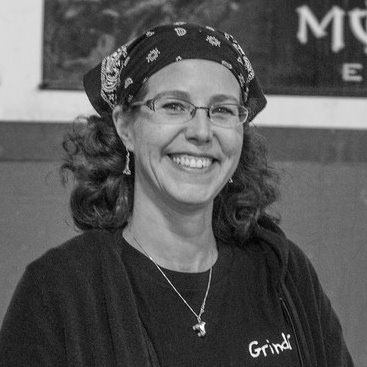
Dani Daly is a jack of many trades, master of none. But seeing as she loves the rogue life, that’s ok with her. You can hear stories she’s narrated on the first four Escape Artists podcasts, StarShipSofa, Glitte
