

PseudoPod 1053: Put Your Metal Blade to the Earth
Put Your Metal Blade to the Earth
by Maddie Logemann
There is an inherent danger in digging. Not metaphorically, rifling through the lives or possessions or hidden minds of others. Though that, too, poses a risk. It’s putting metal blades to the earth and overturning the flesh of their mother that Elias alone seems to understand the danger of. Or perhaps the others know, but keep the frights tucked back on a secluded shelf in their minds. It’s a necessity, after all, in these days where the very air seems polluted with the distinct stench of flesh becoming other. It festers into sickly white pustules or blotches violet with blood. It melts down, becomes rotten pulp to feed the magpies.
He’s seen carrion crows carrying around the eyes of the corpses. They stash them, sometimes, in the boughs of the trees. The forest never stops watching, not really, but now there is a reminder.
“Maybe a mass burial would be excusable, considering the circumstances,” one of the nuns suggests, standing in the crisp of autumn outside the church. Stained-glass and hewn stone cast her in shadow. Her fidgeting with the cross hanging around her neck betrays her unease.
She would never suggest such a thing inside holy walls, nor would the priest ever entertain it. Elias grips tighter to the worn handle of his shovel, sitting just barely in earshot on an unmarked stone. No one has the time for engraved sentiment anymore.
“Yes,” the priest says and sounds vaguely ill about it. “Our Lord will receive them all the same, if they’re worthy. It may be a sacrifice in dignity, but you would have to look very wide to find someone in these times not making some sacrifice.” It’s a paltry justification, and one that picks at Elias’s nerves. He feels the ends fraying like the edges of cut wool yarn.
The nun clasps her hands together. She doesn’t tip her head towards the sky but to the mossy earth beneath her feet. No grass grows in the shadow of the church. “We all must come together now,” she says, no doubt meaning it differently than how Elias hears it.
There’s the thump of flesh and bone colliding, thundering in his skull. They come together, one after the next, souls suffocating in the cramped ditch. Bodies, bodies, pressed closer in death than they ever were in life. Know thy neighbor, intimately. Putridly, with how their remains decay into primordial sludge that melts into your own. Become one infected, rotting thing, merged against any sane or safe will.
It’s the priest who asks it of him, a worn and wrinkled hand on his shoulder. “It’ll lighten your workload, I hope,” he says, his eyes blind against the danger. All the clearer to see the Lord. Fire shines just as bright as the sun, though, and what is man if not a tempted beast? It’s the easy way he sees, not the holy one.
“It’s not right,” Elias warns him, knuckles white around his shovel. He licks, nervously, over his lips and tastes salt and flecks of gravedirt. The ground might not shake, but it fills him with trembling trepidation all the same. That steadiness underfoot is no different than the mask the devil wears to trick good sheep into the wolf’s mouth. “I’ve dug so many graves already…”
“And I fear we aren’t through the worst of them yet. We’ll need room for at least a dozen in this burial. Perhaps more. Many in our care are only getting worse, no matter how we pray,” the priest says solemnly.
Elias’s gaze flicks to the field of fresh burials and he says nothing. Giving voice to what he knows is futile. No one wants to watch bodies, piled around with fragrant florals and herbs to hide the scent, rot like bruised fruit on the counter. No one wants to see flesh bubble and dissolve away from the skeleton.
So they dig. They make him dig.
Scratching anxiously at his wrist, exposed by a rolled-up sleeve, he nods. The tip of his shovel sinks, just slightly, into the ground.
The priest sighs a stale, relieved thing up from his chest. “God has a place for good workers like you,” he says, lips curling, and pats Elias on the back. It doesn’t buoy him the way it’s meant to.
Quietly, he suspects something very different about the end, and watches the priest walk, bowing under the weight of his burdens, back to his church. There are sick inside, more so than devout. Elias won’t set foot in that place. Not anymore.
Instead, he turns back to the field and carves a great hole, one scoop at a time.
Many are laid to rest and one is awoken.
“It’s not right,” he says and digs again and again and again.
She can hear him. She can feel him. He can feel her. She’s there now, beneath the surface of the earth and being lifted. With every shower of loose dirt he spills, with every clump of clay he wrenches up, he’s unearthing her in gruesome parts.
There’s a grip around his throat, choking, that squeezes when he digs. It squeezes harder when he stops. But more people keep dying.
“Make a bigger hole this time,” the priest says, worn and weary and gray in more ways than one. He stops trying to make it sound righteous, or even excusable. It’s no longer a way for the loyal and faithful to return from whence they came, into the open arms of their savior after life. It’s just a pit. They’re just corpses. There’s nothing honorable or glorious about it.
Shaking, Elias swallows his fear and digs bigger holes. He fills them with bodies. He fills them with dirt. He welcomes disease into the earth and burrows into something that ought not be touched.
Some days, standing at the bottom and hauling dirt out over his head, he stops and listens. He hears her swallow, a deep, muffled, guttural sound. The dread that he will not leave this hole is a terrible thing.
He goes to bed, scrubbed clean of the day’s scum, and dreams of things he should not remember in the gentle touch of morning sunlight. He wakes up cold, sweating, and mucked with gravedirt.
The shovel blade slices cleanly through the earth in places, crunches in others. Metal shrieks on stone and Elias’s ears ring with someone—something—else’s cries. They’re joyous and enraged and horrific all at once. His skull reverberates with the noise, even when he stops hefting dirt over his shoulder.
“Digging wide must be safer,” he tells the priest, later in sacrilegious moonlight. His wrists are scratched raw. He itches at the grip around his neck instead. His breath always seems to scrape thin through his throat these days. He swallows and searches in the dull glaze of the priest’s eyes. “I know you said to dig deep, I know, but it’s hurting something. It’s freeing something.”
The bodies weigh on the priest too, Elias knows. They must hide in his wardrobe, cheeks peeling away from toothy grimaces. They must hang off his shoulders, dragging him down, or loom in the dark of the corners, never allowing him to be alone.
For a long while, in the frostbitten night, the priest stands in a graveyard and says nothing at all. His lips move, but there is no sound for Elias. Only for the Lord, he presumes. A Lord who, truly, never seems to hear them.
They say it’s a punishment, this disease, the licks the sinners and witches and faithless have dodged for too long. Yet, it drags them all, even the pearliest of fleeces, down into the putrid, fetid depths. Only an iron fist punishes the clean along with the filthy souls. Elias wonders, while he waits, whether they worship the God who would cull his flock in the name of rooting out the wicked, or whether there is such a figure pulling the strings at all.
Eventually, the priest stirs from his reverie and walks to the most freshly turned earth. The burly farmer had set one big boulder at the head. One marker for everyone. The shovel still leans against that rock, a taunting, haunted thing now. It used to be a tool.
The priest skims dry, cracking fingers over the stone once, then grips the shovel’s wooden handle. “I do not see the holy light in this torment. But even so, I cannot turn my back on this church, this house of God. The people who are yet unburied.”
Elias’s heart sinks, jackrabbit nerves rising to take its place. He knows the way this goes, feels her rising already, from the depths of the pores he’ll no doubt be made to carve.
“Dig deep and narrow. Make them look like solitary graves. My church will not stand in a field uprooted. People come here for solace and protection, not a reminder of the corners we’ve cut. Do you understand?” the priest asks. He presses the shovel into Elias’s hands, fingertips cold.
Somewhere in the trees, a crow cries into the night. Somewhere in the earth, great, laborious breathing heaves.
“I understand.”
His body aches from the work, his mind from the strain. Muscles pull and push and lever and haul for the sake of the dead, for the sake of the living. Yet no movement of the body can free the frantic thing in his mind, baying, frothing, pacing round and round until ruts have worn in.
The nuns keep clear of him now, watching from their stained windows with clasped hands. Save for one, who frets over his scabbed and clotted wrists, the bloody shreds of skin peeling from his throat. He never learns her name, never asks, but she comes with the sad ends of bandages and patches them together into some mockery of protection. Elias lets her, but he does it quietly. There’s something wrong in him, dirt in his veins, and he won’t spread it with words. Won’t let the thing in the earth take hold of anyone but the gravedigger.
There’s enough rot these days. Still, he offers the nun a lone calendula bloom sprouted through the sorrow in return for everything. Her smile is soft, powdery, looks near a thing set to crumble under all this weight that never leaves the air. But it’s warm against the chill all the same.
Elias works to the wolf’s hours, when shivering cries rise to meet the moon and frost laces across the dewy grass. It’s one more foot to the end of the grave, deep enough to stack neighbor after friend after nameless traveler. He climbs makeshift steps with each mound of earth, ascending to the surface to pile it aside. Then, he descends back into the dark. Again and again and again in a dizzying monotony that somehow sharpens his senses rather than dulls them. The night is vivid even when the church seems to warp and rise higher, higher to the heavens with its loving stonework, or when his crumbling stairs hiss laughter as they stretch and distort and wobble to trip him over.
Fog gathers thick and milky across the field and spills into his grave. Elias can’t even see the ground he walks on. Yet still, he digs, choking for breath beneath the mist’s strangling grip.
The last press of his shovel squelches. It isn’t the dry crunch of pebbled ground or the laborious carve through clay or even the familiar slop of mud. Elias knows the dirt, knows the earth, and knows this is not that. His skin itches, heart bounding off without him. Fresh rivulets of blood trickle down into the hollow of his collarbones.
The concealing fog would allow to pry his fingers from the oaken handle they’re frozen around, if he wished to, none the wiser as to what he’s unearthed. To ascend the stairs to a world still untouched by the lurking depths and never return. To pray, perhaps, in the sick of the church, or leave this town on a tailwind and seek salvation somewhere infested only with the usual black rot. Or, deliriously hopeful, somewhere free even of that.
But Elias is a creature who digs, claws in the dirt. It’s all he knows, all he’s worth. And just maybe, some wretched thing, curled fetal in his chest, cries vicious for the danger he knows—he warned them, he did—to see the dripping moonlight paint its face. To prove the overlooked is there. To make it seen.
It’s dreadful, that urge.
He lifts the shovel free of the fog.
There’s no room to wish he hadn’t. The dark, pulsating pulp he excavated is part of a whole. An ancient, unknowable whole that shudders from the earth. In the earth. Is the earth. She has lungs to breathe and teeth to bite and needs only one taste of freedom to tear his grave asunder. The ground splits, rises, clumps together and melds with something else. The wet weight in Elias’s shovel lurches off to join the thing becoming.
Her breath is hot and clouds up as a fresh billow of fog erupting into the night. Elias’s breath doesn’t come at all. He shakes and stumbles back, tripping over his stairway to freedom while the churchyard fractures. Chest set to burst, it’s all he can do to turn away and clamber on all fours like a hound up the shuddering, living ground.
Panic flashes bright behind his eyes, but behind him, around him, she is brighter. Vents of fire and steam from far below open their tiny, yawning mouths. They glow like candles on her altar, beacons in the night. The last of the season’s moths answer her call, papering Elias’s skin in their heedless rush to her. He flees, scrambling, for the safety of the woods, of trees with anchoring roots that won’t let her free.
Blood pounds wild beneath his skin, leaks from his throat, and even still, he scratches deeper. Her choking grip yanks ever harder back, but he can’t yield. Behind him lies only what he can’t imagine and wouldn’t dare to. Things so other to even the horrors of the death that has plagued this town he would rather chew the rotting flesh of those he buries than risk a glimpse over his shoulder.
The ground still shudders under the canopy of the trees, rioting against its rooted prison bars. She may not have sway here, groaning and growling under his feet, but something does. Elias, sprinting for all he has, is confronted with the eyes. They sprout from the aspen bark, watching him with dark, cracked curiosity. They linger in the leaves, peering down from their homes by the feet of the carrion crows. Dead, by all measure, along with their owners—a sacrifice to the dirt. And yet also alive, blinking, rolling feverishly to get a glimpse of the man below.
Cold sweat pours down the back of Elias’s neck as the racket grows. Against the thunder of blood throbbing in his ears, and the slowly fading consumption of the churchyard, sounds the beating of wings. The crows shriek and caw and cry, voices gravel rough. He thinks he might cry with them, the ugly thing the priest calls hysteria clawing up his bones.
Still, he never stops running. Dug up dangers can’t be reburied, and he doesn’t have the gall to turn back and try.
He would have run until his legs were numb and weak, his lungs burst, his heart given out, all to escape that place. To the next town over, and the next, then places farther away than he’s ever dreamed. Yet, his footsteps slow, stop, and the crows go silent in chilling synchronicity.
Behind him, she eats the faithful, their house of God. No merciful hand reaches out to save them.
It’s the shepherd of men—the priest—who stands in the glade, halfway awash in pale moonlight. Breathless and blocking the path away from this terror.
“Look what you’ve done,” the priest rasps, haggard from the escape, yet no less hawkishly critical for it. “Look what ungodly horror you’ve unleashed upon us.”
The arguments don’t even rise to Elias’s tongue, his teeth. The endless barrage of justifications and spinning of blame round and round, as unending as the waterwheel, never even cross his mind. The priest wouldn’t listen anyhow. He speaks, preaches, and others listen. But Elias finds he can’t listen anymore. He is a creature who digs.
He digs fingers into a throat more wrinkled than his own. He tears veins and arteries loose from their caging. He shovels eyes from their sockets and offers them to the watcher of the forest and the servant crows. He digs deep, mining for courage and steel and strength, and flicks the worst of the blood from his fingers.
On his knees before his priest, Elias folds stained hands together and prays. His prayers don’t rise to the God he was spoon-fed in the pews, cast in the fractured colors of mosaic glass. They dig, instead, down to the ancient and buried and unleashed. They find the eyes of the watchful. They beckon for the lost and forgotten, those faded by time and masked beneath the light of holy upstarts.
If he needs mercy from anyone, it’s them.
Host Commentary
From a purely logistical perspective, after reading this story, I’m reminded of The Old Jewish Cemetery in Prague. I lived in Prague for a year back when I was an active software engineer, and that is one extraordinary place – both Prague (which is gorgeous) and the Cemetery (which is hard to get your head around). It contains over 12,000 tombstones stacked up to twelve layers deep, estimated to cover the remains of approximately 100,000 individuals. If you’re at all squeamish about bodies, burial and death, it is not a comfortable place.
Maddie Logemann’s story conjures some of the conversations that must have taken place about the Old Jewish Cemetery – what are we going to do with all these bodies? In Maddie’s story, it’s plague that creates the problem. But the solution creates a problem as well. Not only is Elias coerced into digging ever deeper into places unknown and unseen, there’s a very strong sense that the bodies are poisoning the Earth. And that eventually, the Earth will rise and rebel against the invasion.
Which, of course, it does. What comes up, we’re not sure, but it’s definitely something to avoid! Thank you, Maddie, for putting nightmares into words, and to Lewis for giving them a voice.
About the Author
Madeline Logemann
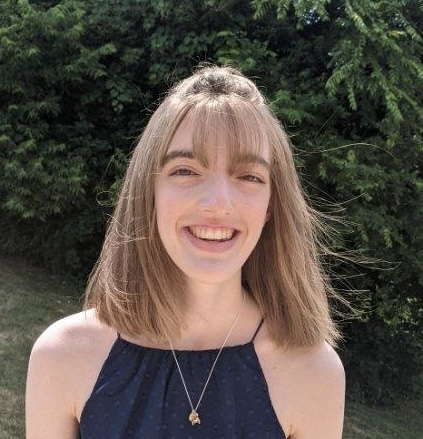
Maddie Logemann is a jeweler, pet sitter, hobby farmer, and most importantly, a writer. Her work is a little shy and often prefers to hide away in dusty documents, but can be spotted in a number of online venues, Including Elegant Literature, Crepuscular, and Globe Soup.
About the Narrator
Lewis Davies

Lewis Davies is a former actor and current history teacher. He is the host of the oldhammer fiction podcast which features readings and analysis of the fiction set in the worlds created by games workshop in the late 80s and early 90s. You can find him on social media as the oldhammer fiction podcast, as nowadays its easier to cope with social media if you are a podcast rather than a person.
