

PseudoPod 1037: Playing Tricks
Playing Tricks
By Angela Sylvaine
Dina had never seen her dad cry until the day he left. His face was puffy and wet with tears when he leaned down to kiss her cheek.
“I’ll see you soon, okay, Button?”
Dina stared at the scarred wood floor, dark curls shadowing her face. She knew he was lying, having talked to the judge about what he’d called Dina’s ‘homelife’ before he’d awarded Mom full custody.
“Just focus on getting well, Greg,” Mom said softly. She opened the front door and waited, fiddling with the frayed cuffs of her Grover Elementary PTA sweatshirt.
Outside, birds chirped, and the sun shone down on a kid riding by on his bike. Dina wondered how everything out there could be so normal when everything inside was so wrong. Their neighbor, Susan, stood at the edge of her front stoop, watching. She’d been over just about every day, comforting Mom and saying what a tough woman she was, what a good mom.
Dad shrugged into his flannel pullover, the one that felt so soft on Dina’s face when he hugged her, and walked out pulling the large, rolling suitcase they’d bought for their trip to Orlando. They never went to Disney, though. Dad had been too sick.
Her vision blurred, and she swiped at her face, reminding herself what Dad had said. She was a big girl, strong and brave enough to make it through this. But Dina didn’t feel brave, she felt scared. For her dad. For her mom. For herself. Everyone at school had seen Dad that day, watched him get dragged from her second-grade classroom.
“Do I have to go to school tomorrow?” Dina asked.
Mom crouched so they were eye to eye. “Mrs. Felton’s okay, and I already let the principal and counselor know what’s happening, to look out for you.”
Dina rubbed her stomach at the thought of all those pitying looks. Why did Mom have to tell everyone?
“I’ve got a surprise for you. Come on.”
Mom led her through the arch off the entryway into the living room, to the khaki sofa that sat against the far wall. The place they all sat watching movies on weekends, Dina in the middle as the official popcorn holder. It was just the two of them now, sitting side by side on a sofa that seemed too big. The coffee table held a beat-up, dusty shoebox.
“Go ahead, open it.”
Dina lifted the lid and peeled back a layer of brittle tissue paper to reveal a doll with auburn ringlets, pursed red lips, and wide, green eyes. She smiled, lifting the doll from the box.
“She’s beautiful.”
“Your grandma gave her to me when I was little, and now she’s yours.”
Dina tucked the doll in the crook of her arm like a baby, smoothing the white lace-edged ruffles of the emerald-colored dress.
Mom hugged her close. “Her name is Pansy, like the flower. Good to squeeze when you’re feeling sad and a great listener, too. If there’s anything you want to talk about.”
“I love her.” Dina leaned into Mom’s embrace. There were still three of them to watch movies together, after all.
Pansy perched on the corner of the desk that sat beside Dina’s twin bed. “It’s his favorite color,” she said, finishing the blue construction paper card, which she’d cut in the shape of a heart and decorated with stickers.
“Time for bed,” Mom said from the doorway.
Dina grabbed Pansy, then realized the doll was overdressed. “Can we make her some other clothes?” She looked down at her own yellow cotton nightgown, one of several she and Mom had made together. Dina even had her own sewing kit in the desk drawer.
“Sure.” Mom picked up the card. “This for Dad?”
“Yeah.” Dina crawled into bed, burrowing beneath her floral, down comforter. She tucked Pansy in beside her.
“I’ll make sure he gets it.” Mom kissed her on the forehead. “Love you.”
“Love you, too.” Dina watched Mom flip off the light switch and close the door most, but not all, of the way. Footsteps sounded on the wood floor as she walked down the hall to her bedroom.
A night-light plugged in near the door cast a triangular glow over the bed and across the wall and ceiling. The dim light left the end of the room at the foot of the bed in shadow, and Dina eyed her closet, a single door with wood slats. She hated that closet, which was the perfect place for a monster to hide.
A thump, like something heavy falling, sounded from somewhere in the house. Dina froze, waited for the sound of Dad yelling, of him stomping into her room. But nothing else happened, because he wasn’t there anymore.
“Dad isn’t bad, he’s just sick,” she whispered to Pansy. “You weren’t here then. Well, I guess you were—up in the attic, but you probably couldn’t hear.”
Her face heated at the realization she was talking to a toy, treating the doll as if she could understand. But Mom said it was okay to talk to Pansy, and Dina had no one else to tell her secrets.
“At first, he thought things were moving, being put in different places, then he swore there was a little girl screaming. He’d come in and pull me out of bed, thinking it was me—that I was being hurt.” She hugged Pansy close. “He even came to my school, screaming that he knew they were doing something to me. It was really scary. I’m sort of… glad he’s gone.”
Guilty tears stung her eyes, and she clenched them shut.
A quiet giggle sounded.
Dina gasped and opened her eyes. There wasn’t anyone in the doorway, so she stared at the closet. Could someone be hiding in there?
The giggle came again, right beside her head. From Pansy.
But that wasn’t possible. Dina stared into the doll’s unblinking, green eyes. “Pansy?”
“Diiiinaaaa,” the doll answered.
Dina yelped and shoved Pansy off the bed. She landed on the floor, propped beside the night-light. It lit up her face, made her eyes twinkle with mischief. Dina squinted at the porcelain face, her breath wheezing in and out of her lungs. Had the glass eyes moved just a little, rolling in their sockets to stare up at Dina?
She yanked her covers over her head in the universal monster protection strategy. Pansy didn’t make any more sounds and eventually, Dina fell asleep. Her dreams were filled with her father ranting about the moving things, the screaming girl, the nightmares that only he could see and hear.
Mom came in the next morning to wake Dina and stopped at the sight of Pansy on the floor.
“What’s she doing down there?” She smoothed the doll’s disheveled ringlets.
The story of the giggling, of the doll saying her name, stuck in Dina’s throat. It couldn’t be real, she had to have imagined it. “I … she fell.”
“Silly Pansy.” Mom set the doll on the desk.
Pansy didn’t laugh or talk, just stared straight ahead, lips pursed in a hint of a smile.
Dina slipped from her bed on the side away from the desk. “I think maybe I’m too old for dolls.”
“Who says? Lots of people have dolls, and not just kids.”
The cool air chilled Dina’s arms and legs, bared by her sleeveless nightgown. “You should take her back. She’s yours.”
Mom frowned. “You don’t like her.”
“No, I—”
“She’s an antique, you know, an expensive one. But you probably want a Barbie or something instead.”
Dina crossed her arms as a shiver shook her body.
“I know what this is. You’re trying to get back at me for your father.” Mom’s face flushed red.
“I’m not—”
“Just wait until you get older, you’ll understand. Parents have to do hard things sometimes to protect their children. That’s what I did. That’s what I had to do. Before he got worse and hurt one of us.”
Dina cringed. “I’m sorry, mom. I like her. I swear.”
“It’s okay. I shouldn’t have yelled.” Mom’s mouth turned down at the corners. “There’s just been… a lot lately. And I thought, I don’t know, that Pansy could help you like she helped me.”
“She will. She does.” Dina tried for a smile. “I love her.”
Dina lay in bed, covers pulled over her head, and tried not to listen to Pansy’s whispers. She’d almost gotten used to it over the past two weeks. Every night, after tucking her in, Mom placed Pansy on the far corner of the desk and shut off the light.
Not only did the doll whisper and giggle throughout the night, she moved.
By morning, Pansy would be perched on the edge of the desk closest to the bed or lying beside Dina on top of the covers. This morning, Dina opened her eyes to find Pansy lying on the pillow, just an inch away.
Dina shrieked and shoved the doll. Pansy struck the wall with a thump and fell face down on the floor.
“Leave me alone!” Dina screamed, pressing her fists over her eyes.
Mom rushed into the room. “Are you alright?”
Dina uncovered her face to see Mom stooping to pick up the doll.
“Again with this? You know, Pansy is precious to me. You treating her like this…it’s mean and hurtful.”
Dina sniffled. “I’m sorry, I tried. I really did. But I can’t stand it.”
Mom sat on the edge off the bed, still clutching the doll by one tiny hand. “What are you talking about? Tried what?”
“Pansy. I tried to be her friend, but she won’t leave me alone.”
Mom’s eyes widened. “Leave you alone? What in the world do you mean?”
A sob hitched in Dina’s chest. “She talks to me.”
“Oh, hon, that’s just your imagination.”
“No. She talks and laughs, and she moves. Even climbs into my bed. I don’t like her doing that.”
“She moves?” Pansy slipped from Mom’s hand, falling to the floor. “Oh, no. No, no, no.” She stood and rushed from the room.
“Mom?”
The silence stretched out until Dina couldn’t stand it any longer. She scrambled from bed, giving the doll a wide berth, and raced down the hall. She found Mom in the kitchen. The blinds were still closed, blocking the morning sun and making the normally cheery room appear cave-like. Mom slumped on a stool at the kitchen island, phone pressed to her ear.
“She thinks the fucking doll is moving, Greg!”
Dina halted, the F-word freezing her in place like a slap.
“I know that.” Mom quieted for a minute. “No, you didn’t see her… it’s like before. When it first started with you.” She whispered that last sentence.
Dina took a step back, considered running back to her room. But it wasn’t safe. Not with Pansy there.
Mom stood and thrust the phone at Dina. “Talk to your father.”
Hand trembling, she reached out and took the phone. “Da-dad?”
“Hi, Button. I miss you.”
“I miss you, too.” Dina turned her back to Mom.
“Tell me about Pansy.”
“I don’t want to,” she whispered.
“It’s okay. I’m not mad. Just tell me what’s happening.”
This sounded like the old dad she remembered, the one who was so patient, always had time to listen to her problems.
“Okay.” She told him everything. When she finished, there was only silence. “Dad?”
“I’m here.” He sighed. “I know that all seems real to you.”
“It is real!”
“Hush now and listen.”
“Okay,” she mumbled.
“I hear and see things, too, sometimes. Or I used to.”
She nodded. “I know.”
“I was imagining things that weren’t real.”
She remembered him bursting into her classroom, shoving Mrs. Felton to the ground, breaking her arm. He’d thought someone was hurting Dina. “You were sick.”
“Yeah. I was sick, I am sick. But I’m getting help, taking medicine to get better.”
“Are you coming home?”
“Not quite yet, Button. Soon, I hope.”
“I miss you, Dad.”
“I miss you, too, so very much.”
She swallowed, her throat tight.
“The thing about my sickness is it sometimes runs in families—” He cleared his throat, and she wondered if he might be trying not to cry, too. “Well, it might be that I gave it to you.”
“I feel fine.”
“This is a different kind of sickness, one in your head. But the doctors can see, and they can help. Like they’re helping me.”
Legs suddenly weak, she dropped to the floor, drawing her knees to her chest. “Am I gonna have to leave, too? Live somewhere else?”
“No, no. You just need to see the doctor. Tell them what you told me.”
“I don’t want to.”
“They’ll help you; I promise. You trust your dad, don’t you?”
“Yeah.” And she did, even after everything.
“Then I need you to do this for me so you can get better, too, and we can all be together again. Okay? Promise?”
Dina did want her dad back, her real one from before. She wanted them to be a family, again. “Promise.”
Dina watched as Mom placed Pansy in the shoebox and climbed the ladder to the attic, returning the doll to her place among the dusty totes of old clothes and forgotten toys. She didn’t follow, because the pills the doctor had given her made her head fuzzy and her knees wobbly.
She tried to forget about the doll as she sat coloring at the coffee table, but Mom and her PTA friends wouldn’t stop whispering about Dina and her imagination. They all clustered around the kitchen island, taking turns hugging Mom and murmuring words of sympathy and encouragement.
That night, Dina lay awake, too frightened to sleep. Not because of Pansy, but because she didn’t want to be sick. Mom and Dr. Vicki said it would be fine, that she would get better. But what if she got worse, like Dad? What if Mom sent her away, too?
A whisper sounded, and Dina bolted upright, heart thumping. She strained to hear, but the only noise was the soft whoosh of the air conditioning. Had she mistaken it for a whisper? She catalogued her room, and everything seemed to be in its proper place, nothing there that shouldn’t be. The door was still cracked open, displaying a slice of the dark hallway.
The sound came again, definitely a whisper, saying “Diiiinaaaa” from beneath her bed.
Gripping the edge of the comforter so tight her fingers ached, she reminded herself that she was brave and strong. And if this was her imagination, the medicine would help. She leaned over the side of the bed, lowering herself until she could see past the dust ruffle. Her eyes took a moment to decipher the small, dark shape on the floor.
Pansy, lying on her back, her head facing Dina.
Pansy, giggling.
Dina yelped and pulled herself back up, yanking the covers over her head and lying as flat as she could. Tears leaked from her eyes and soaked her pillow. She’d seen Mom pack up the doll and return the box to the attic. How could Pansy be back?
Dr. Vicki’s words came back to Dina. “Sometimes the mind plays tricks.”
The air left her lungs in a whoosh. Could she be imagining Pansy like Dad had imagined things moving? The thought made her cry harder, sobs wracking her chest until, exhausted from fear, she fell asleep.
The next morning, Pansy was gone, and Dina thought maybe the doll had never been there. That night at bedtime, Dina took the pill Mom gave her, even though it made her feel dizzy. She didn’t want to see things that weren’t real.
“Can you check under the bed?” she asked.
Mom raised her eyebrows. “Aren’t you a little old to be scared of monsters?”
“Can you just check?”
She wasn’t sure what she hoped for. If the doll was there, she wasn’t imagining it, wasn’t making it up. She didn’t know which was worse.
Mom knelt beside the bed. “Nothing under here but the dust bunnies.”
Dina blinked quickly at the itchiness in her eyes.
“Love you.” Mom flipped off the overhead light.
“Love you, too,” Dina managed.
She lay there, staring at the ceiling, trying not to think about her mind being sick. About everyone at school finding out. But her friend, Sam, had diabetes, and he had to take medicine and stick his finger each day. So, taking a pill wasn’t so bad. People got sick all the time, and they took medicine for it. That’s what Dr. Vicki said, and Dad, too.
Feeling marginally better, she sunk into a restless sleep.
A noise ripped her from her nightmares sometime later, and she sucked in a panicked breath. Please, not again, she prayed, holding perfectly still.
“Diiiinaaaa,” came the whisper from under the bed.
“You’re not here. You’re not real.”
A giggle sounded.
Dina closed her eyes tight. “Leave me alone.”
Another giggle.
She pulled her covers over her head as she had the night before, intending to pretend Pansy didn’t exist. She wished Dad could hug her back to sleep. But if he were there, she knew he’d say they had to face their problems, that telling yourself things weren’t happening didn’t work.
Dina had to know if the doll was real or just her imagination, had to prove it. She threw off her comforter and leaned over to grab her crafting scissors from the desk, then dangled her feet over the edge of the bed. Her toes twitched in anticipation of the tiny doll’s hands grasping her ankles.
After several deep breaths, she slipped off the edge of the bed and knelt on the floor. Pansy lay in the same spot, and before Dina could lose her nerve, she snaked an arm under the bed, grabbing the doll by the skirt to tug it closer. Pulse pounding in her ears like a drum, Dina snipped a piece of lace ruffle off with her scissors.
Pansy giggled.
Dina yelped and shoved the doll back under the bed, scrambling onto the mattress and under the covers, scissors still clutched in one hand and the snip of fabric in the other.
Pansy was gone when Dina woke, but she still had the scrap of lace tucked in her fist. She had proof. Her mind wasn’t playing tricks. Pansy was.
Dina knew about evil doll monsters; she’d seen Child’s Play at a sleepover. She thought about telling Mom, but knew she wouldn’t believe it, not without the doll as proof. Even with the doll, she’d probably think Dina had dug Pansy from the attic.
She had to be brave. She had to catch Pansy and stop her for good.
Dina was rigid as a board, body tense as Mom tucked her in.
“You okay?” Mom asked.
“Fine.” Dina resisted the urge to check under her pillow for the knife she’d stolen from the kitchen, knowing her dull tipped scissors wouldn’t be enough to defeat an evil doll.
“Maybe I should look under the bed again, just to be safe.” Mom checked, declaring the space empty of monsters, before saying good night.
Dina counted to two hundred, then climbed out of bed, stuffing a pillow beneath the covers to take her place. Bringing her knife with her, she crept toward the closet, gripped the knob, and flung open the door.
Empty of monsters.
Easing out a relieved breath, she stood with her back to her hanging clothes and closed the door, peeking through the wood slats at her bedroom. She waited for over an hour, having to switch the knife from her right hand to her left, then back again, to wipe her sweaty palms. Dina yawned and blinked rapidly, trying to stave off tiredness. Just when she thought Pansy wasn’t coming, the floorboards in the hallway creaked.
She froze, gripping the knife tight.
The door edged open another foot, blocking her view, and Dina held her breath. She watched the bottom edge of the door, waiting for Pansy to come walking, or maybe crawling, into the room. But the figure that entered was much taller.
Mom. Probably coming to check on Dina, to make sure she was okay. She was lucky to have such a good Mom, knew not everyone did. But if she checked the bed, she’d only find pillows. Dina would be in big trouble if she were found in the closet with a knife. Mom might even think she was going to hurt herself or someone else, like Dad.
But Mom didn’t touch the mound of pillows. She knelt on the floor, something in her hands.
Pansy.
Dina slapped one hand over her mouth and watched as Mom slid the doll beneath the bed before standing and leaving the room, closing the door most of the way behind her. The floorboards creaked under her retreating footsteps.
Feeling dazed, as if she might be dreaming, Dina exited her hiding place in the closet. She dragged Pansy out and sat on the floor with the doll in her lap. Pansy giggled and Dina jumped, her heart galloping her chest. This was no dream.
Putting down the knife, she held the doll’s mouth to her ear and waited. Another giggle, but not from the mouth. More from the chest. Frowning, Dina flipped the doll over and unfastened the back of its dress to display the soft body beneath. A line of pristine, white stitches ran down Pansy’s spine.
Hand trembling, Dina cut through the stitches to the stuffing beneath. Something hard and black was wedged within the torso, and she tore it free. The slim, square plastic box had a waffle pattern on one side and a battery cover and switch on the other. When Pansy started giggling again, Dina flipped the switch, silencing the voice.
Her stomach clenched in a tight knot as she pushed the doll from her lap to lay limp on the floor, no more possessed than any of her toys. She got up, bracing herself on the footboard while a wave of dizziness passed. When she felt sure she could walk, she crept from her room and down the hall, staying close to the wall to avoid the creaking boards.
She reached Mom’s closed bedroom door and pressed her ear to the wood. From within the room came a high-pitched giggle, then a soft, “Diiiinaaaa.”
It hadn’t been Dina’s mind or Pansy playing tricks.
Mom had been making her hear voices, had been moving the doll.
Clamping her mouth closed on the scream that wanted to escape, Dina crept backward, away from Mom’s room. Icy fingers of fear gripped Dina’s lungs and squeezed them tight at the realization the monster wasn’t under the bed or in the closet, but in the next bedroom.
Nightgown soaked through and clinging to her sweat-slicked skin, Dina crawled back into bed, bringing Pansy and the speaker with her. Working carefully in the dim light, she turned the speaker on, placed it back inside the doll, repaired the stitches with her sewing kit, and returned poor Pansy to her hiding place.
Dina lay in bed, a painful lump clogging her throat. She’d thought Mom loved her, would always take care of her. Her chin trembled, and a sob hitched in her chest.
A soft giggle sounded, and her sadness evaporated.
Mom had made Dina think she was sick. Probably Dad, too. She wasn’t a good mom at all. She was mean and bad and a liar. But Dina was brave and strong, and she knew how to stop monsters.
She reached beneath her pillow and gripped the knife. When Mom came to move Pansy, Dina would be ready.
Host Commentary
You were assuming there was a ghost, or a demon, or something supernatural, right? I did when I first read this story. It’s interesting because this is a horror podcast. We have run stories that don’t have a fantastical element, but not a lot. So you assume there’s going to be something weird and/or eerie going on. However, if this was a story from, let’s say, High Potential, it may hint that there’s a supernatural element, but the audience would assume that the villain is ‘playing tricks’. Now, I’m not going to repeat the common saying about assumptions. It’s not strong enough. As we see in this story, people are getting sliced up by Occam’s Razor.
Assumptions can be dangerous but they can often be correct. It seems the universe of this story is a material one, so you don’t have ghosts and demons and whatnot. So what do you assume when someone is telling you that things are being moved around seemingly by themselves and they’re hearing voices and then they’re having a mental breakdown at the local school? If you were a bystander to the father’s apparent breakdown, 99 times out of a hundred you’d be correct in assuming that he has some psychiatric illness that requires treatment. There is a fantastical element to this story, that the dad was able to get an inpatient treatment placement so damn fast. But I digress. A zebra is often a zebra. Who would paint white stripes on a black horse? Why?
You’re probably thinking of a certain German nobleman right now. Reasonable assumption… except it’s not. Fun fact, it’s officially called Factitious disorder imposed on another. These sufferers tend overwhelmingly to inflict physical symptoms on their victims rather than psychological. Also, their victims tend to be children, the disabled, and the elderly. While Dina is a child, Greg isn’t. So Din’s mom isn’t sick, she’s evil. A woman who managed to convince everyone including her victim that they’re the one who is crazy. Willing to use trust and love and guilt against her own family. Since this is a horror podcast, evil mothers are a reasonable assumption.
About the Author
Angela Sylvaine
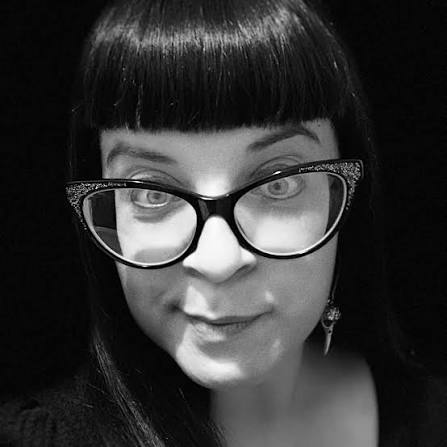
Angela Sylvaine is a Bram Stoker Award nominated author and self-proclaimed cheerful goth who writes speculative fiction and poetry. Her horror comedy novels, Frost Bite and Cold Snap, and her slasher novella, Chopping Spree, embody her cheerful side, while her short story collection, The Dead Spot: Stories of Lost Girls, is fully goth. Angela’s short fiction and poetry have appeared in over sixty anthologies, magazines, and podcasts. Find her online at angelasylvaine.com.
About the Narrator
Laura Pearlman
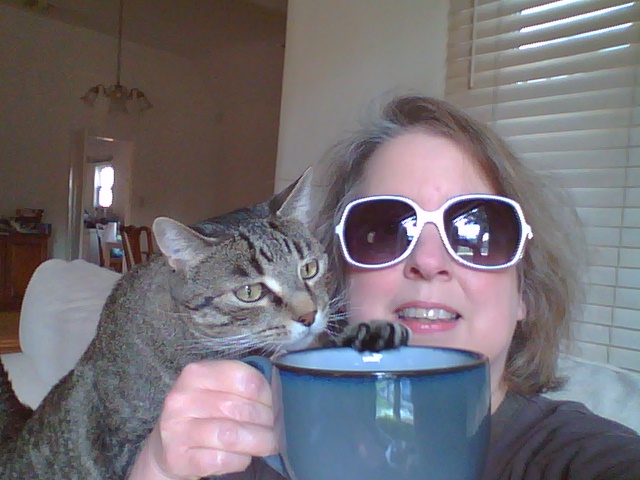
Laura Pearlman’s short fiction has appeared in Nature, Shimmer, Flash Fiction Online, and a handful of other places. Her LOLcat captions have appeared in McSweeney’s.
Laura works in a research computing group in California. She’s decided not to mention her two cats in her bio, not even the cat that helps out with her job by participating actively in all her conference calls. She has a tragically neglected blog called Unlikely Explanations and can be found on twitter at @laurasbadideas.
