PseudoPod 1036: A Greater Dark
A Greater Dark
by M. Ian Bell
Gray sheets of rain as the door bangs in, Willard and his men materializing in that opaque haze and shaking the wet from their long coats. They assess the room with eyes accustomed to staring. Move across the floor and toward a table in the back, away from the windows black with night.
I give Ben a look and he draws three drafts in chipped porcelain steins, struggles to lift them to the counter.
“Ma’am,” Willard says when I carry the drinks over. He won’t tell me his name until later, but I don’t need him to. I take a closer look, face a weathered crag though easily forty years my junior. Almost stop him when he lights a cigarette, but the air is poison, choked with dust. A little smoke won’t hurt anyone. Yet my eyes slide back to Ben with his fingers working a shock of unruly hair, lungs still pink, ten years old if a day.
Willard’s gaze has followed mine, lingers on the boy as I turn and fetch up the tray again. Lingers a moment too long.
I step to the window and stare into the blank nothing, rain streaking the glass, reflection of the motel cafe and its occupants. The Addisons in the corner, three weeks waiting for the visa to come through. Several families up from Boston area congealed around tables too small, set to depart come morning. Willard and his compatriots, silent and morose over their beers. Benyamin behind the bar with his elbows on the wood and his chin in his hands.
A flash of lightning illuminates Casco Bay and the Portland Launch Site across the water. Redwood-thick cables like monoliths stretching 30 thousand kilometers to the elevator terminus. Bright and crisp in the sudden flare like daylight and then afterimages fading to pink, to nothing.
Willard’s eyes on Benyamin again. On me. He knows something he shouldn’t. He knows who the boy is.
The fog rises like a wraith come dawn, rumor of sun a pale glow through gauze. We walk the sand saturated and sucking at our waders, aluminum pails in our fists. The tide is out, a seething froth gathering energy for the journey back. In the morning light the ocean is sedate, almost welcoming. You wouldn’t guess the things sliding through the swirling black.
Ben lowers his pail and hunkers over a likely spot. Catalogs a series of airholes and then sets to work with his trowel, liberating clams with delicate precision. The sunken remains of Falmouth Landing frame the backdrop, warped timber jutting from surf like jagged fingers. The country club fieldhouse, the five-star lobster joint. Faint shimmer of the red-and-white Exxon signage peeking out from beneath inky water. The Portland Launch elevator cables looming in the middle distance, chrome and black and disappearing into cloud cover.
“They’re very big today,” Ben says. He raises a cream shell, lays it gingerly into his pail. Selects a new hole and digs. “Look at this one!”
It’s another twinner. Ben traces the edges, two supple arcs connected into a strange, bulbous heart.
“Do you think there are two of them inside? With different bodies and feelings.”
I mirror his bright smile.
We spend two hours, cover the shore from Sky View to Northbrook, pails grown heavy and full. Feels like yesterday we struggled for a fraction of all this, Dad’s harsh gaze an accusation, like it was my fault. But it wasn’t yesterday, it was half a century ago. The shores overfished, the planet full to bursting. Thirty years of emigration and so few of us left. Just me and Ben, endless array of clam and crab and lobster. The air is poison and the water tainted but there’s plenty to eat. Strange specimens maybe, translucent exoskeletons, extra appendages. Twinners too many to count. An ecosystem thriving just below the surface, unique variations on old marine life. New things throbbing from the deep under cover of night.
But the boy is radiant with the crisp autumn air, cheeks ruddy and smile glittering. He’s pointing at the utility pole sprouting from the mud along Route 1, where an eagle the size of a mastiff is perched precariously. Ben’s bright green eyes shining with wonder, with astonishment.
In the distance the earth shakes and belches great plumes of steam. The elevator car launches, sleek box a child’s plaything from this vantage, climbing toward the orbital hub.
The Casco Elms is quiet on our return, empty rooms to mark today’s departures. In the abandoned lot across the way, three motorcycles sit beside the flutter of woven tarps gone pale with overuse. Willard’s encampment. A faint wisp of smoke rises from an unseen fire.
I set the clams to soak while Ben wipes the tables down. The geriatric Addisons sit by a window with their hands on steaming mugs of tea, gazing at a future just out of reach. No relatives to sponsor them, no funds to emigrate. A sad and pathetic story that could happen to any of us. Watching them from the bar, feeling the weight of their weariness. They’re bound for the grave but they can’t be much older than I.
Ben appears at my side. “I’ve finished my chores,” he utters. One hand pulling at the muss of his hair, winding up for the ask. I scan the blankness beyond the windows as if to read danger in the air, to see the things that can’t be seen by day. I think of Willard and his men.
“It’s okay,” I tell him. “Stay back from the tide.”
He nods. Slips the yellow raincoat over his thick wool sweater, head disappearing into a hood too large. Moves out the door and picks his way through the flat gray, a gentle mist in the air that heralds afternoon storms. Once he’s disappeared, I head out the back and across asphalt choked with weeds.
Willard meets me halfway. Runs a hand through hair wet with the gentle rain. Sticks a cigarette between his teeth and fires the tip.
“Morning,” he says. Gestures at the encampment. “You don’t mind, I hope.”
I offer a neutral glance. “You know we’ve got rooms, right? Anyway. No one owns this place. It’s all fair game.”
His smile is charming. Crows’ feet at his eyes, dimple in his cheek. A missing upper canine gives him the look of a mischievous boy.
“But you knew that,” I say. “You boys are Rangers.”
“Guilty as charged, ma’am.” He draws back his coat to reveal the silver star on his belt.
“But this ain’t the range. You’re a little bit out of your jurisdiction.”
Willard shrugs, breathes a plume of smoke into the air. “We’ve been deputized by the state to keep the peace. Not a lot of law along the coast.”
“Uh huh. Not much need of it, either.” I turn and point at a collapsing building two blocks to the South. “Peyman’s Larder,” I say. “Gets shipments from the interior. Butter, cheese, rice. Whatever vegetables y’all are growing.” Point past Willard’s tents and inland. “Hiram Mittledorf has a schoolhouse about two klicks West. Uses it as a gathering space for the community. I go out there every so often, see how he’s holding up. Ain’t much community to speak of.”
Willard nods. Toes a loose hunk of asphalt. “I hear what you’re saying. They come and they go. Migrants running from the dust, from what hides in the dust. Out to the tether and up the gravity well.” He gazes past me toward the elevator launch. “But it’s not the people needs policing.”
He doesn’t elaborate and he doesn’t have to. His words hang between us, remain present on the surface of his neocortex where I can hear them clear as a bell. What hides in the dust.
I cross my arms against the chill. “So you’re not just passing through.”
“Well.” Willard shrugs again. “We are and we aren’t. But don’t take it as an affront, is what I’m trying to say.” He offers a tight-lipped smile in camaraderie.
“Is it something particular? Disappeared livestock, missing children? Search and rescue, right?”
He hesitates long enough to give the lie. Takes a final drag, flicks the cigarette butt into the haze. “It’s routine,” he says. “Nothing to worry about. We’ll be moving on soon.”
I study his face, listen for more beneath the surface. “Safe travels, then,” I say. Turn back to the Elms and across the vacant parking lot. Feeling his eyes on me, the clipped mentation in his neocortex. Subtly planning. Calculating. He’s thinking about the boy again. I move furtively toward the shore and the flash of yellow hunkering in the sand.
It’s a full house by dinner, the cafe mirthful with bodies warm after a long day’s journey. Ben carries firewood to the hearth in gentle armfuls that come up to his eyes. He squeezes through a ring of migrants and lays the wood down on flagging embers. It catches quickly and he slides back to my side.
“There’s a boy here,” he says quietly. It’s not unusual, but it’s been a long time since there were kids Ben’s size, that he could see himself in. As if sensing our eyes, the boy turns and casts a glance at us. Smiles sweetly.
“Go ahead,” I tell him. Ben looks around for an excuse, settles on a basket of bread rolls. Carries it with him to the table. I don’t see Willard but I keep my eyes open.
The lively satisfaction of tonight’s group speaks of a road too easy, or perhaps an agreement to leave their sorrows behind. In the morning these families will board the elevator and rocket skyward, escape the dangers of a planet run sour, dust storms choking the barren interior, sea levels rising too fast. Squeezing us remnants between, waiting for one or the other to cover us in dark.
No rain tonight but the ominous flash of ball lightning high in the cumulus above Portland. I step into the kitchen and through the back, window on the lot facing West. Flicker of lightning faint. Can’t tell if the tents are up or they aren’t.
The Elms is still brimming with positive energy as we bed down. I can feel the pilgrims’ dreams churning, vibrating on the surface of my skin. It lulls me as I listen to Ben’s soft and husky snores from across the room. Soothes that anxiety I’ve felt since his arrival. I’m in a sleep so deep I don’t notice when I can’t hear his breathing anymore. When I can’t hear the pictures in his mind.
I bolt upright and grope for the flashlight. Throw the blanket back and shine the light on his vacant bed, heart leaping into my throat.
I sense his fear even before the scream, a wail of terror from the depth of night. Pull on boots and raincoat and fly out into the cold, the bedroom door opening onto the motel parking lot. A rumble of thunder chases lightning flashes in the South. I listen for Ben’s voice and for his brainwaves. I race from the lot to the East road and into the thick, wet sand, flashlight beam bobbing ahead of me.
As I close the distance I keep the light trained on the figures. The two boys huddled and the beast facing them with its snout lowered and its hackles up. A coyote snarling and held at bay only by the brittle driftwood branch the migrant boy is swinging in its face.
The fear in their eyes is palpable. I shout at the coyote and fumble for my belt, but there’s no sandalwood grip there, no holster. Only the memory of one. The coyote turns its slavering teeth toward me. I motion for the boys to come to my side, press them behind me. I take the branch from the boy and hand Ben the flashlight.
“Go on!” I shout at the beast. I swing the branch and the coyote snaps, cuts through the branch like a steel trap. Fangs too large for its face, teeth too numerous. It lunges and I stumble, bang my elbow hard against the packed sand. The boy is whimpering but I can feel the heat rising off of Ben. Through the pain in my arm and the ice in my chest I reach a hand back to soothe him. I grip him by the sweater and I try to shush him, to quiet whatever is welling up inside of him. What cannot be contained.
The coyote lunges for my legs, razor fangs slicing at denim just as the shot rings out. Its skull bursts in a spray of warm blood, knocked back from the impact. I still have Ben’s sweater in my fist as Willard and his men appear out of the black night, pistols in hand. The migrant boy has run off back to the motel. Ben is clawing at me, crying into my shoulder. The flashlight forgotten, fallen, illuminating the grim tableau before us, gray fur saturated with blood.
Willard slides the pistol into his belt, helps me to my feet. “You hurt?”
I rub at my elbow, still smarting. “I don’t think so.” My jeans are torn but my skin is unbroken. I can’t draw my gaze away from the coyote’s jaws, thick tongue lolling. Teeth like a shark’s, rows and rows of them.
The beast lurches suddenly, out of the flashlight beam and away from us. I grope for the light but Willard pulls me harder, scoops Ben up, drags us both toward the motel. “Let’s move!” he shouts.
But I can’t stop staring. As the coyote is jerked from the pool of light and down the beach. Into the darkness beyond, into the surf. By something much larger. Something much worse.
It’s well past three when I get Ben back to bed. I want to shout, to fume. But I can’t lay anger on top of terror. I step into the cafe where Willard’s men have the fire going and are nursing beers. Willard beckons me toward the bar. He draws me a draft and we drink in silence.
“So,” he says.
“So.”
“You don’t carry iron.” He nods at my belt. I brush a hand against my hip, feel the ghostly grip in my palm. Vibrating, hammering. Sending shockwaves through me as the muzzle came loose, barrel from frame, trigger guard and magazine and slide. The Ruger 45 flying to pieces, components scattered on the wind.
I clear my throat. “Not anymore,” I say. “I owe you a debt.”
He waves this away. “You got lucky tonight. But the animals are getting bolder. When a young calf goes missing, or—god forbid—a child? It’s a wild thing that does it, like that coyote. If you can call it that. If that’s what it is anymore.”
I nod. Watch his eyes and listen to the subtle frequency behind them. He’s talking about coyotes but he’s thinking about Ben.
“Folks come to the shore to escape those things,” Willard says. “But it can’t be done.”
“It can be done.” The night beyond the windows is full dark, lightning momentarily at bay. But he follows the track of my gaze toward the unseen launch site in the South.
“I was talking about the people who stay. The larder, the schoolteacher. You. The kid.”
My head is buzzing with the incident, the alcohol. With things as yet unsaid.
“The dust storms are gaining ground,” he continues. “There’s fewer of us out there, more of them. It pushes the animals East, like the migrants. But there’s nowhere left for them to go. Soon the whole country will be crawling with wild things. The whole world.”
I think of the coyote, of the eagle. The marine life we see and eat, those things further out that we hasten to avoid. The dust in the air, the poison in the water. The thin strip between them where they meet.
“You could emigrate,” I say.
He shrugs, drinks. “I’ve got a job to do. Try to make a difference. We do what we can while we’re here.”
I finish my beer, put a hand on his arm. “And I am grateful for it. Seriously.”
He dips his head. “There’s something else. That I have to ask.” He pulls a handheld from his duster pocket, a slim screen like we had when we were kids.
“I’m looking for someone,” he says. “In particular.” My pulse quickens. Ben’s image is very clear in his mind’s eye. But when he turns the handheld over, it’s not Ben’s picture I’m looking at but an image of open country, acres of farmland, hint of mountain in the distance. There are two dark blemishes in the foreground.
“What am I looking at?”
“Those are blood spatters. Deceased livestock. Go ahead and swipe through.”
I try to still my shaking hands. Several shots of cows, judging from the size, the ribcages and pools of meat, crimson puddles like water balloons burst on pavement. My gorge rises. I’m seeing the images but double. The handheld photos of a farm in freeze frame. The snow-covered clearing that I stumbled upon two winters back, pants wet where I fell to my knees, hands frozen. Unable to breathe.
Thick blood black against straw-colored farmland in autumn. Bright red against the pure snow of a Casco Bay winter. Iron tang of it in the air. Retching at the scent of it, the sight. Two years later, holding my breath to still the nausea rushing back.
I stop swiping. I’ve seen enough.
“A wild thing did this,” he says. “A beast. Tore up six cattle, twice as many sheep. Killed the farmers. Mother, father, two daughters. Best we could tell from their location, from the clothes on their bodies, on what were their bodies.”
I sit perfectly still.
“We think one of them got away,” he says. “A boy, eight years old. No trace of his body.”
“But—he’s not—”
Willard raises an eyebrow. He hasn’t said a word about Ben. I’m getting ahead of myself.
“You think my grandson is this boy,” I finish.
“Grandson.”
“He’s ten years old, Benyamin. He’s not the one you’re looking for.”
“You have papers, of course. Records that prove he’s yours.”
I try to scoff. “Of course I do. Because it’s true, what I’m telling you.”
Willard nods, swipes at the handheld and turns the screen toward me. Photo grainy but undeniable. The shock of brown curls, the piercing green eyes. The cleft in his chin.
“Two years we’ve been searching,” Willard says. “Almost three.”
I don’t say anything for a long moment. I hand the device back and stand. “I’ll get you those papers,” I say. “I agree there’s a likeness, but that’s all there is. Nothing more.”
“Of course.”
I back away and step carefully to the corridor, toward my office. Mind racing, reviewing the timeline. Two winters past, blank frozen coast of deep February. Tripping from dense thicket into the clearing, pack of wolves lying exploded all around me, blood and bones and fang and claw. The pistol vibrating, detonating. The reverberating sting in my arm, my core.
And the boy, shivering and terrified. Ruddy cheeks wet with tears, voice hoarse from screaming. A boy on the run, a boy from nowhere.
Benyamin.
The Elms is silent by mid-morning, immigrant caravan bound for the launch site. I’ve been up waiting for Willard to hear back from the state, to hear that my documents are illegitimate. Waiting for the world as I know it to end.
Beyond the windows and across the sand, the surf surges with the tide, with the things swept up in the tide. I reach out with my mind and try to feel for them, plead with them. Hulking lobsters or bi-pedal dolphins or octopi with good intentions. Some imagined savior, some unlikely hail-mary.
Instead what comes is Willard, folded slip of paper between two fingers.
“These are forgeries,” he states.
“They’re not—”
“I should arrest you for it. Instead I’m doing you a kindness.”
My skin goes cold as I see past the doorway, into the vacant lot where they are dragging him, bound and kicking his tiny feet. I chase Willard into the morning with the fear around my throat. One of the men is lashing Ben onto the rear of his motorcycle.
“You don’t understand,” I utter. “You can’t—”
Willard whirls on me, the pistol in his hand. “You don’t get it!” he shouts. “He wasn’t chased off by a beast!” He jabs a finger at the motorcycle, at the struggling boy. “He is the beast. You’ve seen the animals changing. People are changing too.”
I open my mouth to protest but I cannot find my voice. He’s no danger to you, I want to say. But the words are a lie and I can’t unmake the world like Benyamin can. I can’t turn it inside out, make it something else. I can only listen to what’s inside, piggyback on their brainwaves. Try to whisper back.
Don’t do this, I say. Not to Willard but to Benyamin. Yet I feel the heat rising, my skin electric. Ozone swirling above.
“Benyamin please!”
The pistol goes first, flying from Willard’s hand and into pieces. The motorcycles are vibrating. There’s a buzzing so loud it feels like my head will burst. I shut my eyes, curl into a ball. Shouting his name, trying to calm him. And then time seems to stop, sound swallowed by vacuum. I peek through slitted eyes and see the thing I dare not see.
Bodies aloft, three feet off the ground, unstitched along seams impossible, crimson spurt of arterial blood raining on pavement, on exploded bike components. Mouths open in soundless screams as teeth and bone and brain emerge, muscle and tendon pulled one from the other, starburst of flesh and metal, bikes dismembered, bodies stripped.
I squeeze my eyes so hard I see spots. But still I see the afterimage. I know I will see it for a long time after, for all of my days. Forever.
The sky is brighter when we sit in the sand, Ben emerging from the surf, scrubbed fresh and bundled in a blanket. The sea hides a darkness unimaginable, behemoths that swarm under cover of night, yet there is a greater dark. Foolish to keep the ocean from Ben. That such a thing could harm him. That he could come to harm.
Unheard blast of steam from across the bay. The elevator rises, rockets in slow motion, disappears into atmosphere. It’s a long time I’ve watched the launch, that privilege denied. Holding silent vigil in the migrants’ passing, the slow passing of the world from something sensible, real. Into who could say anymore. Into something other.
I’ve scanned the ocean for danger, listened to the bodies of animals and pilgrims alike. So I know we’re not alone, Ben and I. We’re not the only ones changed. It’s in the dust and in the sea and it’s in the people too. Those passing through, those who remain. They’ll carry it into the stars, this strange new biology. This thing unstoppable.
I swallow back the dread like a fist around my heart. Knowing I can’t save this boy. Can’t tell if it’s him who needs saving or someone else. If in the end it will be me.
So I brush my hand through his hair and I listen to the soft thrumming of his pulse. Reach into his psyche and root around for the hurt, for the fear. Smooth out the edges where I can, his canvas blank like the flat white sky. Like frozen earth after fallen snow, unblemished, clean.
Dark on the edges but an instant’s respite here in the center. The boy in my arms and the sound of the surf and the calm of the lingering depths. A quiet reprieve, a gift of warmth for just this moment. For just one moment more.
Host Commentary
I experienced this story as a series of slow reveals. At first, I thought we were in Scotland – ceramic ale mugs, people huddling in an eatery for warmth and company. Then Boston and Portland are mentioned, so, not Scotland. Portland Launch Site could be a real place for all I know – I’m Australian, I’ve never been there. Maybe it’s a marine facility. Maybe it’s current day.
Then we get, “redwood-thick cables” and I’m like, oh, that’s a bit odd. When are we?
Then we’re on the beach collecting clams and there’s some weird ones – “twinners”. The air and water are poison… sounds like Portland is a bit messed up.
And so it went. One small reveal after another, like a painter gradually revealing a picture with small, deft strokes. Each layer, each reveal tells us more until we see we’re in a future where the world is blasted and the people are leaving, or trying desperately to live “normal” lives – whatever that means – while the world rots away.
And it’s like that the whole way through. Small reveals of what Willard is doing out here, that Benyamin is not just a normal ten year old boy, that our unnamed protagonist – also more than she seems – is protecting him… until the violent and bloody reveal that answers the questions.
Except, perhaps, for why protect Benyamin? Could be that she’s found someone like her… Could be she just wants to protect a little boy… Could be she knows this can’t last for people like them and she wants to hold onto the illusion of normalcy just a little more… just a bit longer…
Very fine work indeed. And my darker side appreciates the grim ending. We’re good. We’re fine. For now…
About the Author
M. Ian Bell
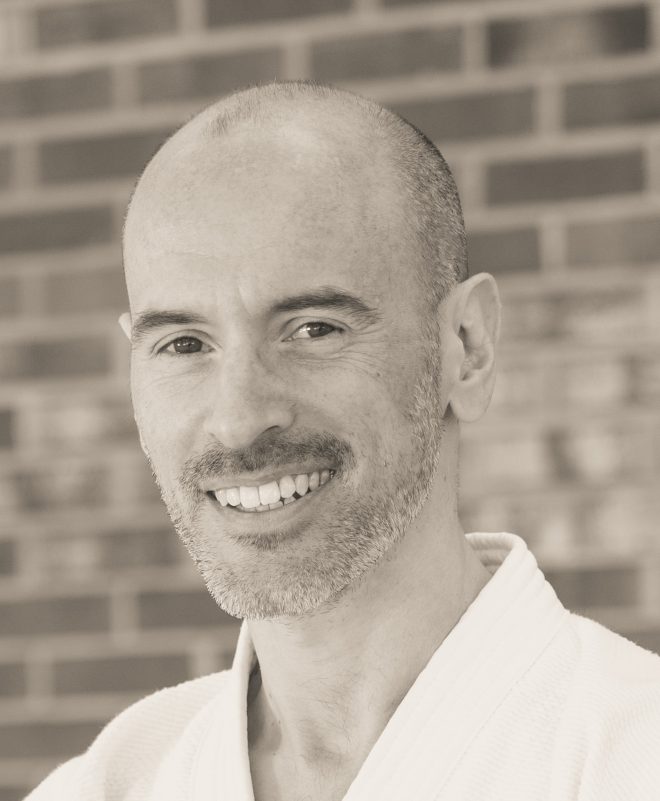
M. Ian Bell is a writer and educator from New Jersey, where he teaches aikido and tutors academic subjects. He is a submissions editor at Apex Magazine, and his fiction appears in Shimmer, Fusion Fragment, and Analog. You can follow him @mianbell.bsky.social.
About the Narrator
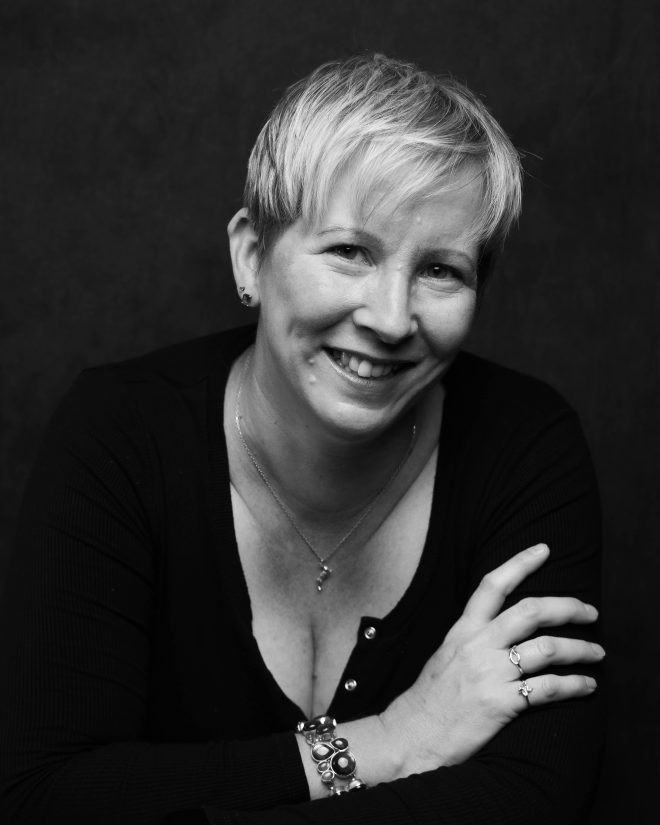
Kat Day