

PseudoPod 1025: Impostor Syndrome
Show Notes
Impostor Syndrome
By Gregory Marlow
Looking back, the first red flag was during the job interview, when Chad said their target demographic was males, ages thirteen to seventeen.
“That’s pretty specific,” I said.
He shrugged. “Market research.”
If I had been using the critical thinking skills I obtained from five short years of undergrad, I would have asked why not eighteen or nineteen. If I were using my conscience, I would have questioned the ethics of any product, even a video game, that targeted minors.
I wasn’t using those things to make decisions anymore. I was thinking with my stomach. The same stomach that was eating discount Ramen by the glow of a computer monitor for the last six months, while I begged for my first job opportunity in the game industry.
Chad was an internationally renowned game designer, with two Game of the Year awards, dozens of cover stories in top gaming magazines, and, most importantly, the respect of the players. He had earned the right to his eccentricities.
My mind was also occupied with Nu Ying, the dark-haired Asian lady from HR who was the host of my studio tour. She was smokin’—metaphorically, not like cigarettes—what I mean to say is that she was attractive. She was nice, too, laughing at my clumsy attempts at jokes and going out of her way to make me feel at home.
Nu Ying had reached out for the first interview with Twisted Abyss Games. Six months of applying to game studios, and I only had two recruiter calls, who both ended up ghosting me. When she contacted me and said they wanted to fly me to North Carolina for a few days to meet the team and discuss an assistant producer role on their first AAA title at Chad’s new company, I was 100% confident it was a scam. I hadn’t even applied, but she said Chad himself found me through my online portfolio, which sounded even more like a scam. I expected a request to wire her some cash or send my Social Security number. Instead, genuine airline tickets arrived in my email inbox. Then $1000 showed up in my Venmo for “travel expenses.” She was either the worst scammer ever, or this was legit.
The interview lasted the whole day. By early evening, I had met the entire team and was back in the office of Chad Teeter, legendary game designer, just the two of us. The window behind him looked out into a wooded area surrounding the business park. His office was the size of three others combined, with a mahogany behemoth desk dominating the room. The walls were lined with shelves of antique books, game developer awards, framed magazine covers, and newspaper articles announcing his achievements. One large, dusty hardback sat closed on the corner of his desk. Leave it to Chad to choose something from the Middle Ages as his light reading.
This is where he tells you that you’ve wasted his time and has you escorted from the building in shame, I thought. You’re an impostor.
Instead, Chad stared at me from behind steepled fingers for several long seconds and said, “So when can you start?”
My jaw hung open as my brain tried to digest his words. “I guess…like…now. Are you offering me the job?”
“Yeah,” he said. “You’re perfect. Nu Ying is writing up the contract as we speak. You’ve already signed the NDA. All that is left is getting you moved out here. Will a start date of next Monday give you enough time?”
I owned almost nothing. My ratty little one-bedroom apartment had a mattress, a computer, and a suitcase of clothes. I packed a single cardboard box of paperbacks and old physical copies of some of my favorite games. The futon in the living room would have fallen apart if I tried to move it across the room, much less to another state. I moved into my furnished Chapel Hill apartment, less than a mile from Twisted Abyss Games, with a weekend to spare.
Several team members, including Spenser, the art director, and Holly, the lead programmer, took me out for beers the Saturday before my start date. They raved about the whole team and how much they loved working on the project, an MMORPG fantasy dungeon-crawler called “The Summoning.”
I landed what looked increasingly like my dream job, full of passionate devs like myself. I wanted to cry, although beer sometimes does that to me.
“I’ll be honest, I’m nervous,” I said, forcing down another swallow of some dark craft sludge Holly recommended. “But I’m going to work my ass off. I don’t want to let Chad down.”
At his name, everyone got quiet, hiding behind sips of their beer. Spenser said. “Yeah, Chad has a special way of getting stuff done.”
It’s amazing how many red flags you can overlook when you are wearing rose-colored glasses.
The following Monday was a whirlwind of meetings. I worked with a senior producer named Ulrich, who was short and had a Russian accent. I sat in meetings with art, animation, UI, programming, audio, and three QA testers who eyed me with hostility. Ulrich told me later that a few of them applied for the assistant producer position, hoping to move out of the testing dungeon and into a hands-on dev position. I shared their skepticism that I belonged there.
By the afternoon, the excess knowledge was leaking from my ears, unable to be absorbed into my oversaturated brain. The last meeting of the day was with the design team, led by Chad himself. Three other designers in the room focused on narrative design, multiplayer experience, and encounter design for the boss battles. But there would be only one title in the credits for “Game Designer,” and that would belong to Chad Teeter.
After a short discussion about a show-stopper bug in the loading screen, Chad asked, “Okay, two months until the live beta event. Where are we on the Cave of Moloch?”
The room got quiet as Chad looked from person to person. He started calling on them by name, “Susan?”
She swallowed, “We’ve been working on the story that leads to the cave, but we’re at a standstill. We can’t finish the narrative until we have a goal. Like, what happens when they get there?”
“The summoning, of course. It’s where Moloch will be revealed,” Chad said.
“Well, that’s another thing,” said Gary, the encounter designer. “We still need the boss. We need Moloch. What does it look like? What are its powers? How do you beat it? The concept team should have been working on this from day one.”
“I have that part under control,” Chad said, flatly. “Leave Moloch to me. We need to make sure everyone arrives at the cave at the same time. Give them a reason. I don’t care what it is, but it needs to be good enough to make them all show up.”
Chad turned to the short bald guy on the other side of the table, who had introduced himself as “Hobbit.” Later, Ulrich told me that he was such a Tolkien fan that he legally changed his name.
“Latency?” Chad asked.
Hobbit was the oldest person in the room, an industry veteran in his mid-fifties. He shrugged. “We’re doing the best we can, but right now, I’m estimating 500 people max.”
“Not enough,” Chad said, his voice rising for the first time.
“Well, short of a major breakthrough in quantum computing, it’s the best you’re going to get.”
“1,500 at the minimum,” Chad said.
Hobbit laughed. “Wish in one hand and shit in the other and see which gets full first. I’m telling you, 1,500 is five years away, and that’s optimistic. Rendering 500 characters in real-time with a 40 ms latency is unheard of. We could publish ground-breaking papers on that accomplishment alone. What you’re asking is impossible.”
The room was quiet for a long time, and then Chad said, “Could you all excuse us? I would like to discuss this with Hobbit in private.”
We all shuffled from the room, Ulrich closing the door behind us. On the way back to the office, I asked, “Why 1,500 people?”
“It was one of the crowdfunding rewards. A huge beta playthrough event where the first 1,500 people who funded the project could beat the game together and summon Moloch.”
“As long as they’re teenage dudes,” Susan said, breaking off from the group with an eye roll to duck into her own office.
Nu Ying caught us as we came around the corner and asked me to come to her office to sign the benefits paperwork. Her office was in the back of the building with the CEO, CFO, and Chad’s office. I was still shaken by the tension of the last meeting and even more nervous about being alone in an office with Nu Ying.
She explained the health insurance plan and helped guide me to a good package with a low deductible and out-of-pocket maximum. She also covered several retirement options that made no sense to me at all. I just pointed at one on the info sheet.
“Alright, you’re all set,” she said. Her smile was warm and calming. “It can be overwhelming. Anytime you need to talk, my door is open. But you’re going to do great.” She reached across the desk and patted the top of my hand.
Chad called me into his office on my way out. “Come have a seat,” he said. Framed articles and dusty hardbacks loomed over the room. “How was your first day?”
“Exciting,” I said, searching for better words. “A little intimidating, if I’m being honest.” The guest chair was so comfortable.
“You know, I pride myself on a few things. The first is being able to clearly communicate my vision to other people. That’s how this company and The Summoning were started. The largest crowdfunded game project in history. Does that have something to do with all my past design awards? Probably a little. But thousands of people saw the vision, too. They got behind it, they funded it, and they believed in it.”
I nodded rhythmically, wondering where he was going with this.
“But I also pride myself on being able to tell the right person for the job.” He leaned forward across the desk. “You are the only person for this assistant producer position. Whenever you start to doubt yourself, I want you to find a mirror, look at yourself in that mirror, and say…” he paused for effect, “Chad Teeter believes in me.”
I amplified my nod to show I understood. “Thank you, sir.”
The long silence stretched out. I didn’t know if I was supposed to leave or if he wanted to continue talking. So, I just continued nodding while he stared at me. I scanned the room, looking for a distraction from the awkward moment.
“You collect antique books?” I asked.
This seemed to be the forfeit to the staring contest Chad was waiting for because he leaned back in his seat and gazed around the room. “Oh, yes. Books were the first games, if you think about it.”
I resorted back to nodding. “Fiction?” I asked.
“Some would say. I, however, believe every word.”
Awkward nod.
“Anyway, I’ve kept you long enough.” He stood, indicating I should do the same. I thanked him and scurried out of his office, glancing at a few titles on the spines as I went. The Chronicle of Eldritch Truths, Astral Realms, and The Timeless Manuscript of Arcane Wards. Some sounded pretty metal, and I tried to commit them to memory so I could look for e-book editions.
The next few weeks were a blur. I half expected to see Hobbit’s desk cleared out and a replacement hired after the dispute between him and Chad, but he was at the next developers’ meeting with bags under his eyes and slumped posture. He reported that the team had identified memory leaks and increased the number of simultaneous players to 750 for the Cave of Moloch.
Ulrich was a machine, and I followed every step he took, drinking in his advice. The producer’s job was to make the project run smoothly, like a project manager, organizer, and pep rally all rolled into one. I spent most of my days scheduling software or attending SCRUM meetings.
My job was to clear hurdles so everyone else could do their job. If a concept artist needed a description and background from the writing department, I shifted the assignments to get that to them quicker. If audio needed voice acting scheduled, I contacted the recording studios and arranged the virtual session. If an animator needed a tool from the tech art department, I shifted assignments, begged, and bribed the rigging artist to make it happen. If the programmers needed more Red Bull, I bent Heaven and Earth to get it. There was not a facet of the game that went untouched by me.
After the first month, Ulrich started sending me to meetings without him so he could get more work done. His declaration of trust meant more to me than any grade on my school projects ever could have. I developed more in the first month on the job than in my last year of school. Plus, Twisted Abyss Games never asked me to write a single English paper.
I ping-ponged between pride in my accomplishments and fear that I was a phony and everyone would discover I had no idea what I was doing.
“Maybe we do two servers of 750?” Asked Hobbit at the next developers meeting.
“No. It has to be 1500. One server”
“But why?”
Chad didn’t answer. Instead, he turned and pointed at me, taking notes in the corner. “What are your ideas?”
Hobbit rolled his eyes, and I tended to agree with his assessment.
“Sir, my programming skills are—”
“I’m not asking you as a programmer. I’m asking you as someone who’s not locked inside this box,” he gestured at the designers around him. “How would you fix it?”
“I—uh—maybe reduce the resolution of the characters and environments,” I said cautiously.
All three designers shook their heads, but not Chad. The corner of his mouth crept up. “Dynamically,” he said.
“We already have LODs as optimized as possible,” Gary said.
“Then we rewrite the entire dynamic geometry system. Something new,” Chad said. “Maybe some sort of voxel calculation?”
“Do you know how many hours that will take?” Hobbit asked.
“But would it work?” Chad shot back.
Hobbit started several words that never made it past the first syllable before letting out a long breath. “Maybe.”
Chad smiled.
“But my team is exhausted, and we don’t have anyone with that kind of system knowledge.”
“Hire someone,” Chad replied. “Steal them from another studio. Throw money at them. We have to hit 1,500.”
I was in my office later that afternoon when I received a chat message from Chad asking me to swing by his office. When I entered, he was behind his huge desk reading a hardback from his shelf.
“I wanted to thank you,” he said. “Sometimes it takes looking at things from a different perspective for the solution to reveal itself.”
“No problem.”
“I told you I was good at picking the right person for the job,” he said and slid an envelope across the desk. “A little reminder of my gratitude.” He tapped the pages of the open book in front of him, “And Moloch’s as well.” He laughed at his own joke, and I forced a laugh, too.
As I took the envelope from his desk, I could see some of the words and illustrations in the book. The page showed an illuminated illustration of a large, horned, bipedal beast at the mouth of a cave. His hand covered most of the text, but the header was clear: “The Summoning of Moloch.”
Outside in the hallway, I opened the envelope to find a gift certificate to Le Coeur de Paris and two tickets to a symphony that night at Meymandi Concert Hall. Was he asking me on a date? No. He would have arranged a time to meet and kept one of the tickets.
As I stood in the hall, wondering what to do with the other ticket, Nu Ying stepped out of her office and walked my way. I showed her the surprise bonus and, with the elegance of a tap-dancing hippo, asked if she would be interested in going to dinner and the Symphony with me that night.
She looked at the ground shyly, and I realized I had probably broken some code of conduct by asking her out. Before I could apologize, she said, “That would be nice.”
The night was wonderful. We ordered dinner using an Image Search on our phones since neither of us knew how to read French. We laughed through the entire meal. The Symphony featured the music of John Williams. We were both fans for obvious nerd-related reasons. I dropped her off at her door, and she gave me a hug and a kiss on the cheek.
I suppose my confidence over the next few days was a little elevated because I overstepped my bounds when discussing the player profiles with the community manager and questioned the target demographic.
“I’m twenty-three, and I’d love this game,” I said. “Why are we limiting our audience so much?”
“It’s what Chad wants,” she said. “In fact, there was a maximum age for the public beta event. No one over seventeen allowed.”
It struck me as a major oversight that could limit the game’s financial success. I mentioned it to Ulrich while he ate his lunch at his desk. He finished his bite and put the sandwich down. He used the voice I had come to know as his manipulative voice, soft, with each sentence ending in a downturn to increase the finality of the statements.
“This is an element of the game that Chad is unwilling to bend on. He is making a game for young people.”
I should have left well enough alone, but I spent several days doing market research based on theme and genre. I had almost completed a small pitch to deliver to Chad when I received another interoffice message asking me to come to Chad’s office.
“Close the door behind you,” he said coldly and gestured for me to have a seat. The book was open on his desk, and he looked into the pages before speaking. “We need you to stop asking questions about the target audience.”
I started to protest, and he held up a hand. “I am aware of every argument you plan to make. I am making this decision intentionally. I picked you for this role because I believed you’d help me achieve what is necessary. Please tell me my trust is not misplaced.”
I nodded. “Sure. I’ll stop asking. I’m sorry, sir. I just want the game to be a success.”
“The Summoning will be a success. Every step I take is to make it so.”
When Nu Ying came to my house for dinner that night, I told her all about it.
“I’ve disconnected my phone from the Wi-Fi in case he’s monitoring me somehow. And what is up with that book, anyway?”
“Chad may be a genius,” Nu Ying said, “but he can be a little creepy sometimes. There’ve even been some…” She stopped herself.
“What,” I said, leaning across the table.
“I shouldn’t say anything, but Chad’s had some HR complaints in the past. Two people quit before you started. One had worked with Chad for years. Chad invited him to some weird religious service or something. Another woman swore she caught Chad putting a spell on her desk.”
“Weird.”
“Yeah, but we all know Chad is strange. So was Tesla and Steve Jobs. It takes people who look at the world differently to make it different, I guess.”
“Have there ever been any, you know, sexual accusations?”
“Never. No inappropriate comments, no wandering eyes, or awkward hugs.”
Later, when we were on the couch binge-watching a Netflix Sci-Fi series, we started making out. We ended the episode early and went to my room.
I was all smiles the next day. To top it off, I received my official character profile and invitation to participate in the beta playthrough with Chad and the dev team.
Ulrich and Nu Ying also received invitations. Only a handful of the dev team members were invited to ensure there was enough room for the project’s backers to join.
Two weeks before the beta release event, the studio adopted a mandatory crunch. I was in charge of maintaining productivity and minimizing strife. I ordered catering for those working late and even had cases of craft beer brought in for the office fridge.
“I code better when I have a buzz,” Holly told me two nights before the deadline as she opened a bottle with a skull illustration on it and headed back to her desk.
As I walked past Hobbit’s office, I looked in. All the lights were off, and he slouched over the glowing monitor, looking drained. I stopped at the door. “Anything I can get you, Hobbit? I’m no Samwise, but I’ll help however I can.”
He let out a tired chuckle. “No, I’m good, kid. Got it up to about 1400 people, and there’s still some room for optimization. I think we’re going to hit the magic number after all.”
“That’s great!”
He continued to look at his screen. “You know, I’ll tell you something. Great things are made by great people. But sometimes they come at the cost of other people—the people who won’t go down in history as great.” He let out a long sigh. “I’ve been doing this too long. I think this is my last game,” he said. “Maybe I’ll try teaching or something.”
“We’re in the home stretch. You’ll feel better after some sleep,” I said.
As I rounded the bend, I saw Chad in a meeting with the audio team. They were doing a final review in the conference room with the best audio system.
I continued down the hall and turned the corner to see Chad’s office door cracked open. I walked past and looked in. The book lay open on his desk. He would be in the audio meeting for at least another twenty minutes.
I looked both ways and then darted into the office and over to the desk. I felt a twinge of guilt for invading his personal space, for not believing in Chad Teeter when “Chad Teeter believed in me.” I told myself that if I knew what was in the book, I might be able to understand his thought process better.
I pulled out my phone, made sure it wasn’t connected to the Wi-Fi, and snapped a few pictures of the open page. I flipped the pages and took more pictures. On the last page was an illustration of Moloch. I snapped one more picture and returned to the page where I started. Then I crept back to the door and strolled down the hall to my office.
Ulrich was working late, too. He had a smear of mustard on the corner of his mouth from his dinner burger I had ordered for him.
“Everything seems to be going well,” I said. “It’ll be a hard night and a hard tomorrow, but I think we’ll hit the submission lock with a functioning game. Another Chad Teeter masterpiece for the books.”
Ulrich smiled. “Chad may be the designer, but he could never do this on his own. We made this game. This is your game, too.”
“My first,” I said.
“But not your last. You’ve done a great job,” he said. “I don’t know if I’ve told you that enough.”
My eyes burned. “Thank you.”
I went home at about 10 p.m. and skimmed the images on my phone while eating a bowl of chocolate ice cream.
It seemed to be a spell book. I’d seen similar novelty items in bookstores, claiming to be the Necronomicon or an ancient book of the occult. It seemed a little immature for Chad.
It was when I turned to the last image that a chill ran down my body, and it wasn’t just from the ice cream. It was the page with Moloch’s image. I wondered, not for the first time, what the final model and animations for Moloch would look like. I even searched source control a few days earlier to see if the assets had been checked in, only to find an empty folder.
Along the side of the image were instructions for summoning the Great Deity, Moloch.
“Enslaving the God Moloch requires a being of exceptional power,” I read. “Only one capable of great and terrible things could amass the resources to complete the summoning and bind the great Moloch.”
I read the steps and couldn’t help but feel uncomfortable by some of the similarities to story elements in our game. I decided to get some rest. The whole thing would make more sense after some sleep.
The next day, during lunch, I tried logging in with my account so I could customize my character’s hair and face to look more like me. I even tried to match my height and build. Then I noticed my character’s default stats. The health meter was set to a variable in the game’s code.
When I had Holly look at the profile, her eyebrows furrowed in confusion. “Weird. It’s just your account. The health is tied to a variable based on the game level. You’ll be all but immortal in most levels, but—” she leaned in and squinted. “Not in the Cave of Moloch.”
“Can you change it?” I asked.
“The account is checked out in version control, so I can’t make changes.”
“Who has it checked out? I can ask them.”
She right-clicked on the file and brought up the version history. I read it over her shoulder. “CTeeter” had both created the file and checked it out.
She looked up at me. “Listen, I’m sure Chad has his reasons. Probably doesn’t want you to die mid-game and miss out on any of the action tonight.”
“Yeah,” I said. “I’m sure that’s it.
“But let me give you this anyway.” She pulled out a Post-it and wrote down a short line of random symbols.
“What’s this?”
“Cheat code,” she smiled. “God mode for debugging. It will be active in the beta. We aren’t disabling it until the final release.”
I thanked her and went back to my office. Why would Chad want to risk my character dying in the last scene of the game? It’s almost like he wanted me to fail. I thought Chad liked me and felt I was contributing to the team, but maybe I was wrong. Maybe he just saw me for the phony that I was. An impostor.
The word rang in my ears, a reminder of the text I read the night before.
At that moment, Chad stuck his head in the office. “You hanging around tonight? We’re all playing the beta event from the office. We can grab drinks and celebrate afterward.”
My body wanted to run, but instead, I said, “Yeah, I’ll be here.”
Version lock was at 5 p.m., giving everyone time to grab dinner and maybe a shower before the event started at 8 p.m.
I made it back in good time. The office hallway lights were on an automatic timer to shut off after work hours, making the glow of our screens the primary light source.
Ulrich brought a huge bag of Twizzlers and a bottle of rum. He offered me both as the game began. I grabbed a Twizzler and then slipped on my headphones.
My heart raced as the loading screen led to level one. Every player spawned randomly on the huge open-world map with the same quest. “Find the Cave of Moloch and summon it to our realm.”
I encountered dozens of other players. Several of them played as female characters with the breast settings cranked up as high as possible, their teen male voices coming through the voice chat. A few called me offensive names, while others proclaimed Chad Teeter an absolute game design God as they slashed their way through the level.
Ulrich guided me to his location on the map. About an hour later, we found Holly in the Fields of Gloom. She took the difficult route because she was so familiar with the map and could avoid some of the toxic teens. At the exit of the fields, we found Nu Ying, who had teamed up with Hobbit. Nu Ying opened a private chat with the dev folks so we could ignore the annoying kids chattering nonstop and insulting us for being old.
We all worked as a group, fighting through the slime-filled bugs that plagued the land. As I slashed with my sword and conjured spells, I was on the verge of tears. My first shipped game! I dreamed of this moment since I was a young asshole, like all the kids fighting beside me. I had become one of the people I had idolized.
But on the inside, I knew the truth. There was nothing different about me now. I was an impostor, just like everyone else. No one knows what they’re doing. They just show up, face the challenge, and fight their way through anyway.
We met Chad at the mouth of Moloch’s cave, and he greeted us each as we filed inside.
I had been a gamer all my life, but what we accomplished was breathtaking. The modeling of the relics on the cave walls was spectacular. The materials were robust and detailed. The animations of the players running, jumping, and tea bagging were keyframed beautifully with seamless state-machine transitions and no foot-sliding. As the room filled with hundreds of characters, not a single frame dropped, not a single motion lagged. The level was a gaming masterpiece.
When the room was full, the cave entrance crept closed. I turned my avatar to realize Chad was right beside me. We stood shoulder to shoulder with 1,500 other characters on the floor of the cave. I had never experienced anything like it in my life as a gamer.
Chad’s voice boomed and echoed in the cave. “Everyone, I want to welcome you and thank you for joining us tonight! This moment will undeniably go down not just in gaming history but in the history of the world. Tonight, in this cave, we are going to summon the great deity, Moloch.”
He turned to me, his character looking directly into my eyes. The word-perfect facial animation and expressions made it feel like Chad was seeing me in person, not just through a monitor.
“I’m the designer, but I couldn’t have done this alone. I want to turn the honors over to one of the newest members of our dev team.” He gestured toward me, and the crowd applauded. Nu Ying triggered the celebration animation for her character, who bounced in place, clapping. I could hear a few team members cheering down the hall. Ulrich reached over and patted me on the back.
A lever appeared on the cave floor. Chad smiled. “Go ahead, pull the lever and summon the Great Moloch.”
I read the instructions from the book. I knew that the cost of summoning Moloch was far greater than simply the effort of pulling a lever.
I cannot say for sure if I was in control, as I moved the thumbstick to reach out my character’s arm. Was I under some demonic possession when I pressed the X button to grab the lever? Was I capable of flicking the joystick that pulled the lever forward?
If it wasn’t me, it could have only been an impostor.
As the flames emerged from the floor, engulfing every virtual soul in the room, I recalled the words I had read from the pages of Chad’s book. “To summon and rule over the Great Moloch, the impostor must kill his beloved, his mentor, and 1000 willing virgins.”
Through my headphones, hundreds cried out in pain. My mentor, Ulrich, moaned and flailed in the chair behind me, but I could not bring myself to turn around. On my screen, Nu Ying’s character fell to her knees in the flames, her eyes pleading to me. Her office was on the other side of the building, far enough away to stifle cries of betrayal, far enough to tell myself she might respawn somewhere else on the map.
As the flames died down, leaving the charred remains of 1,500 corpses, I couldn’t help but think that the effects team had outdone themselves. I tried to remember if any of them were among the smoldering avatars on the cave floor.
I turned to see Chad’s character still standing next to mine with a spiked mace in his hand. I remembered the modeler who created that mace. Was she among the charred dead?
Chad smiled and pulled back the mace. “I knew I picked the right person for the job,” he said, then swung the weapon at my character’s head.
The impact flashed red on the screen. The mace was the strongest of all the melee weapons in the game and should have easily killed my character. But my health meter stayed full.
Chad cursed and hit me with the mace again and again. I didn’t fall.
His character stopped moving and defaulted to the idle breathing animation.
Footsteps approached down the hall until his shadow loomed tall in my doorway. At the end of his right hand was the silhouette of a gun.
“God mode?” he asked.
“Yep.” I should have been afraid, but I wasn’t.
“How did you know?”
“I saw the book. Why 1,500? You only needed 1000.”
“Kids nowadays,” he said. “Better safe than sorry. So, you know the next line, too?”
“‘He who takes the impostor’s life will rule Moloch in his stead.’ So that was your plan all along. That’s why you chose me. I bring back Moloch, and then you kill me?”
“Why else? It couldn’t be me; I’m the real deal. You were the least capable person I could find for this job,” he began, raising the gun. “An impostor.”
“But you missed something, Chad,” I said.
His hand hesitated. “Is that so?”
“We finished the game. I’m not incompetent at my job.”
The gun lowered slightly.
I looked at Chad’s character on my screen, still breathing in a smooth cycle. “You couldn’t have made this game without us. Without me.” I tapped the space bar, and my avatar decapitated Chad’s character with a splatter of blood across the screen.
In the dark of the studio, a rumbling growl seeped from the walls around us. The smile slid from Chad’s face. I empathized with that look in his eyes. The doubt. The sinking feeling, heavy in his stomach, that legendary game designer, Chad Teeter, was a fraud.
In the hallway behind him, the shadows changed, grew tall, and took on a form I had only seen as a drawing in Chad’s book. Chad continued to stare forward at me. Maybe he was afraid to turn and face what he knew was there, just as I was unwilling to turn and see the great and terrible things I did to prove my worth.
I leaned forward in my chair and smiled at Chad. “I’m not the impostor,” I said. “You are.”
I nodded a command, and a claw clamped down on Chad’s shoulder. His screams echoed down the halls as my servant, Moloch, dragged him, screaming, into the shadows.
Host Commentary
From the author: “This story is set in a game development studio. I’ve worked as a character animator in video games for eighteen years, on and off. This story was not inspired by any specific event, studio, or individual from my animation career, but the process of making a video game with a diverse group of creative and brilliant people is rarely portrayed in media or books the same way I experienced it. I am sure there are still inaccuracies in the story because I based it on my tiny slice of a very large pie. But I enjoyed reading it, and if I am being honest, that’s the biggest reason I write.
In a game development studio, you collaborate with a team to create something millions of strangers will interact with for hours. At least once a week, I would come home and secretly confide in my wife, “I have no idea what I’m doing.” Impostor syndrome is something I lean into now as an animation teacher. I tell my students that I never take a job I already know how to do.
Now, I’m pretending to be a writer. I hope you enjoy the result.
About the Author
Gregory Marlow

Gregory Marlow (He/Him) is an associate professor, animator, and writer living in East Tennessee with his wife, Amanda, and dog, Sadie. He has animated on over a dozen video games, including Civilization 5, 6, and 7, XCOM, The Pathless, Marvel’s Midnight Suns, and Five Nights at Freddy’s: Help Wanted 2. His short fiction has appeared or is forthcoming in Asimov’s, PodCastle, Strange Horizons, Flash Fiction Online, and The LeVar Burton Reads podcast. To learn more about Greg and his work, go to www.gregmarlow.com
About the Narrator
Brian Lieberman
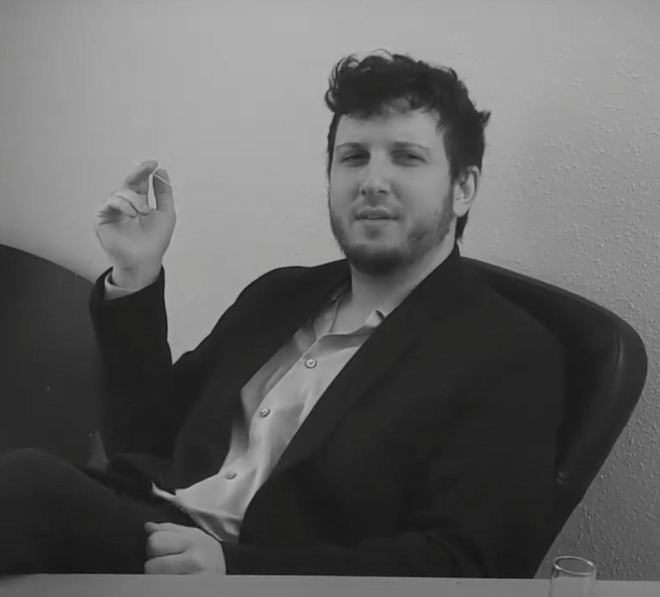
Brian Lieberman has been many things at the Escape Artists Foundation, first finding his footing back in 2007 as a moderator for the newly minted forums. These days, he’s a Solutions Engineer, helping to manage some of the back-end technologies that help keep the wheels spinning and the stories coming. When he’s not doing all of that, he’s fighting various evils with his friends or cuddling up with his wife and two corgis.
