

PseudoPod 1017: In the Hands of a Different God
Show Notes
Jim Kristofic novels
Why Miitaries Must Destroy Cities To Save Them (Add your own air quotes as appropriate)
Destroying a Quote’s History In Order To Save It
Hank Green: Chemo is Weird, Y’all
“Now You Know” from Merrily We Roll Along
In the Hands of a Different God
By Noah Ashley Blooms
It was Daddy who taught me to sew. I’d made three patch quilts and was starting on the fourth before he let me touch a patient. That was my mother’s word for them. I think the only way she could handle what we did was by pretending we were doctors, not butchers, not hosts to a power that we didn’t understand and probably never would.
Mama insisted that Daddy take the patients outside, so in the summer he worked on the back porch and, when it grew too cold, he took to the shed in the backyard with its squat woodstove and string of light bulbs hanging from the ceiling. He worked on a narrow bench back then. He’d cover it with a sheet of plastic and burn the sheet once the patient left, scrub the table and his hands with bleach. His knuckles carried a pink look to them, like they were always one careless touch away from bleeding.
My first was a cancer. Daddy hated them the most. They had to be pretty bad off before he agreed to take them in, and even then, he would give no guarantees. Cancer is thinner than a memory, he said. It hides.
The man was eighty years old, pale and thin, the skin bunching on his bones like it was a size too big for him. His name was Edward. Daddy laid him on the table, put him to sleep, then split him down the center. He peeled the man open until I could see his insides glistening and slick and pink. Everything quivered with the echo of Edward’s heartbeat. Daddy scooped up a little ash from the hearth and sprinkled it over Edward’s insides.
Then he looked at me and said, “Breathe.”
I bent my head down until my nose was nearly touching all those things I didn’t yet have a name for. I closed my eyes. It was like blowing out my birthday candles, except instead of a flame, there was only smoke. It trailed in thin, oily streams from the place where my breath touched Edward’s organs. When the smoke dissipated, it left a black stain behind. It was the stain that Daddy was after.
He braced his hands on the edge of the table and bent forward with his teeth bared. He sucked the cancer right out of the man’s body. He drew it through his clenched teeth, strained it through himself until it sat in a thick pool on his tongue. When his mouth was full, he leaned back and spit the mess into a bucket that sat on the floor. He did it two dozen times at least, leaning forward and back, sucking and searching, his nose buried deep inside the intestines, his cheeks slick with blood and his eyelashes glistening.
When the last bit was emptied into the bucket, he stood with his forearm pressed against his mouth. The air was heavy with the stench of cancer. It was worse than anything I could imagine, and I was afraid that Daddy would ask me to take the bucket out back and set fire to it. There wasn’t much I could do to help back then. The taking only has one host at a time, and it was Daddy who carried the flame, and only Daddy who could reach inside a person, wrench something free and still leave them whole. All I could do was watch and learn knowing that one day Daddy would pass the taking to me.
“Close him up for me, Harry,” he said. I was always Harry to him, never Harriet.
He took a handkerchief from his pocket and pressed it to his mouth. He stumbled twice before his feet caught the porch beneath them. He bent and grabbed the handle of the bucket and took it into the yard. I stood on my tiptoes and drew Daddy’s long needle through Brother Edward’s skin.
My fingers shook something awful, but it was a clean job, a neat row of black right down the middle of him. I was proud of that. Outside, Daddy lit the fire and the cancer burned deep green with a tinge of yellow at the tips.
It took Daddy a month to recover after that night. My mother tended to him as she always did, feeding him spoonfuls of warm broth and humming to help him sleep. I have often wondered if that’s why she refused to let Daddy take her own cancer when the doctors found it a few years later. She had seen what it might cost him to save her and had judged it too great.
I could almost understand her decision, until her condition worsened. She suffered for nine days before she died. Nine days of weak, rasping breath dragging through her lungs. The thick gurgle and gasp, the slow pause in between growing longer and more painful until I staggered outside and hid in the shed because I couldn’t take counting the seconds any longer, wondering which one would finally be the last.
When I came back inside the whole house had been silent. The quiet was heavy that it felt almost holy. I was scared to move, to breathe. Then I heard Daddy begin to cry.
I know that we have taken many things, and much of it is hard to understand. But one thing I am sure of is that the way death takes is far crueler than anything I have ever done or could ever do.
There’s a patch of skin on Fallon’s forehead that won’t heal. I have restitched that one section, barely three inches long and just above the place where her right eyebrow would be, at least a dozen times, but it always comes undone.
It looks almost funny, the way the skin folds over the top of her eye and the way she looks up at it as though she has just noticed that she has a body. She makes a small noise in the back of her throat as she stands before me in the kitchen and the piece of skin moves back and forth.
“I’m sorry,” I tell her.
I fetch the sewing basket from the floor by my favorite chair, and as I bend down the world goes soft at its edges. I knew this would happen eventually, but it seems too soon. I suppose everyone feels that way when their life begins to slow toward stillness. The fact that my end has begun makes me all the more determined to give Fallon everything she needs before I am gone.
I carry the basket back to the table and search through it. I have tried everything I know and if Fallon were cotton or silk, she would be fixed by now. But being real, being alive, makes her harder.
Her teeth bare slightly as I bring out the needle, and it makes me wonder how much of her making she remembers. She was put together in pieces. I started with the bones, of course, and built her out that way. Sometimes her hands would twitch while I was working. Her cheeks, too, once she had them. I thought it was just the muscles spasming, the nerves showing me that they were alive and feeling. No one had ever used the taking like this, to create, instead of to remove. There were no rules to follow. No way to know if I made some fatal error along the way, something that can’t be undone, not even by me.
And I know I made mistakes, more than I thought I would. I can’t help but see my faults in her finish work. She has no hair and no eyebrows, either, but she has eyelids and lashes, too, thanks to a woman with an awful fear of the dark. Her scalp is smooth, and the mottled color of an old egg. Her lips are small and there’s some scarring at the corners but they’re a matching set.
I motion to her, and Fallon edges toward me. Her gait is still unsteady, and she falls often, though less now than in the beginning. I can usually reach her before she hits the ground, but even when I can’t, I tell myself that these are small hurts. They will heal. These bruises, these tears on her seams, these scars. And if she is to carry the taking then she must learn how to bear pain, her own and everyone else’s.
She sits in the chair by the back door where the light is strongest. Her lips are still snarled and the flap of skin on her forehead droops a little lower. I scoot close enough to smell the faintly chemical scent of her.
I say, “I don’t know why it keeps doin’ this. The next time it does, I’ll take some of my own skin and we’ll see if that sticks, alright?”
She looks at me with one blue eye and one green and I smile. I lay the stitches in with the smallest needle, making them tight. My hands start to shake halfway through, and I pause to steady them.
After I set the last stitch, I pour some alcohol onto a cotton ball and hold it over the fresh row of red skin. I know this part stings, so I don’t react when she grabs hold of my knee, her fingernails digging into my flesh until it gives. I don’t pull away, though my hand trembles as I wipe her skin clean. She has already hurt so much in such a short amount of time, and I hate being the cause of it. I made her. I chose this. I tell myself that she would rather exist than not exist, that that’s the way all things are. Humans will go to awful lengths to stay alive. I have seen it all my life.
“You know,” I whisper as her grip begins to loosen. “Daddy told me once that sometimes the ordinary way just won’t work. He had the taking for almost thirty years and he said, even after all that time, there were still things that surprised him. That half of taking was making things up. Following your gut.”
I drop the cotton ball onto the table. I put my hands on either side of her face and hold her, but not too tight. Both eyes swivel in their sockets to lock onto me.
“Let’s try somethin’ new, huh?”
Then I bend down and lick the wound. Fallon growls softly as I do it again and I do it again. Daddy had spit and swallowed and breathed and kissed his way through dozens of people. He believed that sometimes you had to give something of yourself in order for the taking to work. It was an exchange. A loss and a gain. I don’t stop until my tongue tastes like copper and salt and my throat is too dry to swallow, but it feels right.
We have taken all manner of things for all manner of reasons. We have collected fingers and toes, fistfuls of teeth, rolls of skin, eyes of all colors, livers, kidneys, lungs both paired and separate, muscles in flanks and strings, tendons, ears, clatters of bones, of which I chose my favorites as a child, the femur for its strength and the ilium for its curve, like a wing, like we might have been built into a lighter, simpler thing in the hands of a different God.
We took these things because we were asked. Because they contained memories or sickness or some other dark thing that the body didn’t want to carry anymore. We stored them in the cellar, in glass jars or between thin sheets of parchment paper or stacked in boxes with holes cut into the side for ventilation, each of them labeled in my mother’s neat handwriting. We have never used anything we have taken, though no one ever asked us not to. I see no harm in offering to Fallon what nobody else wanted.
The taking has always been passed from parent to child. For over a hundred years, it has been this way. The hosts died young at first. The taking burned through them in two years, then five, but my family seems to have adjusted to the pain or perhaps the taking adjusted itself to our bodies. My father carried it longer than any host before him—from the age of twenty-nine to fifty-six. Twenty-seven years in all.
I have carried it longer still.
If it were up to me, I would never part from it at all. There is no Heaven that I would trade for the life I have now. The slow fog rising from the tips of the trees in the morning, the same soft blanket I have slept with since a child, the timid knock on my door as someone finds their way to me for healing. It is all I can ask for.
But time has come for me, as it comes for all things.
Over the years, we’ve grown to understand more about the way the taking works. It seems to grow stronger with practice, so there are many long, healthy years where we don’t feel the effect of it at all. Sometimes there is a certain warmth in our chest, a faint glow between our ribs. Little else sets us apart from an ordinary person, except that we age faster and harder than most. Our bodies begin to fail under the strain of what we hold within us, and we can’t practice our craft as often as we once did. The taking, for want of anything better, begins to take from us.
By the time my father passed there wasn’t much left of him. He was so thin that I could see the long bones in his arms and count the ribs in his chest. I was seventeen when he drew his last breath, and I know he worried about passing the taking onto me. I would hear him late at night sometimes, long after I was supposed to be in bed, whispering to my mother. I heard my name pass between them like a secret, and I could never figure out how to prove to him that I was made for this, just as he was.
I know he worried that I didn’t have a partner of my own. The taking is a burden at times, and the weight of it is better shared between two people. My mother couldn’t do the job for my father, but I’m not sure he could have done it without her, either.
It’s different for me.
I’ve never longed for someone the way my father longed for my mother. I’ve never caught that spark of feeling and chased it into another person. I have always been content unto myself. I am not lonely. I don’t feel as though I’m missing anything.
But others see it differently.
My father saw it differently. Had I met a man, settled down, had a child of my own, he might have been less fearful of his end. He might have been happier with me.
I like to think that he would love Fallon anyway. That he would see her as I do—the natural progression of all the work that we have done over the years. I’d like to believe that he would praise me for being so clever, for using the taking in the one way it had never been used before: to bring life instead of to remove it.
And if I have made Fallon right, then I believe she can never be unmade. What binds her to this world is more strange and more permanent than anything I’ve known before. She will change, with time, as anyone does, but she will not age like me. Her joints will never know the ache of arthritis. Her eyes never failing, her bones never growing brittle. She will never have to worry about who will carry on the taking because in her our family’s gift has finally found a permanent home.
Of all the things I say to Fallon, I say her name the most. I whisper it to her every morning until her eyes flutter open and she wakes to a world that is calling for her.
“Fallon,” I say, again, standing in the doorway to the bathroom. The steam rises from the water and fogs the air, makes it dense and gray, so that walking to her is like walking through a cloud.
She looks back at me the second time. She is trying to understand me, and I am trying to help her. I point my voice at her like it is a flashlight and she is a long stretch of dark woods. I shine it through her.
Thinking that way always reminds me of the girl whose tongue is sitting inside Fallon’s mouth. The tongue has shrunk back to its normal size over the years, but it never did go back to its old color. I suppose even that is more than I could ask for.
The whole town came out to look for the girl when she went missing, me included. I walked with Daddy through the wet woods well into the night ‘til it was only our flashlights arcing through the darkness to join the sunlight pouring through the trees. She had been gone for eight days when they found her half-covered by a blanket of damp leaves in the woods.
It was her mother who came to us. Hazel had known my family for years and she knew what Daddy was capable of. Although I’m not sure if even Daddy knew what to expect that night.
Maybe that’s why he tried to warn Hazel against it when she showed up at our door. He told her that some things were better off buried with the girl, but she said that she couldn’t sleep until she knew. It seemed the truth, too, judging by the hollow look of her face and the redness of her eyes. So, he took her in.
Hazel and I stood on the back porch while Daddy walked to the shed. We waited in silence until he returned carrying a clear glass bowl and a heavy metal ladle. He put the bowl on the table and held the ladle out to Hazel.
“Spit,” he said, and she did. Then he put the ladle to my mouth and said it again. I added my own spit to hers and Daddy added his, too. The only other thing he said that night was, “Put it here,” as he pointed to the clear glass bowl.
Hazel unfolded a dark handkerchief that she had been holding to her chest. I couldn’t help but crinkle my nose as she pulled back the cloth and revealed her daughter’s tongue, grown fat and dark with bruises of purple and black along the edges. Hazel placed the tongue inside the bowl and Daddy emptied the ladle onto it. The spit disappeared into the tongue immediately and it scared me. The thought of being thirsty even in death, of needing something that you would never have again.
Daddy didn’t seem to think of these things as he added a pitcher full of rainwater to the bowl. The tongue lay like a stone at the bottom. Daddy stood back and waited. The trees creaked in the yard. Small beads of rain that the leaves had been saving fell from the branches and pattered against the tin roof. I watched Hazel’s fingers move, gripping and releasing the handkerchief.
It was then that a feeling settled onto me. A kind of dread. A heaviness in my joints. Everything on me ached. Then a voice rose up from inside the bowl like an echo of an echo saying, daddy, no, and please.
The voice was gone almost as soon as it sounded.
The girl’s mother had half-fallen with grief, and it was only my Daddy’s arm, caught solid beneath her elbow, that kept her from crashing to her knees. He held her straight while she trembled. I couldn’t read his face at all, but it was set in hard lines, and he was looking not at me and not even at the bowl where the girl’s tongue, now free of its burden, floated on the surface, but somewhere in the yard where the fireflies caught light and faded, caught light and faded again.
The girl’s father was arrested a few days later. I saw his picture only once and the sight of him burned my eyes. It was the first time I ever really understood the taking. I may never know why it came to us, but from that day forward I never questioned it. The world needed the taking and because it needed the taking the world also needed people who could bear it. We were those people. Have always been, will always be. It doesn’t matter how we find a way to keep going, all that matters is that we do.
I tried to transition Fallon to a bed of her own, but she kept waking in fits, her hands clutching at my throat, her teeth gnashing along my wrists, half-formed words tumbling like stones over her teeth. Instead, she sleeps in the bathtub, floating quietly, her fingers twitching like minnows. I wake every couple hours to add warm water and to check her breathing. In the morning, I dry her with a soft towel and lead her to the rocking chair by the fire.
The water, the warmth, the ritual—it seems to soothe something in her.
I wish I felt as calm as she looks sitting there with her fingers clasped together and her eyes half-shut. Even more than I worry for her body, I worry for her spirit. I know not where the soul is made or how or when. I can’t begin to guess what knits us into being, what wrenches us from darkness into light, but some days I wonder if Fallon has made it all the way yet. If some part of her still lingers in what comes before ourselves—a place I can imagine only as dark woods against a darker sky. I fear that she will remain in that place forever. Caught between our world and someplace else, never fully becoming.
When I return from a short walk, she is there, by the fire, right where I left her. The towel hangs like a second skin around her shoulders, damp and wilted. Her gaze is locked on the cardinals in the backyard. The birds are preparing for winter, gathering dried pine needles for their nests, and she tracks them with curious intensity. Eyes narrowed. Mouth slightly agape. Breathing faster than normal. Her hands tense on her lap, clutching together to form a noose with her fingers, like she is imagining what it might be like to hold one of the birds in her hands, to cradle it against her.
She makes a chittering sound at the back of her throat. Low and rolling. The birds pause, then take to the air together, five or six of them at once, leaving the yard empty. Fallon’s shoulders droop.
“It’s all right,” I say, and she looks up at me for the first time. “They’ll be back. You and I can look for birds this afternoon when it warms up a little. Would you like to watch the birds with mama?”
I kneel down in front of her so we are on the same level. Her head tilts to the side, taking me in, and I wish so badly to see myself through her eyes. To know if I look kind, gentle. Familiar. I know that it’s too early, but I say it anyway.
I say, “Fallon.”
I tap my fingers against her chest.
I say, “Mama.”
I tap my fingers to my chest. I try to infuse the word with every good thing I have ever known about mothers.
“Nnnghhh,” she says to me.
Fallon’s voice is a strange voice. It sounds like it carries its own echo inside of it. It is a layer of noises. Sometimes, at night, I’ve woken to find her grunting and gurgling in the tub. I’ve watched her twitch, her hands jerking at her sides, splashing water onto her bare chest and throat, and I have wondered what the cost of her patchwork self will be. If the people who first owned her body would linger inside of her and if she could feel it somehow. Maybe she hears them speaking, asking her to live the life they were taken from, asking her for help. Her voice makes me think that it is true, at least in part. I don’t know what that means for her or for me.
She blinks one blue eye, the lashes long and stiff. The other eye, the green one, stays open. The skin around the temple has pulled too tight. The green eye waters from being exposed too long to the light and the air of the world. The water grows and grows, and I keep waiting for one pale drop to trail down her cheek. I wait so I can wipe it away.
But then I am the one who is crying.
It sweeps over me without sound and without permission. I have not cried this way in a long while. I think of Daddy again, and those last minutes before he passed. His body had been so warm that it heated the air around him. His chest glowed all the way to his wrists, all the way to his throat. Without a single light on in the house I could still see him clearly. He hadn’t spoken in days, but he spoke to me then. Just three words, but they have followed me every day since.
“Let it die.”
He looked at me to make sure I knew what he meant. Of course, I did. He had asked me the one thing I feared most. He wanted me to turn and leave the room, close the door behind me, to let go the one thing that had bound our family together for generations. I was so hurt I lost all sense of myself. I didn’t know whether to nod or scream or cry. To run from the room as he’d asked and never look back on the mountain.
He had minutes left. Maybe less than that. And I had even less to make the decision. Once the taking has left a host it is meant to go directly into another before the first has died.
I took a deep breath and made up my mind. I nodded, and he smiled at me, relieved. I like to think that’s the last thing he remembers.
Then I walked to the door, opened and closed it, as I had a thousand times before, but I sat down beside it instead, on the inside of the room. It was so dark, and Daddy was so ill that I believe he couldn’t have seen me if he tried. I waited as his body grew slack and the light grew brighter, moving slowly up his throat, into his jaw, and then, finally, out of his mouth.
A firefly emerged.
I’d heard the stories from my family countless times, but this was the first I’d ever seen of it. The taking. Small and bright as the sun.
I had to squint to keep track of it, but it seemed to know just what to do. It floated toward me on gossamer wings, and I opened my mouth. The heat was painful at first. I almost screamed when it touched the back of my throat, but I held it back. Tears poured out of my eyes as it settled into the center of me.
I lost track of time, waiting for the pain to pass. I’m not sure how long I sat there with my eyes closed and teeth gritted. But when I finally found the strength to push myself to my knees, Daddy was gone. His head was turned toward me, his eyes wide open and staring.
I do not think he saw me. I do not think he knew that I denied his dying wish. Even if he did, I hope that somewhere in Heaven he has come to understand that he was wrong about me, and about the taking. That we were meant to carry on together, just as Fallon was meant to be made. She will do what none of us could have done.
Fallon leans her head toward mine. She watches my face like she is studying it, trying to figure out what is happening to me and how to make it stop. There is a kind of panic in her eyes as she watches my tears, a helplessness that I haven’t seen since those first days when she was learning to walk. She would take huge steps, her knees stiff and unbending, lurching and swaying. She looks that way now, but the leaps are inside of her.
She bends closer to me. She doesn’t stop until I can smell her breath, a mix of alcohol and milk. I am not sure what she is doing until she opens her mouth and sticks out her tongue. She licks my cheek. She follows the place where the tears have fallen right up to the corner of my eye. Her tongue leaves a trail in its wake that takes the place of the tears. Fallon bends her head and does this three more times until I lean back and look up at her. She blinks again, first one eye and then, with some effort, the other. It shocks the tears out of me, sends them back to wherever tears go when they aren’t needed. She looks at me with the tip of her tongue resting on her bottom lip, her hands hanging at her sides, this girl, my child, who already knows more about healing than I have learned in my whole life.
Host Commentary
I like to talk about these stories by looking for, and extracting, the horror in them. This time round, the idea of cutting the story open to see how it works has, as I’m sure you realize, a darker context.
I used to struggle a lot, less so now, with the fact my memory retains things it shouldn’t. What has helped immensely with that is trust. Learning to trust my brain to hold the things it needs to hold, and that those things will be brought back up when I need them. We build our own context, draw our own maps. Which brings us here:
“It became necessary to destroy the town to save it.”
There’s a link to the origin of that line we’ll drop in the show note it’s from the Modern War Institute and I would not recommend reading it without some careful pre and post emotional care.
That idea that in order to save something you destroy it, has some context baked in from different fields too. Naturally occurring wildfires help spread seeds and restart the nutrient cycle. Destruction followed by rescue. Growth in the ruins. You see the same process with medical procedures up to and including amputation and the types of chemotherapy Hank Green memorably describes in the video we’ll link in the show notes..
This is a story about dissection and comprehension and my intent when I dissect it is to comprehend it. To understand why it makes me feel uncomfortable and why that’s a good thing. To do that, I turn to this line.
‘The world need the taking and because it needed the taking, the world also needed the people who could bear it.’
I think this part of this story makes me very angry. I think it’s meant to. And when I say angry, I do not mean in any way with the author. This family and what they can do is a miracle, is impossible, it defeats and destroys the natural order and in doing so it reminds us the natural order is natural but isn’t in any kind of order. Like Sondheim says
It’s called apples rot, It’s called thieves get rich and saints get shot, It’s called God don’t answer prayers a lot,
But even the impossible has limitations and see them here. I’ve lived, and am living through, the consequences of a seriously ill parent suspending treatment to help treat a terminally ill one. My entire family right now is engaged in trying to re-map the territory we are all thrown onto by that choice and by the loss we suffered two years ago. It’s territory I’d wish on no one. It’s territory we all end up on for a while, in some form. If you offered me a chance to change that?
But if it’s offered to me it isn’t offered to someone else.
And every miracle costs. The simple act of dissecting it, and understanding it, gives us those limitations and if it’s a real miracle, then surely it should be limitless? You don’t crack the laws of physics, you either negotiate with them or shatter them and if you negotiate with them, if you pick and choose salvation then you’re not the wielder of a miracle you’re a monster. And you know it.
And there’s the horror.
The anger is the point. The limitations are the point. The atrocities and quiet compromises sketched in the margins here should repulse us. That’s not a flaw, that’s as close to perfect writing I’ve seen in a long time and please understand that when I say ‘thanks, I hate it’ I say that with total admiration. Especially how this story is designed to horrify you more the more you think about it, the more you dissect it, the more you remove. Because the ending here maps the vicious emotional and ethical complexity of the world, the family, their miracles and their crimes onto the one person who can take it and the last person who should receive it; a victim. Someone defined by the actions of their abuser, given their legacy to continue and, hopefully redeem. Taking freedom. Taking agency. Taking a future in the hopes that someone else’s hand will be steadier on the knife than yours ever was.
What an astonishing piece of work. Thanks to everyone.
About the Author
Noah Ashley Blooms
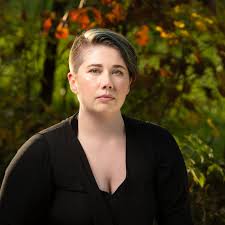
Noah Ashley Blooms (they/them) is the author of two critically acclaimed novels, Where I Can’t Follow and Every Bone a Prayer. Their work has been nominated for the Crook’s Corner Book Prize, Weatherford Award, and Judy Gaines Young Book Award, and they have been named a South Arts State Literary Fellow for Kentucky. Their fiction and nonfiction have appeared in The Year’s Best Dark Fantasy & Horror, Fantasy & Science Fiction, Strange Horizons, The Oxford American, Reactor, and elsewhere. They received their MFA as a John and Renee Grisham Fellow at the University of Mississippi and are a graduate of the Clarion Writers Workshop.
About the Narrator
Dani Daly
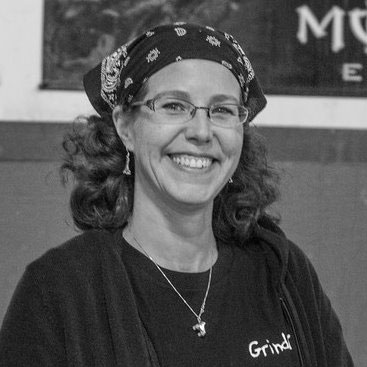
Dani Daly is a jack of many trades, master of none. But seeing as she loves the rogue life, that’s ok with her. You can hear stories she’s narrated on the first four Escape Artists podcasts, StarShipSofa, Glitte
