

PseudoPod 1015: What Haunts the Newbuild?
Show Notes
What Haunts the Newbuild?
by Meagan Kane
If the dead who loved her haunt an old home’s bones, what haunts the newbuild? What makes her creak and moan? Every house is a violence—and a weathered house knows this better than most—but if the trees that once stood on her land form an old home’s dead-spirit frame, what drywall-and-laminate ghosts have lent their souls to the joining of foam and caulk?
The old house asks herself this as she watches her new neighbor assemble herself, fresh foundation and fragile frame tin can telephone line close to her stucco-and-old-growth self. The girl’s paint hasn’t finished drying yet. Her floors teem with gasoline planking; she treasures the feature enough to name herself after it.
“What do you think to eat off of, little one?” asks the old home. “However will you make yourself strong?”
“I am light as air,” says LUXURY VINYL FLOORING. “You are good bones. You sink down heavy and crackle to dust; why will you not strip yourself clean and live as I live, free of wood and worries?”
Life runs through the old home’s halls. Wood windows open on broken sashes, propped up by wood blocks and least favorite books, lead paint atomized into elemental inhalants. An old man coughs upstairs; children play in the yard. There’s a pink plastic slide; a little girl catapults down it over and over, laughing as she hits the mud, the first thaw fresh about her. In three months’ time, the old man will slip down too-steep stairs during a coughing fit, slide down them just as the girl does, the same head-first tilt. His soul will settle in the dappled light coming through the stained-glass window. The girl will spend her whole life fretting over railings, taking steps one at a time, searching for bungalows: in this way, the house will never leave her.
“Come,” says Good Bones. “I will teach you.”
Every house eats its inhabitants; every home makes their meals dance for them, gnawing away at their cells and years as they strip wallpaper and ground sockets. A good meal can last three decades or more; will digest slowly afterwards. This the old house attempts to teach the new: the subtle art of tetanus and mousetraps, the slow satisfaction wood varnish and fresh piping can bring. The newbuild needs no replacement piping, and leaks without instruction. She sips at couples touring homes, guzzles down builders, worms into inspector’s lungs. Eventually, a nesting brood crawls into her warm hollow, man-and-wife-and-son. They have three dogs, one of whom will be hit by a car before next spring.
This too Good Bones wishes to teach the foolish child, her past-and-future craft. “The years unspool as they walk through your body, making themselves known; you may alter them here or there, but such rearrangements sap strength, require you to spend yourself, should you have the spirit to use as coin in the first place.”
“My coin suffices; my knowledge, endless,” says LUXURY VINYL FLOORING.
“The secret is to keep them as long as you can, until they have no choice but to embed themselves in your heart,” preaches Good Bones, not heeding the child’s words. “The closer they grow to you, the more each room becomes without-time.”
LUXURY VINYL FLOORING whistles childish impatience. She flaps superficial shutters; the siding facing Good Bones rattles in the wind. “Come, let’s have a contest, if you think yourself the better. Cast out your current grievers, now that the old man is dead, and refresh yourself with new stock. Let one year run its course, and at the end we will see whose stomach is fuller.”
“Five years,” says Good Bones. “One is nothing, little thing.”
LUXURY VINYL FLOORING laughs, petroleum by-product stench wafting off in short bursts, ah-ah-ah. “Then you should not fear. One year, counting from when you gain new boarders, and at the end, we will count up our dead.”
“Wagers should have stakes. What will you offer to me, when I win?”
“The cherry tree at the boundary between us, and the gooseberry bush. They will have your savor, not mine, and the lawn mower in the shed will break; pollinators can run riot over my back lawn, enriching your garden beds and shrubs.”
A fine prize: fruiting plants produce lingering memory, and present dangerous opportunities; there is always the chance for heavy metal contaminants from wrongly-placed produce, choking hazards, accidental poisonings. Two small bundles rot under the tree, flitting spirit-fragments caught in the branches, useful little things. A man died near the gooseberry bush a thousand years ago; he is the oldest thing Good Bones can imagine, and she has wanted his smooth pebbly remains for decades.
“Fine,” she says. “The winner will have gooseberry and cherry, and—”
“And when I win, another prize for me, dear teacher.” The shutters flap again, ornament-only. “You will abandon those nasty wood floors for something new.”
Good Bones has had her floors covered before, but LUXURY VINYL FLOORING intends to sacrifice them entirely. Sensing her reticence, the infant says: “If you are so confident in your success, the bargain should be no burden.”
“Then if I win, you shall repaint yourself in addition to the rest: mint, perhaps, or a light blue.”
The new house agrees. They have no hands to shake, but Good Bones’s old family leave a ladder and a basketball hoop for LUXURY VINYL FLOORING’s occupants, who in turn bake bread for Good Bones’s new couple: this is handshake enough. The contest begins.
Before Good Bones had inhabitants, her builders lashed bone to bone, fresh and steaming tree corpses climbing stories tall, cracking screams still filling the air as the slow, forceful magic braided itself from foundation to trusses to frontispiece. Every house is a violence; every violence a meal. Long ago, she sucked the meaty pulp from her floorboards, fixtures, built-ins; she feasted upon the framing, and licked the marrow-sap off her teeth when her banquet ended; by then, her nesting humans had grown attached to her plaster and old growth frame. She had drawn first blood. Now she invites her new inhabitants to tour all she might offer. Come, sit atop her lolling tongue; come, see:
An inhabitant from some decades ago greets her new nesters before they reach the door, an unremarkable man bundled against long-gone frigid air, shovel in hand, wandering restlessly from property line to front stoop; he died mid-shovel, his body found by his neighbor thirty minutes later, cardiac arrest, taken before his time.
The front door swings uneasily with a lesser haunting, a worried woman staring out the small window, summoned there by an early snowstorm on a haunted day three decades ago; her fretting gummed up the hinges with its power and a scrap of her soul caught in the pins when she passed, though she did not die in the house. Good Bones’s new house-wife shivers to step through her.
“Shivers?” asks LUXURY VINYL FLOORING. “Is that all?”
Good Bones ignores the young house. She shows her nesters the living room (the floors creaking with long-dead children hiding from parental drunkenness), the dining room (the built-in buffet reeks of anise and aquavit, the floor of food poisoning and icily silent meals), the kitchen (lead pipes, naturally, and a pantry where one boarder, hid, crying, whenever she cooked for the other boarders; tasty clockwork). There’s the precipitous drop off into the basement, the damp musty smell hanging about the crumbling walls. Wood paneling lines Good Bones’s bottommost chambers, a small warren of rooms not meant to see the sun.
A decade ago, the old man put an egress window into one moist basement corner, consuming his whole year. And what a sweet year it was! Contractors in and out, dusty disturbances, endless little fixes cascading outwards. Good Bones had already gotten under the old man’s skin by then, which meant he wouldn’t let a job for her go half done. She’s glad he died here; the stained-glass window feels right for him.
Now she must ensure she snares the new without misspending the old. She charms first: the house stays warm through an unseasonable cold snap, drinking glasses sparkle when washed, the drawers in the built-in fixtures barely creak. She pours the memory of a young girl sweeping the floor over the wood like oil, and it gleams.
When the new boarders host a party on her behalf, she preens. The toilet doesn’t clog at all. Her new house-wife shows friends about the upstairs. “The bedrooms are a little small,” she says. “But so much character!”
“I love the wood,” says one of her little friends.
“And the windows, so cute,” says another.
The third friend looks about, lips pursed. A spirit sinks clammy hands into her ankle, a potent one, a woman who died back before they all crawled off to other buildings to die, denying Good Bones her most powerful prizes. The woman’s hair clings to her, wet with sweat; she swims in her own blood. Good Bones’s house-wife must wade through her each night, and each night the house-wife feels a tiny, private dread she cannot explain. The wall-cracks settle pleasingly. Dread feeds dread. She never feels as if she’s cleaned the floors enough. This winter, she will sprain her ankle on them as the house-husband, through the window, spots the neighbor’s dog running into traffic, his concerned cry startling her to action. Good Bones can see this in her mind, anticipatory, imagining the feast she’ll make of what she’s invited in.
For months, Good Bones carries out her usual schemes, nurturing house-wife and house-husband, carving thin slices from them like the meat-things they are. They nest in her hollows and start gestating under her watchful auspices. The wife grows rounder. Late August heat makes her crabby; October cold does as well. She scrubs the floor on hands and knees. She cannot get the blood taint out.
“The floors are fine,” says the house-husband.
“They’re sticky,” she says. “I have to get them clean.”
He tells her she shouldn’t be doing this in her condition; she tells him to stop mentioning her condition every three seconds, thank you, and what will they do when her mother visits and notices the floor’s wrongness.
“We could replace it,” says the husband.
No, no, a miscalculation. Good Bones spends some of the stained-window soul to make the room just right, the floor and trim and wall color all perfect compliments to each other. Light shines on all natural baby products; would they really put fresh spawn around something so nasty, so gaudy, as artificial flooring?
“It’s probably the hormones, ignore me,” says the wife.
She sits on the floor weeping. The blood pools around her, invisible. After the paperwork was signed on the house, Good Bones engineered a meeting between her and the old man’s daughter; her new house-wife recalls the daughter’s thin lips, her funeral black, how she said he loved this house too much to leave it, I guess. She scrubs the floor again. The dead woman wraps icy fingers about her wrist.
Inviting new life in does not differ much from letting old life out; walls grow thinner during transitions. The house-wife’s belly swells. She sees shadows where the husband sees none; when she traverses the stairs, she moves to the side, as if passing someone. The wooden banister creaks, protesting. Her fingernails dig into the wood, the keratin chipping. She considers sending the old man’s daughter a message—you never disclosed haunting on the truth in sales report—but worries this will sound hysterical.
The house-wife attempts to transmute her concern into assurances: he loved this house, she tells herself. He would not wish to leave. She ties herself closer to Good Bones each time she does.
Where will the woman haunt? Will it be the stairs? The foyer? Will she burn herself in the kitchen, or run afoul of ancient wiring in the living room? What would Good Bones like best? Which room most needs a pretty jewel?
No, the bedroom, she decides. She’ll make the fall a spectacle too terrible for the woman to escape. Good Bones likes the idea of the wet, dripping one having company her own age.
But if the dead that haunt her halls love an old home’s bones, what loves the newbuild? What makes her shriek and groan? LUXURY VINYL FLOORING’s husband-and-wife-and-son do not know what to do with her. They take in her fine self, her sleek floors and white cabinets and gleaming stainless steel appliances, and think ah, we should not touch her; ah, she is too sacred for our hands, too strange. She revels in this worship, the trick given to her at birth: she is made of fixedness, permanence, the last house to ever life.
The arrogant old hag across from her thinks she knows stability, but all she knows is good bones, being a skeletal frame for any who cling to her to paint their desperate dreams upon. So needy! No thank you. Why spend decades lusting after one silly basement window, hoping the vermin inside will love the bones enough to paint new flesh atop them, when instead you could cause endless confusion, and with it, endless delight? Obscure the mechanicals. Leak mysteriously. Hide one remote, and watch them scurry for days, confused in their own residence.
Every old house was young once, and LUXURY VINYL FLOORING imagines Good Bones committed terrible crimes in her youth to store for herself something strong. Back then they all died in homes, blood could come easy. But the newbuild does not need the simple trick of bleeding out to get what she wants, to grow heavy with power. She soars light as air and needs no heaviness. She rises; the old home sinks.
But what feeds the newbuild? What keeps her strong? Her stomach should lie empty, these unfortunate sips merely tiny tastes of true power, an amuse bouche for a sophisticated palette. To the hag, she must seem to run on empty, but does so with aplomb, siding shining, thick grass wilted only where the dogs have pissed. One dog favors the air conditioning unit for his target, wearing down internal structures with constant urea streams. LUXURY VINYL FLOORING’s husband and wife have noted the dog’s misbehavior but have yet to act: a neglect they will come to regret. This regret will serve as tether, a constant nagging thought, that summer, if we’d had the AC running, maybe we could’ve …
They do not think this now, though. That is the next-year future, which is the house’s domain, and not theirs. Instead they think, where is the remote, and have you paid for the refrigerator subscription, and why will the biometric scanner on the liquor cabinet not respond, even if we beg so sweetly. They give her camera-eyes and endless fearful attention. It is the easiest trick in the world to keep them off balance; alarms ring constantly, and they blame rodents, thieves, the wind. LUXURY VINYL FLOORING laughs to herself, giddy.
October cold turns to brittle December frost. The newbuild’s inhabitants shiver in their thin-walled home. The heated driveway works just often enough to allow the snowmelt to freeze and refreeze into a perfect ice sheet. The husband-and-wife-and fuss, worry about ruining the concrete with salts and chemical melts, console themselves with their four-wheel drive. No one can find anything wrong with the mechanisms; no one will. Still (they comfort themselves) at least they are not married to fickle street parking only, as the neighbors are.
“You have done little to secure your stores for winter, little one,” says Good Bones, that jumble of creaking sticks.
“Winter provides rich opportunities for commerce, broken hearts, slick floors. The dog will pass, and the boy will see, and they will be reminded of the death come summer, when the cooling system breaks, and the wife suffers heat stroke. How terrible!”
“But she will live and find this commonplace; it happened in the last house as well,” says the hag.
Ah-ah-ah, the old home can predict patterns well enough—may see her tenant’s lives laid out on her precious hardwood in her beloved plaster walls—but LUXURY VINYL FLOORING can see into eternity. Let the ruin play her games with her own house-wife. Let her crow over her egress window, her leaded glass, her original fixtures. LUXURY VINYL FLOORING flickers her alarms on and off. Her inhabitants settle in for another sleepless night, debt accumulating under their fingertips like grave dirt.
“Mine indebt themselves to me as well.”
“Their serfdom does not sour them as thoroughly. They do not even consider service serfdom; it is knighthood. You are Good Bones, you are structure to build onto. I am complete.”
“You are complete as saplings are complete,” says the old, decaying thing. “You have nothing in you that can be made into strong supports, beams, floors, joists. You are only good for chips and trim. I have seen your kind before; they do not last. You will not either.”
How delicious, that she thinks so. LUXURY VINYL FLOORING sups on her ignorance like a baby nursing.
The next few acts pass as the houses foresaw, in their finite spatial wisdom: the dog meets its end under truck tires, winter thick outside; the hag’s husband, distracted by this, shouts for his wife to come see; she slips and falls on her overripe belly; so sad, another mediocre haunting added to the pile. Yawn. LUXURY VINYL FLOORING’s husband-and-wife hear her screams from their thin-walled bedroom; they have yet to realize they are part and parcel with the tragedy. The dog dies slowly as the boy watches, breathing heavy as it pants its last. They will all blame each other for its escape; their squabbles will echo for months and months.
Their irritation at the shrieks emanating from Good Bones’s hallowed halls matches LUXURY VINYL FLOORING’s own. Yes yes, so sad, fresh life turned to dust; the hag should thank her.
“We will share this feast,” new tells old.
The hag does not understand. Ah-ah-ah, how funny! The house-wife shrieks and screams. The house-husband runs for aid. His car rests three blocks away due to treacherous street parking, and his mind grows thick with fear. He sprints for the neighbors, across their slick driveway; slips, falls, a slapstick tragedy.
Good Bones feels her house-husband’s future presence diminish; this was not how it was supposed to go. He should spend forty years here, and pass her to his children, who will not know how to let the house go either, so crabbed over it will be with their parents’ whole history. Rooms rearrange themselves with frightening speed in her future, her vision obscuring. The house-husband’s soul starts to snag on the boundary between the two properties.
“That was mine!” says Good Bones.
No use. The newbuild’s child spots the man’s life trickling away, part and parcel with the dog panting its last; more shrieks and screaming cause the bleeding house-wife to stagger towards the sounds. She leaks everywhere, amniotic fluid mingling with her blood, ankle buckling underneath her as she drags herself towards—Good Bones rattles, furious—the boundary-line, the damned unheated-heated driveway, widening the path of her haunting.
“We will share the feast,” says LUXURY VINYL FLOORING again, now that Miss Brittle Bones can understand.
No, no, no! Good Bones spends her snow-shoveling dead down to nearly his last stub to slow the wife, his corpse weighing her down, his shovel in her way, but this cannot stop her, not forever. She drips a trail towards her husband. Of course she will haunt there: how could she not? At best Good Bones will have timeshare claim to her spirit as she wanders from bedroom to death site, over and over.
Sirens squeal closer. They will ring in the house-wife’s ears forever. LUXURY VINYL FLOORING sighs and smacks her lips.
“Neighbor, you should find another brood, and then we can share again!” she says.
The house-wife lives, but no more will she walk through Good Bones’s halls. The old house attempts to console herself: one spoiled winter does not disaster make, not if one has sufficient stores and spirit still to spend. She must spend quite a bit to keep the cleaners the house-wife sends from ruining her finishes through carelessness, and the stubby snow shoveler spirit she expends on discouraging a surviving neighbor-dog from pissing on the property line; if it becomes habit, the thing will ruin her grass.
She spends more than that to keep the workers away from her floors, but the house-wife continues to push, scheduling new ones when old ones quit, threatening to tear each floorboard out herself, even as a contractor tells her it would be so much easier to cover the wood up.
“No, I want it gone,” she says. She can see the glistening ghost that was to be her companion from her vantage point on the wilting lawn. “Get it out. I don’t care what you replace it with.”
And this, then, brings them to June. Good Bones has lost.
#
“How?” the hag asks the new thing, sleek and shining and stronger. “You have nothing to grow from, no deaths to start you out.”
LUXURY VINYL FLOORING laughs and asks the hag if she truly cannot see. The first floorboard comes off. Good Bones bids the infant not test her, not now.
“You still think me infant,” says the newbuild. “Hah!”
Life was long ago leeched from that which makes her petroleum planks and finishes, but still those ancient creatures off gas their discontent, putrefying air such as to make any man retch. Her faded specters speak not to fresh blood but to old, old rot. Every house is a violence, yes, and LUXURY VINYL FLOORING’s furnishings and floors teem with violence, resource acquisition, fumes, wars, drills, famine, drought, smog. Her husband-and-wife-and feel faint floating over her floors, sensing some thick Pre-Cambrian sludge about them; her guts and gutters compressed themselves for millions of slushy, hateful years in order to bear this dreadful vinyl fruit.
“The trees that fell to make my baseboards housed owls and squirrels and many crawling things,” says Good Bones.
“Oh, so sad! But what is a few trees, compared to ancient seas destroyed and buried and destroyed again?”
“My lead coatings cruelly withered many men before their time.”
“And when I laugh, I wither the future,” says LUXURY VINYL FLOORING. “You talk to me of peering into the future-past, and yet you did not realize I steal from there to make myself rich here? You live moment to moment, tenant to tenant; every tenant is my last, every creak of my boards releases souls, off-gassing into their very marrow. You are good bones only—do you think that to be good enough?”
To this, the hag has no answer. The newbuild’s dead cry and shriek and groan, innumerable, grey, each one bellowing for revenge. The old house’s floors crack and crumble, board after board stripped out and thrown away.
“I am the oldest thing alive, little lodging. I am the last house to ever be built. You are an extinct creature, and I am made of those. Hurry up and crumble: I am so frightfully hungry. I have been dead for so very long.”
Host Commentary
I love the way Meagan Kane wrote the two houses to have distinct personalities, and you find yourself rooting for one or the other. While many of us think about houses being haunted, we don’t usually think about them doing it on purpose. If you enjoyed it as much as I did, you can check out her other stories, ‘The Only Piece Left’ and ‘Playback’, at mkanewrites.com.
About the Author
Meagan Kane

Meagan Kane writes science fiction out of love, and horror out of burning necessity. She lives in a hundred and ten year old house in Minneapolis with her wife, who refuses to believe in ghosts. You can find her writing in Cursed Morsels zines, her games and interactive fiction at mkane.itch.io, and her online presence on Bluesky @spocksbrain.bsky.social.
About the Narrator
Dani Daly
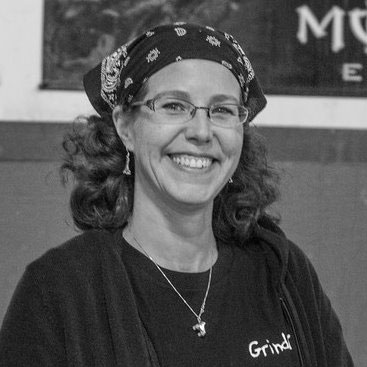
Dani Daly is a jack of many trades, master of none. But seeing as she loves the rogue life, that’s ok with her. You can hear stories she’s narrated on the first four Escape Artists podcasts, StarShipSofa, Glitte
