

PseudoPod 1005: Do It
Show Notes
Note from author: The pizza joint in the story is based on a locally (local to me) famous spot in Boston’s South Shore. Having been raised on the North Shore I take umbrage at this city having ‘shore’ anywhere near it in geographic designation as it’s at least a 30 minute drive from any shore. Anyway, I moved to this city in 1999 and I have dreamed of robbing the place in fiction for years, but I never found the right story until the 120 Murders anthology invite from Nick Mamatas. I finally found a way to, well, do it. Sorry.
Do It
By Paul Tremblay
It’s early March 1993 and Generation X sorely needs an antihero. Not a folk hero, you fucking hippies. Not a sponsored, manufactured musician in Chuck Taylors and unwashed hair, not even if he’s a morosely self-aware and self-flagellating genius (sorry, Kurt). Certainly not one of those pre-packaged, obnoxiously beautiful sellouts from The Real World. We need one of us. We need someone who is living this shit for real and not someone washing themselves in a corporate spotlight. We need someone like Kelly G.
End of fifth period lunch and Kelly G. was in the courtyard, orange Walkman headphones around her neck instead of over her ears, music from a mixtape spilling out. She was sitting on top of her black Dickies sweatshirt under the lone spindly tree in the space. It had taken her more than a full academic year to claim that spot as hers. She didn’t have many, or any, friends in Stoughton and she liked it that way. Kelly wasn’t ugly. She wasn’t pretty. She liked that her arms and hands and legs and feet were too long for her torso. She wore glasses with photochromic lenses that stayed shaded under the decrepit school’s florescent lights. Her hair was dark, long, and curly, which, apparently, made her ethnically indeterminate based on the number of times white kids and teachers asked Where is your family from? She was mostly Portuguese with a name that ended in a “z” if you must know. But she knew who she was and she didn’t care what anyone thought of her, which made her an intimidating one-of-one in that school. With five minutes left in the lunch period, a nineteen-year-old senior named Jared wandered over to her tree. He had been on the wrestling team until last year when the school shit-canned the program due to budget cuts. Jared wasn’t ugly. Jared wasn’t pretty. He didn’t have any close friends, but he moved through the social strata of school freely and without consequence. The hallways and locker rooms whispered that he was tapped in the head, not someone to fuck with, not someone to be hanging out with—not after the cops had broken up the party in the woods near Ames Pond. The stupid freshmen believed he’d stayed back twice and had no mom. The annoying sophomores swore he’d stabbed a kid behind the football bleachers and he had no dad. Rumor and myth aside, he was the kid who crossed out the “S” on three now entering stoughton street signs as though he’d invented, or claimed, the Toughtown nickname. Like the name and the whole fucking town, Kelly figured Jared was all bluff, all bluster. Jared stood with his scruffy Jordan Nikes inches from Kelly’s boots. He rubbed a hand through his bangs and then the stubble undercut, waiting for her to say something first. She didn’t. He turned his back to her and mumbled, “You work takeout at the Star?” She said, “Yeah, but I don’t have your order.” He said, “You work there on Fridays,” like it was a pronouncement, a portent, and not a question. She said, “Sometimes.” He said, “Maybe I’ll see you there some Friday.” Sometime between her standing and tying her sweatshirt around her waist and him leaving, the bell rang.
We need someone who was weaned on Judy Blume, Kindred, Stephen King, Maus, The Handmaid’s Tale, stacks of Choose Your Own Adventures, but definitely not any of the Beats or any of the other books from the ’50s and ’60s that her high school teachers constantly push (okay, fine, in middle school I was totally into The Outsiders). We need someone who was weaned on shitty cable TV movies and Barney Miller and Family Ties and The Facts of Life, and yeah, fine, MTV, too. We need someone like Kelly G.
That next Friday Kelly G. worked the takeout counter with two soccer players who only talked to her when they had to. Not that there was time for chat because it was fucking Lent and every quasi-Catholic asshole in on the no-meat-Friday charade was getting pizza. Lenten Fridays got so busy the restaurant paid a dumbass cop to direct traffic in the lot and prevent fistfights over parking spots and near fender-benders. Town Star Pizza was hailed as the South Shore’s best pizza, despite Stoughton being no-fucking-where near any shore. It couldn’t have been more overrated as far as Kelly was concerned. Cracker-thin crust and personal-sized bar-style pizza. A wall with a single connecting door separated the takeout area—a square room that included soda fridges and a brand-new, standalone ATM next to a Keno screen—from the sprawling, always-packed restaurant and bar. Takeout even had its own parking lot, in theory. But on a Friday during Lent, all parking bets were off. At thirty minutes to closing, the ATM was out of cash and the line for takeout was a formless mob that spilled out the door. The whole night had been a blur of Kelly calling out first names with last initials and telling the occasional yuppie from Canton that the Star was cash-only and pointing out the ATM. Kelly allowed herself to look at the clock again and it was still, somehow, thirty minutes till closing. Thirty minutes to decide if she was going to beg a coworker for a ride or walk the two miles home in the dark. Someone in the kitchen slid a single pizza through the mail-slot-type hole in the wall between the kitchen and takeout and onto the counter behind the registers. She loudly read the name on the order slip: “Jared F!” Jared broke from the mob and stepped up to her register. He wore a Red Sox hat, pulled low, and a smile that was lower. Kelly told him the price. He passed her a ten. Kelly pressed buttons and opened the register, stuck the ten in its bulging slot, gathered the change, and closed the drawer. Jared said, “A lot of cash in there.” Kelly said, “Fucking Lent.” He nodded, sprinkled a single and change into a tip jar, and said in a voice that was lower than his hat and smile, “We’ll talk.”
Let’s talk about the name Generation X. It kind of sounds cool, mostly. The “X” because you can’t define us, right? It’s already being overused and corporate-opted. And it’s not like we’re all cool. Some of us are the worst people we know, and they will only get worse as they get older. And hey, is it weird that Generation X came from some Canadian novel? Not that there’s anything wrong with Canadians. And sure, fine, he got the term from somewhere else, but it’s that novel people will remember and credit, and it wasn’t even that good to be honest. Let’s be honest because I will always be honest. People will remember Kelly G.
Kelly G. was back at her tree during Monday’s lunch. She was the only one outside because of a hard drizzle, the sharp and pointy kind. It was glorious and she didn’t want to waste a day like this in school when she could be in her room with her window open and listening to music, so after lunch she went to the nurse and said she was coming down with something. The nurse didn’t argue. Tuesday was different. The sun was out and it was warm, too warm for March, and half the school was outside. The underclassmen chased and wrestled and giggled, and the juniors roamed and mingled, and the seniors, who were tired, huddled in packs. Kelly hated it all and sulked under her craggy tree. At least her lenses were full dark. Nearing the end of the period, a tumbleweed of freshman boys rolled by and when their noxious cloud of acne and body odor cleared, Jared was there. His back was turned. Though she couldn’t see his face, she knew he was smiling. He said, “Can we talk?” She said, “About what?” He said, “How much money are in those registers?” She said, “Depends on the day.” He said, “I bet there’s always a lot.” She said, “Then why’d you ask?” He said, “Wanted to hear your answer.” She said, “If you’re gonna ask me to skim for you, you won’t want to hear my answer.” A teacher popped out of a door and yelled at some sophomore girls who were passing notes through an open cafeteria window. The girls ignored him. The teacher looked like a moray eel as he sank back inside his hidey-hole. Jared said, “I’m not asking you to skim.” She said, “Are you asking me something?” He said, “More like telling you.” She said, “You haven’t told me anything.” He said, “I’ll be back to see you one of these days.” She said, “Another Lent Friday?” He said, “A day when there’s no cops outside.” Kelly laughed. She didn’t believe him, just like she didn’t believe anybody, including herself. But she did believe he was being serious in the moment. She said, “I’m not helping.” He said, “I’m not asking you for help. You don’t have to do anything. In fact, I’m here telling you to do nothing. No calls to no one—that part is important. And if anyone asks you anything, you say nothing. Can you do that? Can you do nothing?” Kelly said, “I do that all the time.” He said, “I bet.” She said, “Do I get anything for doing nothing?” He said, “Yeah. After I see how well you do nothing.” The bell rang. Kids mock-screamed and scream-screamed. Their sneakers squished in mud. They funneled through the double-wide cafeteria doors. Kelly said, “Sounds like a threat.” He said, “No, a threat would sound like ‘I know you live in Wood End with your mom and your little brother and you don’t lock your front door.’”
The Lost Generation has a cool ring, but it tries too hard. O, woe is us. Like, how bad do we have it? They tell us we don’t have it that bad. They always tell us that. The MTV Generation can go fuck itself. Latchkey Generation is okay and maybe the most accurate. But some of us can’t be trusted with keys or the lock might even be busted. Are all our parents divorced? Do they all work late hours or just not come home sometimes? Whatever you want to call us, we don’t care. We just need someone for whom heartbreak, loneliness, and alienation isn’t a convenient pose and is instead their resting state. We need Kelly G.
Eighteen months ago, in the middle of her sophomore year, Lobsterman Dad—she sometimes imagined him with pincers for hands and beady black eyes, and sometimes what his subverbal grunts and huffs would sound like if he were plopped into a pot of boiling water—fled Gloucester for Maine. He called once every two months like clockwork. Mom, in an act of revenge and self-sabotage, moved Kelly, her younger brother Tommy, and their dog Peru south and inland, into a two-bed one-bath rowhouse here between big bad Brockton and affluent Sharon and Canton. Mom answered phones at the Department of Public Works by day and two, or three, or four, or five nights a week she either tended bar or just hung out at Doyle’s. Mom said, “You’re not funny,” whenever Kelly creatively pointed out the bar’s proximity to the Foxy Lady. Mom slept on a pullout couch in the living area so Kelly and Tommy could have their own bedrooms. Poor Peru was relegated to a too small penned-off area near the front door because of some skin disease that made her back and haunch fur fall out in clumps. Mom never tired of the observation that Peru’s ass looked just like her ex-husband’s balding head. That afternoon, Kelly got home a little after 3:30 p.m. The front door was locked but it didn’t stay locked if you pulled and pushed up on the handle. She swung the door open slowly, careful to not ram it into Peru. A toxic fog of stench greeted her instead of the dog. There was an elephant-was-here pile of shit on the floor, just beyond the reach of the swinging door. She said, “Jesus, fuck—Tommy?” No answer. The middle school got out earlier than the high school and most days she came home to find Tommy playing Nintendo. He must’ve come home, saw the mess, and let Peru out—Peru spent more than half of her days roaming free in the complex; that she always came back made Kelly feel less guilty about her not being allowed in the rest of the apartment. Thomas probably went on his own roam of the complex or to the McD’s in Cobb’s Corner because he didn’t want to deal with an oil spill of dogshit. It had a weird, gross film of mucus on top, too. Kelly was pissed at Tommy and a little worried about the insides of Peru’s gut. Then she flashed to Jared saying that he knew where she lived. Maybe Jared had already come by and fed Peru chocolate or rat poison, or rat poison with chocolate. That dog would go to anyone and eat anything. She worried about Jared finding Tommy walking down Central Street or in line at McD’s, and like the dog, Thomas would go to anyone and eat anything. The worries were vague enough in their threat to become even more worrisome. Kelly stepped over the adjustable fence, went to her bedroom, snagged Dad’s old Polaroid, and paused in the doorway. Now, Kelly didn’t believe in signs from the universe. She didn’t believe the universe was a sentient, give-a-crap entity. That didn’t mean this epic shit pile didn’t have meaning. What it was, was a metaphor. Kelly believed you could find or make metaphors if you stayed open to them. Kelly went back into her room, opened the top underwear drawer, and plucked out a red-handled pocketknife with a single, squat three-inch blade. She had a plan. She had a plan for the shit, and a plan for Jared, for everything. Kelly pocketed the knife and returned to the scene of Peru’s crime. With the toe of her boot, she slid the water dish next to the shit. She needed the dish for scale. She snapped a picture. The Polaroid whined. She stepped over the fence and put the photo and camera down on the coffee table. She gathered up paper towels, a quarter-full bottle of Pine Sol, and a garbage bag. As she cleaned, dry-heaving from the foulness of it all, and the shit pile, still, somehow, radiating heat through the wad of towels protecting her hand, she considered the metaphor more deeply. Maybe it represented what she’d been dealt in the short term. Maybe it represented what she would continue to be dealt if she followed Jared’s “Do nothing” demand and threat. The shit cleaned up, chemical cleaner tanging the air, garbage cinched and tossed out front, Kelly patted the knife in her pocket and then hung the Polaroid photo of the dish and the shit onto the fridge with a Town Star Pizza magnet. She wrote a message on the photo’s wide border at the bottom. The message was and would be for everyone: Look what Kelly G. had to fucking clean up!
We’re the Loser Generation, and that’s okay. There’s dignity in losing. There’s dignity in longing and needing. We need someone who’s used to losing and used to being ignored, dismissed, or not even considered. We need someone who is invisible. We need someone who will make us feel her dotted outline. We need someone to make us feel something, anything. We need someone who might go away but won’t ever die. The past isn’t ours. We don’t want it. We should’ve been dead already, incinerated in a thousand nuclear flashes. We have no future. For many of us, it has already been determined. We need someone who knows we’re dead already. When we hear my story, some of us will pause and think and laugh and cry and raise a fist and curl a lip and sigh and shake our heads, and someday we will remember me not because I sang a song or wore cool boots or pouted for a camera, but because I showed us the consolation of losing is the same as the consolation of caring. It’s May 1993 and Generation X still sorely needs an antihero. We need Kelly G. We need me.
Fucking Lent ends and more days and weeks pass whether or not anyone wants them to. Jared doesn’t talk to Kelly G. again at school, doesn’t even come outside during lunch anymore. He doesn’t show up at the Star, either. No matter, because all the waiting makes what he has planned and what she has planned more real. Kelly runs through every possible scenario in her head, and daydreams about what everyone in school and in the town and in the country will think and say about her. She can’t help but imagine angsty, noisy songs written about her; preferably at least one by Buzzcocks. The songs are popular but not too popular, and they piss off the right people. She can’t help but imagine a movie, something dopey but still kind of awesome like The Legend of Billie Jean, being made about her. She hates herself for thinking that her antihero status requires pop culture approval but would welcome such approval with open arms and rolled eyes. Then, finally, on a sleepy Friday in mid-May, Kelly works the register alone because it’s only 4:30 p.m. More register jockeys won’t be coming in until after five. But Kelly isn’t alone, the knife in her pocket keeps her company. Besides, the takeout area isn’t empty; it’s never empty. Someone’s mom who smells like cigarettes and regret works the Keno window and register, and she half-assedly flirts with two grimy dudes who only have eyes for the animated Keno numbers appearing on the screen. There’s a high school couple from Easton dressed in their obnoxious Oliver Ames High School gear waiting for their order. Behind them is Jack P., a reedy, melting candle of a mechanic from the body shop across the street. He always orders two pizzas pre-Friday rush: one with cheese and one with linguica. Kelly has her back turned, watching the counter between her and the kitchen, when the front door bursts open, accompanied by a heavy shuffle of feet and gasps and a scream or two and then above it all, a shout: Everyone against that wall! Now! Kelly turns and she has a smile on her face. She can’t help it. The smile is nervous and hungry. Jared waves the handgun like it’s a flashlight in a dark room. She imagined a beat-up shotgun, maybe sawed-off like in the movies. He quickly herds the customers up against the wall between takeout and the restaurant. Jared is dressed all in black, including a ski mask, and—good for him!—his sneakers. Kelly had imagined him wearing his stupid Nike Jordans. The handgun and black sneakers are a sign that he put some real thought into this. Though not as much as she has. As ready as Kelly is, she doesn’t know how this will turn out, and that only widens her smile. Jared orders the customers to lie on the floor and the two grimy dudes block the door to the restaurant with their whimpering bodies. Kelly wonders if a second person is waiting in an idling car in the mostly-empty parking lot. Either way, she knows Jared isn’t planning on giving her a cut. The Keno mom on the other end of the counter has her hands up. Did Jared ask her to do that? Kelly has her right hand in her front pocket. Jared’s view is blocked by the register. That hand pulls out the knife. She opens it, then curls her left hand around the knife’s small handle. Jared throws a cloth bag to her and says, “Fill it.” He turns and pivots, a weathervane in a storm, trying to keep an eye on everyone and everything at once, when he should be keeping an eye on Kelly because her plan isn’t do nothing. She says, “I know who you are.” Jared turns to stone, briefly. Then he approaches the counter, gun arm extended, no bend in the elbow. He says, “No you don’t.” She says, “I’m pretty sure I do”. Keno Mom whispers something at Kelly, but Kelly doesn’t hear it. She refuses to be distracted now that she’s finally here, at the moment she’s imagined nearly every waking minute of the past two months. This is her moment of chaos within chaos. Jared must sense this in some dumb animal way. His eyelids flutter and he bares his feckless teeth. “You don’t know me,” and he says it as bratty as a kid who doesn’t want to share his toy. He licks his lips, and adds, “But you’re a problem, now. I have the solution right here.” He stops walking, with the gun hovering halfway across the counter. His hand trembles. Kelly presses a button on the register. The drawer clangs open and Jared jumps. She laughs and says, “Nervous Nellie.” He doesn’t say anything. He continues blinking and continues not seeing her left hand, which is hiding under the bag he threw to her. Jared isn’t all talk, but she’s going to find out how much talk he is. Kelly says, “Do it.” He says, “What?” She says, “Do it.” He looks to his right, at the Keno mom and the customers on the floor, like maybe they’ll help him. Kelly grabs Jared’s wrist and pulls his hand and the gun toward her, pressing the muzzle against her own forehead. Momentum stumbles him forward until the tops of his thighs are pressed against the counter. He asks, “What are you doing?” Her eyes are on his eyes and she easily wins that wrestling match. She raises the knife, slow and smooth, and presses blade tip under his jawline, dimpling the skin. In one of her endless imaginings of this moment, she told him that she was a lefty the second before she bullied the knife under his skin. There were endless times she imagined a blood cloud billowing from the back of her head and her falling to the floor, a fall into grace. Now that the moment she imagined, that she crafted, a moment with only two possible future outcomes, is here, she wants it to last longer. She wants it to last forever. The best part is, is that it will last forever for us. After. After she says, “Do it,” one more time.
Host Commentary
So the truth is, sometimes you have to do it.
A note from the author:
The pizza joint in the story is based on a locally (local to me) famous spot in Boston’s South Shore. Having been raised on the North Shore I take umbrage at this city having ‘shore’ anywhere near it in geographic designation as it’s at least a 30 minute drive from any shore. Anyway, I moved to this city in 1999 and I have dreamed of robbing the place in fiction for years, but I never found the right story until the 120 Murders anthology invite from Nick Mamatas. I finally found a way to, well, do it. Sorry.
I was a teenager, made entirely of terrible hair choices and unacknowledged trauma and rage in 1995. There are lines in this story which are encoded into my DNA. Let’s strt with:
‘She didn’t believe anybody, including herself.’
We didn’t get to pick where we stood. Not just because we were kids but because of the way society was built. I grew up on an island so institutionally homophobic that because I was softly spoken, had glasses and hated football I was gay. I honestly wasn’t sure myself for a very, very long time and because I didn’t have the culture to articulate that uncertainty I didn’t have the capacity to perceive that uncertainty. And it wasn’t just what sexuality I was, or was allowed to have. I was a teacher’s kid and I was a good three inches taller and twenty pounds heavier than most people in my year. I stood out by sitting in a room. I stood out by breathing. I was held together by the school uniform and the increasingly suffocating perceptions of others and when the bad things happened towards the end of my adolescence, and that uniform finally tore, I spent most of my time in University learning who I actually was. Because I said I was fine a lot and I almost never was and even now, a frankly horrific non zero number of days later that still tries to make me feel like a failure. I still don’t quite believe myself.
‘Kelly believed you could find or make metaphors if you stayed open to them.’
You make your own fun, we used to say. I have a friend who made a mountainboard in CDT class, which is what the UK calls shop. I bought terrible UFO videos. Another friend learned how to make homemade napalm. I know for a fact I went to school with the person who got drunk and did ten thousand pounds of damage to every window in the building once they left. I know for a fact I was in classes with the person whose decision to be the first urban explorer on the Isle of Man led to a ‘70s style police chase across the roof of the school, and a three inch long vertical scar they carry as far as I know to this day. All of us exploring, trying to find the metaphor that made our world make sense, the flotsam washed ashore like us on the faded Victorian wreckage of the Isle of Man.We built meaning out of what we had, and the thing I built the most meaning out of was popular culture. That, far more than the big city, than the UK itself, was the North star for me. Superman taught me I could be big and clever and kind. Midnight Caller and Northern Exposure play, now, like postcards from the future. Shows where a main character would talk into a microphone and find meaning, together alone with an audience that taught them as much as they taught it. I made my own fun. I stayed open. My metaphor for my future arrived when I was 17. I just didn’t realise it for about another decade. Podcasting being invented helped too.
She hates herself for thinking that her antihero status requires pop culture approval but would welcome such approval with open arms and rolled eyes
Et tu Tremblay?
This is the horror, right here. This perfectly turned liver punch of a sentence. Because the truth of this sentence is the truth of every creative and odds are every LGBTQIA+ neurodivergent and person of size you know. So many of us, so many alienated and left outside looking in. So many of us finding our own parties, making our own joy but never quite putting our phones down for long enough, never quite looking away from the door. Just in case.
And that’s the other horror here. Because Kelly finds her metaphor, her moment and her escape all at once and it’s a seething oil slick of brutal certainty not quite resolving. So she forces the issue, and why she does that depends on where you stand and how you feel and what day it is and odds are how many Wheatus albums you own. This could be suicide by idiot. This could be finally getting to throw a punch back in the stupidly one-sided fist fight of adolescence in a small town. This could be escape. This could be boredom. This could be everything and she could be a heroine, a martyr, a saint, a victim, a killer. But she’s Kelly G, and she’s all of us, and that’s the truth.
About the Author
Paul Tremblay
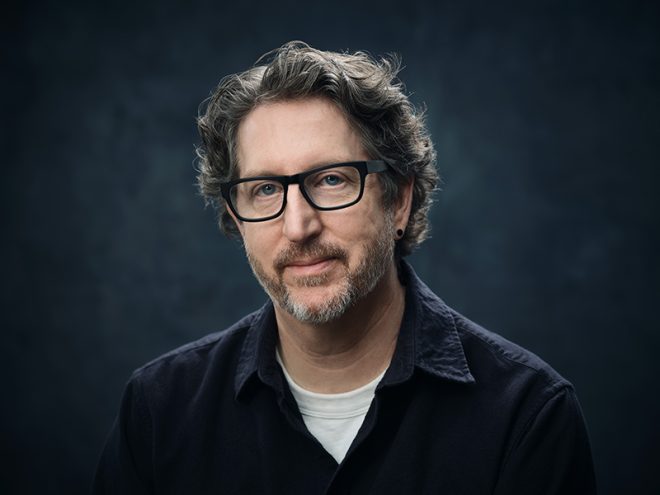
Paul Tremblay has won the Bram Stoker, British Fantasy, Sheridan Le Fanu, and Massachusetts Book awards and is the New York Times bestselling author of Horror Movie: A Novel, Another, The Beast You Are, The Pallbearers Club, Survivor Song, Growing Things and Other Stories, Disappearance at Devil’s Rock, A Head Full of Ghosts, and the crime novels The Little Sleep and No Sleep Till Wonderland. His novel The Cabin at the End of the World was adapted into the Universal Pictures film “Knock at the Cabin.” His next novel, Dead But Dreaming of Electric Sheep, will be published in summer 2026.
His essays and short fiction have appeared in the New York Times, Boston Globe, Los Angeles Times, and numerous “year’s best” anthologies. He lives outside of Boston, Massachusetts and has a master’s degree in Mathematics.
About the Narrator
Rosie Sentman
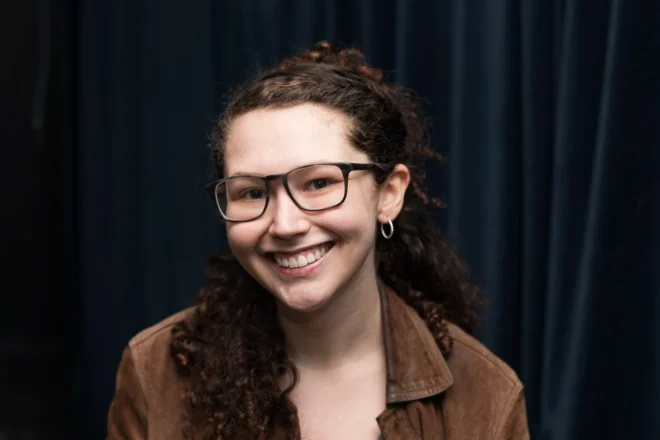
Rosie Sentman is an actor, voice actor, singer, and all around ‘theatre artist’, originally from Georgia and now living in Boston, Massachusetts. Outside of performing, they are an independent researcher focusing on cosmic horror and the decadent movement, and are passionate about disability rights, surrealism in theatre, and their orange cat, Whitby. You can find more about their projects and contact them at rosiesentman.com.
